
We earn a commission if you buy through these links. Learn more
Crank
Guide by the Books of the Day editors · Updated · How we write our guides
Ellen Hopkins's verse novel Crank tells a teen's slide into methamphetamine addiction through short, stark poems that make the pull of the drug feel frighteningly real.
What Creators Say About Crank
2 creators reviewed Crank on YouTube in 2015, with 5.6K views between them. Their opinions are their own; we picked these reviews, we didn't write them.
What It's About
Crank is a young adult verse novel by Ellen Hopkins about a high-achieving teenage girl whose life unravels after she starts using methamphetamine. Hopkins builds the story from short free-verse poems, many shaped on the page so the line breaks and white space carry the rhythm of a racing, then crashing, mind. The form is the book's main event: a poem can be only a few lines, and what is left out often hits as hard as what is said.
Reading it is fast and immersive rather than slow and reflective. You can finish it in a single sitting, and the book asks you to feel the appeal of the drug from the inside instead of watching it from a safe distance. Hopkins has said the story grew out of her own family's experience with addiction, and that personal root gives the book a raw, unpolished emotional texture. The narrator's voice shifts with her circumstances, so you follow a person changing through the form as much as through events.
Expect the book to be frank. It deals openly with drug use, sex, and family damage, and it does not offer a neat moral or a comfortable resolution. Its strength is momentum and emotional directness, which suits readers who want a story that hits hard rather than one that reassures.
Read this if you…
- want an emotionally intense, fast-moving story that works well in a single sitting
- are interested in verse novels and how line and page layout can carry emotion
- want to understand how addiction feels from the inside, especially for a teen reader
Skip it if you…
- want a gentle, hopeful story or one that resolves its problems neatly
- are looking for a detailed, factual account of drugs, recovery, or treatment
Key Ideas
- 1
Addiction as a persuasive, gradual story
The book shows how drug use can start as relief, excitement, or escape and gradually become the organizing force of a life. Hopkins doesn't frame the narrator as foolish; she frames her as someone who makes choices that each seem survivable. That is what makes the descent unsettling. The reader sees how rationalization works from within, which is more useful than a simple warning.
- 2
Form as part of the meaning
Because the story is told in verse, the physical layout of each poem reflects the narrator's state: crowded, fragmented, or suddenly sparse. The reader's eye has to slow down or speed up with her. This makes the book feel less like a message about drugs and more like a direct experience of living inside an unstable mind, which is why the form is discussed so often.
- 3
Secrecy and the gap between appearance and reality
Much of the tension comes from the distance between how the narrator looks to others and what is happening privately. Friends, family, and school see one version of her while the real story runs underneath. The book explores how easy it is to hide a collapse in plain sight, and how shame keeps people from asking for help until the cost is very high.
- 4
Family damage and the limits of rescue
The book is interested in how parents, siblings, and relationships are affected by addiction, not only the person using. It suggests that people around an addict can cause harm, be harmed, or feel powerless to intervene. The story does not present rescue as simple or guaranteed, which gives its emotional stakes weight beyond the drug plot itself.
Limitations
The book is written from a single perspective, so readers hoping for a balanced view of addiction, family members, or treatment options will not find one. Its prose is deliberately spare, which some readers find powerful and others find thin or repetitive. The depiction of drug use and sexual content is frank and has drawn criticism from some parents and educators, so it is best suited to older teen readers. As a first book in a series, it sets up a story that other entries continue, so readers should expect some open threads.
Questions Readers Ask
- Who is Crank best suited for?
- Crank suits older teen and adult readers who are comfortable with mature content and want a short, intense read. Its verse form is accessible even for reluctant readers, but the subject matter is heavy, including drug use, sexual content, and family harm. Readers who are sensitive to those themes, or who want a gentler book, should consider something else.
- Is Crank still relevant today?
- Yes, the emotional core of the book, about secrecy, shame, and the pull of addiction, remains relevant. Drug culture and the specific substances have changed since the book was published, so some practical details may feel dated. Readers looking for current information about addiction should use other sources alongside it.
- Published
- 2001
- ISBN
- 9781417632329
- Difficulty
- beginner
- Category
- Children's Books
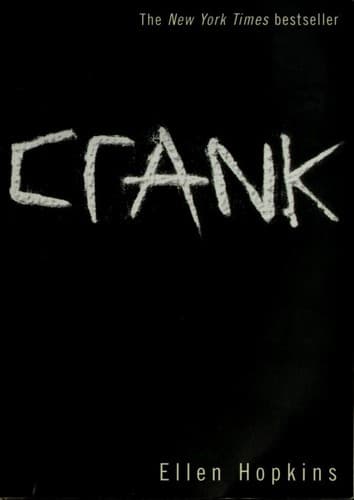
Book details and cover from Google Books.
Ready to read Crank?
Get your copy on Amazon, or listen to it on Audible. We earn a commission if you buy through these links.