
We earn a commission if you buy through these links. Learn more
Count Zero
William Gibson's 1986 cyberpunk novel is a stylish, unsettling look at corporate power, art, and belief in a networked near future, and a rewarding follow-up to Neuromancer.
What It's About
Count Zero is a 1986 science fiction novel by William Gibson, the second book in the Sprawl trilogy after Neuromancer. Although this listing files it under History, it is fiction, set in a near future where multinational corporations hold more power than governments and cyberspace is both a workplace and a battleground. The story moves among several characters whose paths only slowly converge: a corporate mercenary taking on a job, an art consultant drawn into a strange commission, and a young hacker chasing a legend of his own.
Gibson's style is clipped, atmospheric, and full of brand names and street slang that he seldom explains, so you learn the world by swimming in it. The book is less a single plot than a mood of dislocation, a sense that money, art, religion, and machines have blurred into one system. He stays in each viewpoint long enough for it to feel lived in, then cuts away, which keeps tension high but can make the early chapters feel scattered.
Reading it is an experience of texture more than resolution. Its questions about identity, belief, and the value of things stay partly open, and it rewards a second pass. Readers coming from Neuromancer will recognize its tone and motifs, though this book is more interested in people on the ground than in the grand hacking caper.
Read this if you…
- love gritty, brand-soaked cyberpunk with a strong sense of place
- enjoy storylines that converge slowly and don't need everything explained
- want to continue from Neuromancer into the same world
Skip it if you…
- need a clear, linear plot with a tidy resolution
- dislike dense slang and jargon you have to decode on your own
Key Ideas
- 1
Corporations as the real power
Gibson imagines a world where large firms have replaced nations as the forces that shape daily life. Governments appear weak or absent, and characters move between corporate interests as easily as between cities. The book asks what loyalty means when your employer owns the streets, the networks, and the products you use. Its vision of corporate sprawl still feels recognizable, which is a big part of why the novel continues to be read.
- 2
Art, value, and authenticity
A subplot built around the art world asks who decides what something is worth, and why. Collectors, dealers, and consultants treat objects as status and commerce, while the story hints at something sincere underneath. The theme gives the novel a quieter emotional thread than its hacking and violence. It also suggests that in a market this complete, meaning has to be found in unexpected places.
- 3
Folk belief meets networked machines
Gibson blends older spiritual traditions with artificial intelligence and cyberspace, so that machines take on the feel of gods, spirits, or ritual. This mixing is one of the most distinctive things about the book. It treats belief as something that can be engineered, shared, or exploited. Readers who want a purely technical vision may find it strange, but it is central to what the novel is reaching for.
- 4
Bodies as modifiable hardware
Characters routinely alter their bodies with cybernetic implants, and the line between person and tool is often blurry. Gibson treats these modifications as ordinary, almost like fashion or debt, rather than as spectacle. The result raises questions about identity and autonomy without lecturing. It makes the future feel practical and grubby rather than shiny.
- 5
Fragmented stories that slowly converge
Gibson alternates between viewpoints and withholds connections, so the pieces only gradually form a larger picture. This structure is part of the experience, asking the reader to assemble meaning as the characters do. It keeps the pace unsettling and the stakes hard to pin down. Readers who want a clear, steady narrative may find the method frustrating at first.
Limitations
The novel's technology reflects the mid-1980s, so some of the hardware and interfaces feel dated, even as Gibson's broader picture of corporate life holds up well. Many readers find the plot looser and less focused than Neuromancer, with several threads that feel more like atmosphere than story. Critics have also pointed out that its female characters are often more defined by their relationships to men than by their own choices. The book's heavy style can be tiring over a long reading, and its open ending may leave some readers unsatisfied.
Questions Readers Ask
- Is Count Zero a sequel to Neuromancer?
- Yes. It is the second novel in the Sprawl trilogy, following Neuromancer (1984), and it is followed by Mona Lisa Overdrive (1988). You can read Count Zero on its own, but it is richer if you know the first book's world, characters, and background, since several of its threads build on that earlier story.
- Why is Count Zero listed under History?
- It is a work of fiction, a science fiction novel, so the History category on this listing is an error. It is worth checking the category before buying, especially if you are looking for nonfiction about the period or about computing history.
- Does Count Zero still feel relevant today?
- In many ways, yes. Its portrait of corporate influence, online life, and the commodifying of identity anticipates debates that are very current. Its specific technology looks dated, but readers usually find that the mood and the social questions matter more than the gadgets.
- Published
- 1986
- ISBN
- 9783453089013
- Difficulty
- intermediate
- Category
- History
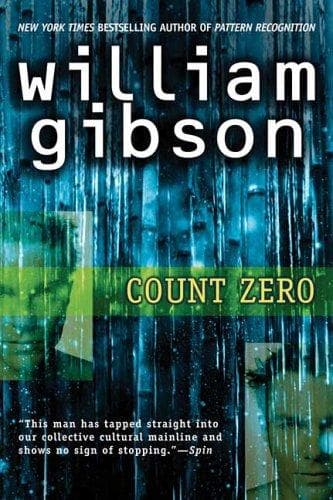
Book details and cover from Google Books.
Ready to read Count Zero?
Get your copy on Amazon, or listen to it on Audible. We earn a commission if you buy through these links.