
We earn a commission if you buy through these links. Learn more
Consider the Lobster
Wallace's sharp, funny, and restless essays on a Maine lobster festival, cruise ships, presidential politics, and usage fights, all tracing one curious mind at work.
What It's About
Consider the Lobster (2005) is a collection of nonfiction essays and magazine pieces by David Foster Wallace, mostly written as assignments that he stretched far beyond their original brief. The title essay began as a report on the Maine Lobster Festival, but it becomes a meditation on animal suffering, the ethics of eating, and how much a reporter can notice about the people and machinery around him. Other pieces cover a luxury cruise, the Illinois State Fair, the 2000 presidential campaign trail, the porn industry's annual awards show, and a long argument about English usage.
The style is maximal. Sentences are long and layered, parenthetical asides pile up, and footnotes often run into digressions of their own. Wallace is reporting and examining himself at the same time. He admits his biases, notices his own discomfort, and frequently turns a simple assignment into a question about his motives. The result feels like listening to a very smart, very anxious friend who keeps second-guessing every observation.
The experience is uneven in a good way. Some pieces are openly comic, others are uneasy, and a few are slower and more analytical. Rather than building one argument, the book gives you a set of portraits, each one a study of American appetite, spectacle, and self-consciousness.
Read this if you…
- are curious about how ordinary events reveal larger cultural patterns
- enjoy dense, witty prose with footnotes and self-aware digressions
- want a sharp, skeptical look at American consumer culture
Skip it if you…
- want a single sustained argument or narrative rather than separate essays
- find long, winding sentences and extended footnotes tiring
Key Ideas
- 1
Moral attention to the animals we eat
The lobster essay asks whether boiling a lobster causes real suffering and how much the capacity to feel should matter to ordinary diners. Wallace refuses easy answers and keeps noticing his own appetite while he questions it. The essay is less a verdict than an honest record of a man trying to reason through a habit most people never examine.
- 2
Reporting that keeps the reporter visible
Wallace rarely hides behind a neutral narrator. His motives, embarrassments, and sales-driven assumptions stay on the page, so the journalism becomes partly about the journalist. This makes the pieces feel candid and sometimes self-punishing, and it asks readers to judge the observer as carefully as the subject.
- 3
Spectacle, commerce, and American excess
The cruise ship, the state fair, the campaign trail, and the awards show each reveal how mass entertainment and marketing shape the experience of being a consumer. Wallace pays close attention to the managed fun on display, noticing both its absurdity and its appeal, and he rarely stops at mockery alone.
- 4
Language as a field of power
The long usage essay treats dictionaries and style guides as arguments about class, authority, and who gets to set the rules, not simply as neutral references. It is one of the more demanding pieces in the book, but it shows Wallace's range: he can make a debate over grammar feel as charged as anything in the political essays.
Limitations
The style is mannered and can wear thin over a full book, especially for readers who want plainer prose. Wallace's constant self-questioning can read as indecisive to some, and a few pieces run much longer than their material warrants. Many essays are tied to the early 2000s, including the 2000 campaign and the media landscape of that period, so some topics feel dated. The collection also centers on American subjects, and readers looking for a broader range of perspectives may find it narrow.
Questions Readers Ask
- Do I need to read Infinite Jest first?
- No. These essays are shorter and more approachable than Wallace's novel, and they show his voice without the length and structural demands of Infinite Jest. Many readers start here and move on to the novel later, while others find the essays a useful companion after finishing it.
- Is the title essay worth reading if I'm not interested in food writing?
- Yes, if you care about ethics or about how writers handle their own discomfort. The essay is about a food festival, but its real subject is how a person thinks through a moral question he would rather ignore. Readers who want straightforward restaurant or seafood coverage may be disappointed.
- Published
- 2010
- ISBN
- 9783462041262
- Difficulty
- intermediate
- Category
- Essay
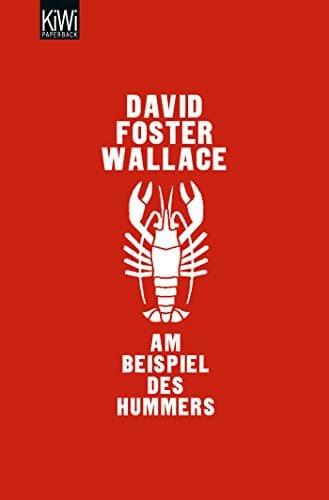
Book details and cover from Google Books.
Ready to read Consider the Lobster?
Get your copy on Amazon, or listen to it on Audible. We earn a commission if you buy through these links.