
We earn a commission if you buy through these links. Learn more
Confessions
by Kanae Minato, BookSource Staff
A short, savagely efficient novel of revenge and grief, told in linked voices that keep shifting what you think you know about who is guilty and why.
What It's About
Confessions is a Japanese crime novel by Kanae Minato, first published in 2008 and later adapted into a film. It is short and reads quickly, but it is built with real care. The story is set around a junior high school class and unfolds through a series of first-person monologues, each delivered by a different character connected to a single death. Each voice gives you a partial account, and the gaps between them do much of the work.
The approach is what sets it apart. Minato writes characters who justify themselves, some sympathetic and some repellent, and she trusts readers to notice what each speaker leaves out. The prose is spare and cool rather than lush, which suits a book so concerned with how people rationalize harm. Expect clipped chapters and a steady escalation of tension rather than a slow, atmospheric build.
Reading it feels less like following a detective and more like sitting in a room with people who have decided what they are owed. It is uncomfortable and often bleak, and its moral questions do not resolve neatly. If you want a puzzle with a tidy solution, you may find it harsher than satisfying. If you want a close look at grief, cruelty and adolescent judgment, it rewards careful attention.
Read this if you…
- want crime fiction that asks who is responsible more than who did it
- like short, intense novels that reward rereading
- are interested in moral ambiguity and psychological realism in school settings
Skip it if you…
- need a sympathetic protagonist or a conventional detective to follow
- have little tolerance for bleak, cruel material involving children
Key Ideas
- 1
Grief that hardens into a plan
The novel looks at how a parent's loss can turn into an organized campaign. Revenge gives grief a structure and a sense of purpose, and the book asks whether that structure is a form of healing, a form of madness, or both. It treats the impulse seriously without endorsing it.
- 2
Unreliable voices and the gaps between them
No single narrator is trusted, and each account reframes the events told before it. There is no all-knowing guide, so the reader must assemble the picture from competing testimony. Much of the pleasure comes from noticing what a speaker needs you to believe and what they are quietly avoiding.
- 3
How ordinary people justify cruelty
The characters are not written as monsters. They are teachers, students and parents who convince themselves that their actions are reasonable. Minato shows how small rationalizations accumulate, and how easily people excuse harm when it serves their own sense of fairness or pride.
- 4
The classroom as a pressure cooker
The school setting is more than backdrop. Peer status, adult authority and the anxieties of adolescence shape every character's choices. The novel shows how a closed community can magnify resentment and make a single grievance spread through many lives.
- 5
Spare style, deliberate structure
Short sections and economical sentences keep the momentum high. The structure is the main craft achievement: the order in which voices arrive controls how the reader feels about each person. It rewards attention and, for many readers, a second look.
Limitations
Critics often point out that the characters are deliberately thin, so readers who want deep interiority may feel kept at a distance. The cruelty can feel relentless, and the moral framework is unusually grim, which some readers find unsatisfying. Because the book is short, its social context beyond the school is only sketched. Translation also shapes the prose, and some readers find its clipped tone flatter than the original.
Questions Readers Ask
- Is Confessions a good first Japanese novel to read?
- It can be. The prose is plain and the book is short, so it is accessible. However, its themes are dark and its structure asks you to track several narrators, so it works best for readers comfortable with demanding crime fiction rather than light entertainment.
- How does it compare to Gone Girl?
- Both use shifting narrators and withhold easy trust in any one voice. Confessions is much shorter and less interested in the mechanics of a marriage. Its focus is grief, school life and collective guilt, so readers who enjoyed the twists of Gone Girl may find this one colder and more morally bleak.
- Is it still relevant today?
- Its concerns about grief, bullying, online and peer pressure, and the desire for justice remain widely recognized, so the book still lands. Its portrayal of school life is specific to its setting, but the psychology of rationalizing harm is not tied to any era.
- Published
- 2014
- ISBN
- 9780606353120
- Difficulty
- intermediate
- Category
- Mystery & Thriller
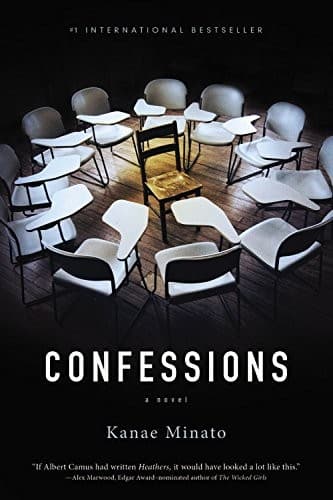
Book details and cover from Google Books.
Ready to read Confessions?
Get your copy on Amazon, or listen to it on Audible. We earn a commission if you buy through these links.