
We earn a commission if you buy through these links. Learn more
Conclave
On screen: Conclave (film, 2024)
Guide by the Books of the Day editors · Updated · How we write our guides
Robert Harris's tightly plotted novel about a papal election turns a closed Vatican room into a pressure cooker of ambition, secrets and doubt.
What Creators Say About Conclave
2 creators reviewed Conclave on YouTube between 2023 and 2024, with 7K views between them. Their opinions are their own; we picked these reviews, we didn't write them.
What It's About
Conclave opens with the death of a pope and then follows Cardinal Lomeli, the Dean of the College of Cardinals, who must organise the secret election of his successor. Almost the whole book takes place inside the Vatican during the days of voting, so the setting is closed and the pressure builds steadily. Harris builds the story around procedure: rules about who may vote, the rhythm of ballots, the deadlines and the private arithmetic of who can persuade whom in the small hours.
Reading it feels like a procedural mystery crossed with a political thriller. Harris writes lean, brisk prose with short chapters and clear explanations, so the machinery is easy to follow even if you know nothing about canon law. The pleasure comes from watching alliances shift and secrets surface, and from seeing how Lomeli's private doubts sit uneasily beside the duties he has taken on.
It is a page-turner rather than a meditation on faith. Characters are sketched economically and the tone is cool, observant and often wry, so you will move through it quickly. Expect a tightly built, intelligent read that rewards attention to small details, more than a deep portrait of the Church itself.
Read this if you…
- enjoy tightly plotted political thrillers with a closed, unusual setting
- want a fast, intelligent read you can finish in a few sittings
- are curious how institutions make decisions behind closed doors
Skip it if you…
- want a detailed theological debate or a serious study of Catholic doctrine
- prefer sprawling, character-heavy novels with long interior passages
Key Ideas
- 1
A closed room that feels like a pressure cooker
The confinement of the conclave, with cardinals sealed off from the outside world and forced to decide in tight quarters, turns ordinary politeness into strategy. Harris uses the setting to make nearly every conversation feel loaded. Readers who enjoy closed-circle tension, like a country-house mystery, will recognise the appeal.
- 2
Procedure as the engine of suspense
The election's rules, ballot counts and required majorities drive the story, so the tension comes from process rather than chases or fights. Harris explains the mechanics clearly enough that you always know what is at stake in each round, and every vote becomes a small event with consequences.
- 3
Power, ambition and the lure of office
The book is candid about how men who speak of humility can still want the job. Harris shows careers, rivalries and national loyalties pulling against one another, and he asks what kind of person should hold such authority without turning any character into a simple villain or saint.
- 4
Doubt inside a position of certainty
Lomeli's role requires him to be impartial and sure of his path, yet he is unsure of God and of his own motives. That tension gives the story a moral centre beyond who wins, and it asks what integrity looks like when a system depends so heavily on appearances.
Limitations
Some readers find the characters thin. The cardinals are distinguished more by function and nationality than by inner life, and Lomeli is the only one drawn in real depth. The book also presents a fairly conventional view of Vatican politics, so readers who know the institution well may notice procedural shortcuts or dramatic simplifications. It does not explore the wider Church, the lives of ordinary Catholics, or the theology behind papal authority in any depth. Its ideas are raised more often than they are resolved.
Questions Readers Ask
- Do I need to know Catholic doctrine to enjoy Conclave?
- No. Harris explains the rules of the conclave in plain language as the story goes, and the drama depends on people and power rather than theology. Some background on how popes are chosen helps, but it is not required. Readers with strong religious convictions may find the book more interesting for its questions than comfortable in its portrayal.
- How does it compare to a conventional political thriller?
- It shares the pacing and secret-keeping of a political thriller, but the setting is unusual and the stakes are spiritual as well as institutional. Where many thrillers rely on action, Conclave relies on conversation, voting and the slow reveal of what people are hiding. Harris's controlled, factual style will feel familiar to readers of his other novels.
- Published
- 2016
- ISBN
- 9781784751845
- Difficulty
- beginner
- Category
- Mystery & Thriller
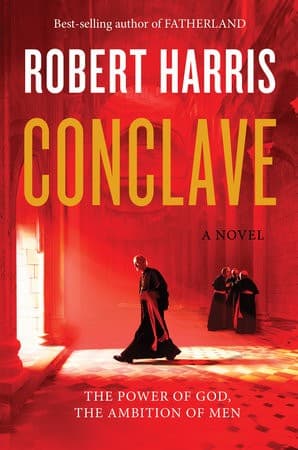
Book details and cover from Google Books.
Ready to read Conclave?
Get your copy on Amazon, or listen to it on Audible. We earn a commission if you buy through these links.