
We earn a commission if you buy through these links. Learn more
Cold Sassy Tree
Guide by the Books of the Day editors · Updated · How we write our guides
A funny, warm small-town Georgia novel from 1906, told by a teenage boy whose grandfather's scandalous remarriage shakes the whole town.
What Creators Say About Cold Sassy Tree
2 creators reviewed Cold Sassy Tree on YouTube between 2023 and 2024, with 1.4K views between them. Their opinions are their own; we picked these reviews, we didn't write them.
What It's About
Cold Sassy Tree is a comic novel set in a small Georgia town in 1906, narrated by fourteen-year-old Will Tweedy as he looks back on the year his beloved grandfather, a prosperous merchant, stunned everyone by marrying again barely a year after his wife's death. The premise sounds like a scandal story, and it is one, but the real subject is how a community decides what counts as respectable and who gets to decide.
Burns writes in Will's voice, which gives the book its charm: a boy who is observant, funny about adults, and earnest about things he cannot yet understand. The dialogue is rich with regional speech, and the humor often comes from the gap between what the town says and what it does. Episodes are loosely strung together rather than driven by a tight plot, so the book moves like memory, looping through family dinners, church, store talk, and the slow arrival of modern change.
Reading it feels like sitting on a porch with a talkative relative who knows everyone's business. It is warm and sometimes sentimental, and it lingers on small rituals more than big turns. Expect a slow start that rewards patience, and a tone that sits somewhere between comedy and elegy for a way of life already fading.
Read this if you…
- enjoy warm, character-driven comic novels about small-town life
- like a narrator whose innocence is part of the joke
- want a Southern novel built on voice and memory rather than suspense
Skip it if you…
- need a fast plot with steady cliffhangers
- find regional dialect and rambling episodes hard to sit through
Key Ideas
- 1
Respectability as a community's shared performance
The town's outrage is less about the couple than about the sense that someone has broken an unwritten code of grief and propriety. Burns shows how gossip, church, and store talk enforce that code, and how the people most loudly scandalized are often the ones hiding their own compromises.
- 2
A boy's view of adult hypocrisy
The narrator is old enough to notice contradictions and young enough to be bewildered by them. His reporting is funny because he takes adult pronouncements at face value, then lets the reader see the cracks. This gives the novel its comic edge and also its tenderness, since Will's loyalty to his grandfather is never in doubt.
- 3
Vernacular voice as the engine of the book
The book's rhythm, idiom, and humor depend on its regional Southern speech and on the way characters tell stories to make a point. Readers who enjoy dialect will find much to savor, while readers who find it tiring may need time to settle in. The language is the main reason the book feels like a place rather than a plot.
- 4
Change arriving slowly in a small town
Early twentieth-century modernity shows up as rumor before it shows up as fact, through new rail schedules, a shifting local economy, and changing ideas about women and marriage. Burns handles these pressures lightly, letting them accumulate rather than announcing them, so the sense of a community bending under change builds quietly.
Limitations
The episodic structure can feel loose, and readers who want a tightly engineered plot may find the middle sluggish. Some critics note that the town is seen through a comfortable, largely white and middle-class point of view, so the lives of Black residents and working people appear mostly at the edges. Its nostalgia is affectionate but selective, which is part of its charm and part of its blind spot.
Questions Readers Ask
- Is Cold Sassy Tree still worth reading today?
- Yes, mainly for its voice and its portrait of a small Southern town on the edge of modern change. Its attitudes toward race and gender reflect the setting and the narrator's viewpoint, so read it as a window onto a particular time rather than a model of it. Readers who enjoy comic family sagas will likely find it rewarding.
- How does it compare to To Kill a Mockingbird?
- Both use a young narrator in a small Southern town, but Cold Sassy Tree is lighter and less concerned with injustice. Its engine is social comedy and family gossip rather than a courtroom drama. If you loved Scout's voice, you may enjoy Will's, though the stakes are gentler and the tone more wry than moral.
- Published
- 1984
- ISBN
- 9780440514428
- Difficulty
- beginner
- Category
- Fiction
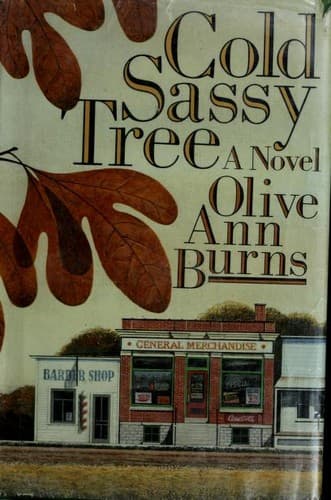
Book details and cover from Google Books.
Ready to read Cold Sassy Tree?
Get your copy on Amazon, or listen to it on Audible. We earn a commission if you buy through these links.