
We earn a commission if you buy through these links. Learn more
Cold Mountain
On screen: Cold Mountain (film, 2003)
Guide by the Books of the Day editors · Updated · How we write our guides
A lyrical Civil War novel that follows a deserter's long walk home and the woman waiting for him, offering a rich portrait of wartime Appalachia and the cost of coming back.
What Creators Say About Cold Mountain
2 creators reviewed Cold Mountain on YouTube between 2017 and 2025, with 9.7K views between them. Their opinions are their own; we picked these reviews, we didn't write them.
What It's About
Cold Mountain is a Civil War novel told through two people in the last stretch of the Confederacy. Inman, a wounded soldier who has grown weary of a war he never wanted, leaves a hospital and begins walking back toward the mountain town where Ada, a educated woman from the city, is trying to keep a neglected farm alive after her father's death. Their separate stories alternate, and the book keeps asking what a person owes to home, to a cause, and to the people left behind.
Frazier writes in a rich, slightly old-fashioned voice full of close attention to plants, weather, and the daily work of making food and shelter. His sentences can be lush, and his dialogue carries the rough music of Appalachian speech. Many chapters read like episodes on a long road, with strangers, dangers, and small kindnesses punctuating the journey. The structure owes a visible debt to Homer's Odyssey, and readers who know that poem will notice the echoes, though they don't need it to follow the story.
Reading it is slow, immersive work rather than a page-turning thriller. The pleasure lies in the texture of the world and the steady pull of two people trying to find their way back to something they have lost. The romance is tender without being sentimental, and the violence, when it arrives, is abrupt and unglamorous.
Read this if you…
- want literary fiction where setting and voice matter as much as plot
- are drawn to Civil War stories about ordinary people rather than generals
- enjoy slow, romantic journeys and stories about trying to return home
Skip it if you…
- need fast plot momentum or a tidy, satisfying resolution
- find heavy regional dialect and long descriptive passages tiring
Key Ideas
- 1
Home as the thing war takes
The novel treats home less as a place than as a fragile arrangement of people, work, and habit. Inman's walk and Ada's struggle to keep the farm going show how quickly a war can erode that arrangement, and how much effort it takes to rebuild it. Frazier is interested in whether a home can be recovered at all once it has been left or lost.
- 2
Two lives braided across a divided land
Alternating chapters let the reader feel how the same conflict bends very different days. One thread is a journey through danger and chance encounters, the other a grinding domestic effort in a place cut off from supplies and authority. The contrast makes the war feel like a condition of everyday life rather than a set of battles.
- 3
Landscape and speech as subject
Frazier's attention to trees, animals, herbs, and weather is not decoration. The natural world shapes how characters survive and how they understand themselves. The dialect and folk expressions of the characters give the book a distinct sound that is a large part of its appeal and, for some readers, its difficulty.
- 4
The Odyssey as quiet scaffolding
Frazier builds the story on the bones of Homer's epic, with a traveler returning home and a household left to fend for itself. The parallels give the book a sense of myth beneath its realism. Readers who notice them will find extra depth, while others can simply read the novel as a story about ordinary people under pressure.
Limitations
Critics have noted that the dialect and dense natural description can slow the reading, and that the episodic middle section can feel uneven in pace. The perspective is largely that of white rural Southerners, so readers looking for the experience of enslaved people or a broader view of the war will find it limited. Some readers also find the Odyssey parallels more schematic than the story needs. The book rewards patience, but it does not hurry to explain itself.
Questions Readers Ask
- Do I need to know The Odyssey to enjoy Cold Mountain?
- No. The novel stands on its own as a Civil War story about a journey and a homecoming. Knowing Homer adds a layer of recognition, since the shape of the book echoes the epic, but the characters and events are fully realized without that background. Most readers will not feel they are missing anything important.
- How does Cold Mountain compare to Gone with the Wind?
- Both are Civil War novels about the American South, but they differ in scale and focus. Gone with the Wind is a sweeping, melodramatic saga centered on wealthy planters. Cold Mountain is leaner and quieter, concerned with ordinary people far from the big houses, and it tends to appeal to readers who want a more literary, less romantic-epic treatment of the same era.
- Published
- 1997
- ISBN
- 9780679309451
- Difficulty
- intermediate
- Category
- Fiction
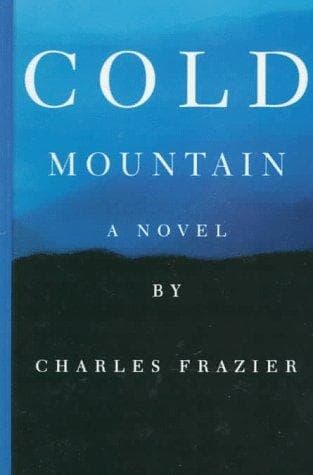
Book details and cover from Google Books.
Ready to read Cold Mountain?
Get your copy on Amazon, or listen to it on Audible. We earn a commission if you buy through these links.