
We earn a commission if you buy through these links. Learn more
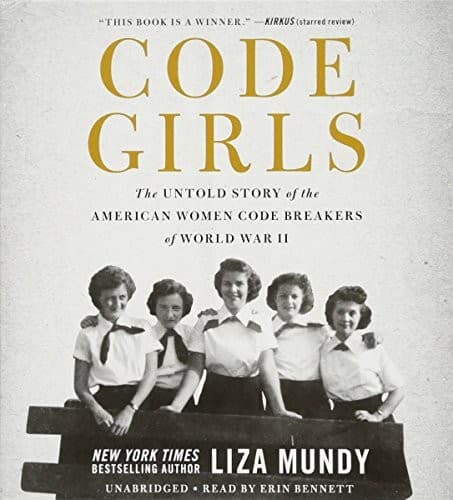
Code girls
by Liza Mundy
The overlooked story of the thousands of American women, many recruited straight from college, who broke enemy codes in World War II, told with archival depth and personal detail.
What It's About
Code Girls follows the large number of young American women who went to work breaking enemy codes during the Second World War. Mundy, a journalist, reconstructs how the Army and Navy turned to women to fill desperate needs for cryptanalysts, recruiting from colleges across the country, often with a promise of patriotic service and little explanation of the work. Much of that labor was done in secrecy, in cramped rooms and under strict rules that forbade talking about it, even to family, for decades afterward.
The book's method is part reporting, part group portrait. Mundy draws on interviews with surviving codebreakers and on archival material to show how the women worked: tracking radio traffic, grinding through repetitive patterns by hand, and helping to crack Japanese and German systems that had real consequences on the battlefield. The narrative moves between individual lives and the larger institutional story, so you get both the big picture of how the effort was organized and the texture of daily work.
Reading it feels like being let in on a secret that was kept for a very long time. The tone is warm and admiring without being sentimental, and the pacing is brisk, though the many names can blur together. It works best as an experience of recovery: a history of people whose contributions were minimized in their own time and largely forgotten afterward.
Read this if you…
- You enjoy World War II history told through individual people rather than generals and battles.
- You are curious about how codebreaking actually worked on the ground, away from the spy-thriller version.
- You want an account of women's wartime contributions that is warm, well researched, and easy to follow.
Skip it if you…
- You want a technical explanation of the ciphers and mathematics themselves.
- You are looking for a dense, analytical history of wartime policy or military strategy.
Key Ideas
- 1
Recruiting women into a wartime secret
Wartime demand for trained people pulled women into codebreaking on a scale few had imagined. The book shows how recruiters looked to women's colleges and to mathematics and language departments, and how many young women took jobs without knowing exactly what they would be doing. The picture of an institution improvising around a labor shortage is one of the book's most useful threads.
- 2
Codebreaking as patient, repetitive work
Much of the real work was not flashes of genius but long stretches of careful pattern-spotting, record-keeping, and cross-checking. Mundy makes clear how small observations, collected over time by many people, could add up to a break. This reframes codebreaking as a collective, methodical craft rather than a lone-genius story.
- 3
The cost of keeping quiet
Secrecy shaped these women's lives long after the war ended. Many returned to ordinary jobs and family life without any public acknowledgment of what they had done. The book examines how that silence affected their sense of self, their careers, and how their work was remembered, or not remembered, by the wider culture.
- 4
Gender and the limits of recognition
Mundy pays close attention to how the women were valued during the war and how they were overlooked afterward. The story raises questions about why skilled women's labor was so readily used in crisis and so quickly set aside once the emergency passed. It is a history that asks readers to think about who gets remembered as contributors to important work.
Limitations
The book centers largely on white, college-educated women, and its treatment of Black women's roles and of the segregated military context is comparatively thin. Some readers want more analysis of the institutional sexism behind the story and less reliance on individual recollection. The cast is large, so some names blur together, and the cryptology is explained at a general level only. Readers who want to understand exactly how the systems were broken should look to more technical sources.
Questions Readers Ask
- Who is Code Girls best suited for?
- It suits readers who like narrative history and want to learn about a part of the war that is rarely covered. You don't need any background in mathematics or cryptography, since the book explains the work in plain terms. It is also a good pick for readers interested in women's history who want a story grounded in real archives and interviews.
- How does it compare to The Woman Who Smashed Codes?
- Both books tell the story of women in codebreaking, but they cover different ground and eras. Code Girls focuses on the large wartime cohort of American women, while Jason Fagone's book centers on Elizebeth Friedman and her work. If you want a broad group portrait, Mundy's book fits; if you want one remarkable life, the other is the better choice.
- Published
- 2017
- ISBN
- 9780316352543
- Difficulty
- beginner
- Category
- History
Book details and cover from Google Books.
Ready to read Code girls?
Get your copy on Amazon, or listen to it on Audible. We earn a commission if you buy through these links.