
We earn a commission if you buy through these links. Learn more
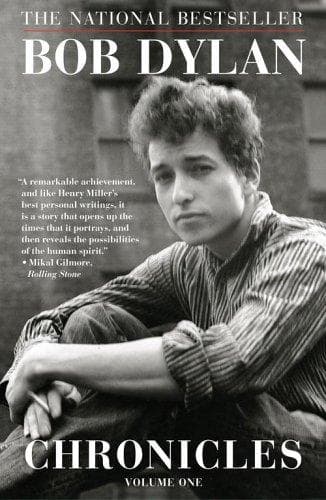
Chronicles
by Bob Dylan
Guide by the Books of the Day editors · Updated · How we write our guides
Dylan's own restless, digressive account of his early New York years and songwriting craft, written in a voice that rewards patient readers more than fans hunting for facts.
What Creators Say About Chronicles
2 creators reviewed Chronicles on YouTube between 2013 and 2018, with 11.1K views between them. Their opinions are their own; we picked these reviews, we didn't write them.
What It's About
Chronicles: Volume One is Bob Dylan's memoir of his early years as a musician, centered on the New York period that began in the early 1960s. It is not a tidy life story. Dylan moves between scenes, doubles back, and lingers on the rooms, records, books, and people that shaped him, so the reader gets a sense of a mind at work rather than a chronological record of dates and releases.
The prose is the main attraction. Dylan writes in a conversational, mannered voice full of sharp observations, odd turns of phrase, and long passages that read like a musician describing how a song took shape. He is less interested in settling scores or confessing than in explaining what he absorbed from folk traditions, from older songs, and from the Greenwich Village scene where he learned his trade.
Reading it feels like sitting with a talkative, watchful guest who keeps changing the subject and then circles back with something surprising. Fans of his lyrics will recognise the restless, associative logic. Readers who want a clear narrative, with names and dates lined up neatly, may find it frustrating. It is a short, unusual book for its subject, and the reader who settles into its rhythm gets more out of it than one who expects a standard memoir.
Read this if you…
- care about how songs are made and what writers absorb from older art
- are happy with a loose, digressive memoir and don't need a tidy timeline
- want an insider's view of the early 1960s Greenwich Village folk scene
Skip it if you…
- want a complete, year-by-year account of Dylan's career
- expect candid revelations about his personal life or relationships
Key Ideas
- 1
Songs as the product of absorbed traditions
Dylan presents his writing as the result of years of soaking up older songs, blues, and folk material rather than a sudden flash of inspiration. The book is most useful when it shows how borrowing, rewriting, and listening closely became a working method for him.
- 2
Greenwich Village as a formative world
The early 1960s folk scene in Greenwich Village is the book's home ground. He describes the clubs, the musicians around him, and the competitive yet generous atmosphere of a scene that was both a community and a marketplace. Readers get a vivid sense of the place without a standard history of the era.
- 3
Memory as an unreliable, shifting process
Dylan does not pretend his recollections are precise. He lets scenes blur, revisits moments from different angles, and admits that memory selects and distorts. This makes the book feel more like reflection than documentation, and it asks the reader to weigh his account rather than simply accept it.
- 4
Reading and art as a lifelong education
Books, painters, and older writers recur throughout, treated as tools for thinking as much as subjects of admiration. He shows how his sense of storytelling and character grew from reading widely, making the book a quiet case for literature as a source for songwriters.
- 5
Ambition, reinvention, and self-definition
The memoir returns often to the question of who he was supposed to be, and how a young performer resisted labels from critics, audiences, and fellow musicians. It is less about triumph than about the pressure of being seen as a symbol.
Limitations
The book is selective and deliberately partial. Dylan skips large stretches of his career and personal life, and it is not a reliable guide to dates, sequences, or who said what. Some readers find the digressions self-indulgent, and the voice can feel evasive where a more direct account would help. Critics have also noted that the book is written with a performer's self-protective instincts, so it is best read as one man's account rather than the full record. It is a memoir of a period, not a finished life.
Questions Readers Ask
- Do I need to know Dylan's music to enjoy it?
- Not strictly, but it helps. Many passages assume familiarity with his songs, albums, and the people around him. Readers who know little of his work can still enjoy the prose and the picture of the Village scene, but some sections may be hard to place without a basic knowledge of his career.
- Is it worth reading if I've enjoyed other music memoirs?
- It stands apart from most music memoirs because it is less interested in tour stories and gossip than in craft and memory. If you want a conventional rock autobiography that narrates a career in order, this will feel strange. If you like literary memoirs that wander, it is a rewarding choice.
- Published
- 2004
- ISBN
- 9788373844902
- Difficulty
- intermediate
- Category
- Biographies
Book details and cover from Google Books.
Ready to read Chronicles?
Get your copy on Amazon, or listen to it on Audible. We earn a commission if you buy through these links.