
We earn a commission if you buy through these links. Learn more
Children of Virtue and Vengeance
by Adeyemi
Guide by the Books of the Day editors · Updated · How we write our guides
A sequel that turns the first book's quest into a harder question: what fairness looks like once the old order has fallen, and what people will do to get it.
What Creators Say About Children of Virtue and Vengeance
2 creators reviewed Children of Virtue and Vengeance on YouTube between 2019 and 2020, with 17.9K views between them. Their opinions are their own; we picked these reviews, we didn't write them.
What It's About
Children of Virtue and Vengeance is the second book in Tomi Adeyemi's Orïsha series, picking up after magic has returned to a kingdom that was built on fear of it. The story follows Zélie, Amari, and Inan, who narrate in alternating chapters as each tries to decide what a fairer Orïsha should look like and what they are willing to do to get there. The fallout from the first book is messy, and this sequel spends much of its time on consequences rather than on a single quest.
The prose is fast and cinematic, with short chapters, frequent cliffhanger endings, and large set-piece action that keeps the pages turning. Adeyemi draws on Yoruba-inspired language, gods, and ritual, and she tends to weave these into names, customs, and everyday speech rather than stopping to explain them. Much of the emotional weight comes from family ties and from characters who argue in good faith about whether vengeance can ever produce justice.
Reading it feels like being pulled through a long, eventful stretch of a larger story. It is hopeful at its core but not comfortable: characters are hurt, make poor choices, and rarely win cleanly. Expect a middle book's pacing, with plenty of motion, some sprawling scenes, and an ending that leaves the central conflict open for the next installment.
Read this if you…
- want YA fantasy where politics and personal grief matter as much as the magic
- finished Children of Blood and Bone and want to see its consequences play out
- are interested in fantasy drawn from West African traditions and written with cultural specificity
Skip it if you…
- dislike series entries that run long, end on open threads, and leave major conflicts unresolved
- want a standalone story or a light, fast read without much moral complexity
Key Ideas
- 1
Justice versus revenge as a moral question
The title pairs two words that the characters often use interchangeably, and the book keeps testing the difference. Grief and injury give almost every major character a reason to hurt others, so the story asks whether a just cause can excuse cruelty. It rarely gives an easy answer, which is what makes the arguments between characters feel earned.
- 2
Power after a revolution
The book is less interested in the moment of rebellion than in what follows it. Once people who were oppressed hold power, alliances strain, leaders face hard tradeoffs, and former allies disagree about the cost of stability. Readers who like political fantasy will find this the most absorbing thread.
- 3
Loyalty split between communities
Amari and Inan are caught between the people they were raised among and the people they now feel responsible for. Their divided loyalties turn personal choices into political ones, and the book uses this tension to explore what it means to belong to more than one side.
- 4
A West African-inspired world as texture
Orïsha's culture is built from Yoruba-inspired mythology, language, and ritual, and it is presented from the inside rather than as a tourist's glossary. Readers who are not familiar with these traditions will need to lean in, but the payoff is a fantasy setting that feels lived in and specific.
Limitations
Some readers find the middle of the book slower than the first, with long stretches of dialogue and planning between action scenes. The romance threads are sometimes criticized as predictable or as taking up more room than they need. The violence and emotional intensity are high for some readers, and the book's rules of magic can feel loosely defined when the plot needs them to bend. Because it is the second book in a trilogy, it does not resolve its central conflict and is not satisfying on its own.
Questions Readers Ask
- Do I need to read Children of Blood and Bone first?
- Yes. This book assumes you know the characters, the magic system, and the events that ended the first book, and it does not stop to reintroduce them. Starting here would mean missing the relationships and stakes that give the sequel most of its force. Read the first book before this one to get the full experience.
- Is it suitable for younger teen readers?
- Many readers in their early teens handle it well, but the book includes violence, character deaths, grief, and oppression that are portrayed with real weight. Parents or readers who want specifics should check a content guide before starting, since the tone is more intense than many standard YA fantasy titles.
- How does it compare to Six of Crows?
- Both are YA fantasy with large casts and strong worldbuilding, but they feel different. Six of Crows is built around a heist structure and tight ensemble banter, while this book is more focused on rebellion, politics, and the moral cost of fighting for change.
- ISBN
- 9781529034790
- Difficulty
- beginner
- Category
- Young Adult
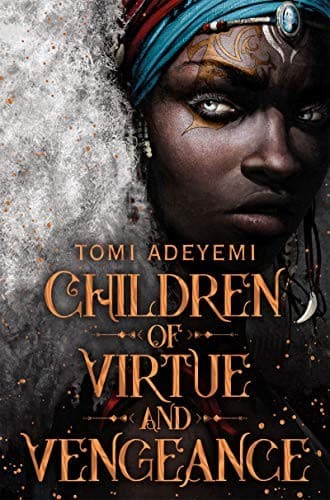
Book details and cover from Google Books.
Ready to read Children of Virtue and Vengeance?
Get your copy on Amazon, or listen to it on Audible. We earn a commission if you buy through these links.