
We earn a commission if you buy through these links. Learn more
Chasing Vermeer
A puzzle-packed middle-grade mystery in which two sixth graders read paintings and clues closely, making it a quick, clever pick for young readers and puzzle fans.
What It's About
Chasing Vermeer is a middle-grade mystery, written for readers roughly ten and up, though adults who enjoy puzzles often finish it in one sitting. The story follows two sixth graders, Calder and Petra, who become entangled in the theft of a valuable Vermeer painting in Chicago. Their investigation moves through school life, neighborhood detail, and the art world, with the kids gradually realizing that the answers depend on noticing small things most people overlook.
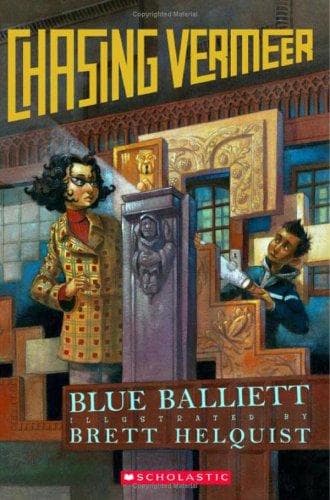
Balliett's approach is playful and visual. The book is built around clues, codes, word games, and riddles that the reader can try to solve alongside the characters, and Brett Helquist's illustrations add to the sense of a shared puzzle. Chapters are short and the pace is brisk, so the book rarely stalls. Art history comes in as a useful tool rather than a lecture, and the reading experience is less about dread or suspense than about the satisfaction of following a clever line of reasoning.
It works best as a light, engaging read with a lot of intellectual play. Expect a tidy, sometimes convenient plot and characters who are more curious than deeply complicated. What you get is a fast, warm, detail-driven mystery that rewards attention and makes you want to look more closely at the world, and at paintings in particular.
Read this if you…
- enjoy puzzles, codes, or trying to solve a mystery before the characters do
- want a fast, light middle-grade mystery with a clever, art-centered premise
- are curious about Vermeer or art history and want an accessible way in
Skip it if you…
- want a dark, grown-up crime novel with real danger and moral complexity
- need tight police procedure and a plot where every coincidence is carefully justified
Key Ideas
- 1
Close looking as a detective skill
The book treats careful observation as the central method of solving a crime. Details in a painting, a room, or a note become evidence, and the kids learn to slow down and examine what others skim past. This theme gives the story its quiet intellectual pleasure and encourages readers to pay closer attention to what they see.
- 2
Puzzles that invite the reader to play
Codes, word games, and clues are woven into the narrative, so the reader is not just watching events unfold. Many puzzles are solvable with patience and attention to detail, which makes the book feel like a shared game rather than a passive story. Readers who enjoy solving problems before the characters do will find this especially rewarding.
- 3
Friendship between outsider kids
Calder and Petra are curious and somewhat apart from their peers, and their partnership grows as they work the case together. Their friendship, with its small disagreements and shared discoveries, gives the book its emotional center. The investigation matters, but the way they learn to trust each other matters just as much.
- 4
Art as something people fight over
Beneath the puzzle, the book touches on who gets to own, display, and protect great art, and why a single painting can attract so much attention. It raises these questions lightly rather than preaching, leaving young readers room to think about the value of art beyond its price.
Limitations
The plot leans on convenient coincidences and neat solutions, which some adult readers will find too tidy. The characters are engaging but fairly simple, and the emotional stakes stay modest by design. The art history is simplified for younger readers, so experts may find it thin. Some puzzles demand more patience with small details than the pace seems to allow, and readers hoping for a sophisticated, realistic thriller will be disappointed.
Questions Readers Ask
- Is Chasing Vermeer suitable for adults?
- Yes, especially adults who enjoy puzzles, clever children's fiction, or art. The vocabulary and sentence structure are accessible, so the reading is easy. Adults looking for a gritty or morally complicated mystery will probably find it too light, but as a fast, playful read it holds up well for grown-up readers too.
- How does it compare to The Westing Game?
- Readers often compare the two because both are puzzle-driven middle-grade mysteries with clever clues. Chasing Vermeer leans more on art and visual detail, while The Westing Game centers on an elaborate will and a large cast. If you liked the puzzle structure of one, you will likely enjoy the other.
- Do I need to know anything about Vermeer to enjoy it?
- No. The book introduces the painter's work in an accessible way, and the mystery makes sense without prior knowledge. Some readers find that the story sends them to look up paintings afterward, which is a pleasant side effect rather than a requirement.
- Published
- 2003
- ISBN
- 9780786270071
- Difficulty
- beginner
- Category
- Mystery & Thriller
Book details and cover from Google Books.
Ready to read Chasing Vermeer?
Get your copy on Amazon, or listen to it on Audible. We earn a commission if you buy through these links.