
We earn a commission if you buy through these links. Learn more
Caramelo
A funny, tender family saga told by a Chicago girl on a summer road trip to Mexico City, where digressions and family stories add up to a portrait of belonging across two countries.
What It's About
Caramelo is a novel built around a yearly car trip. The Reyes family, a large Mexican-American household in Chicago, drives south to visit relatives in Mexico City, and the narrator, Celaya, called Lala, tells the story from inside that loud, crowded car. The trip is the frame, but the book is really about the family history that surfaces along the way: stories about her grandparents, uncles, aunts, and cousins, some told as legend, some as gossip, and many contradicting one another.
The style is the main event. Cisneros moves freely between voices, tenses, English and Spanish, and sudden leaps back in time. Sentences are often long and rhythmic, and the narration circles back on itself, so reading it feels closer to listening to a relative who keeps adding details than to following a plot. Some passages are hilarious, others sharp about class, gender, and what it costs to live between two languages and two countries.
The reading experience rewards patience. Early chapters can feel scattered, and you have to accept that the book is more interested in atmosphere, voice, and accumulated detail than in a tidy arc. Readers who give themselves over to its rhythm tend to find it warm, moving, and surprisingly structured once its threads start to connect.
Read this if you…
- love novels where voice and style matter as much as plot
- are curious about Mexican-American family life and the tensions of crossing between cultures
- enjoy long, looping narration full of family stories, humour, and asides
Skip it if you…
- want a fast, linear plot with clear turning points
- prefer books that stay tightly on one storyline without much digression
Key Ideas
- 1
Family history as a living, argued-over story
The book treats a family's past as something people tell differently depending on who is speaking. Relatives disagree about who did what, and Lala has to sort through versions rather than receive a single authorised account. This makes the novel as much about how memory and myth get made as about the events themselves.
- 2
Being between two countries and two languages
Lala's identity moves between Chicago and Mexico City, and between English and Spanish. The book does not present this as a neat bicultural balance. It shows the small humiliations, the pride, the confusion, and the sense of belonging to neither side fully, all rendered through the texture of everyday speech.
- 3
The rebozo as a symbol of inheritance
The title refers to a shawl that carries family meaning and passes through generations. Following its history gives the novel a physical, object-level thread that links the grandmothers' stories with the narrator's own sense of what she inherits and what she chooses to keep.
- 4
A girl's voice that refuses to be small
Lala is observant, funny, and often defiant about the expectations placed on girls in her family. The novel's energy comes from her refusal to tell her story in a tidy or polite way. Her voice is the reason the digressions feel purposeful rather than random.
Limitations
The book's looseness is its biggest obstacle. Readers used to tight plots often find the first stretch slow and the shifting timelines confusing, and the many relatives can be hard to track. Some critics also feel the novel leans on nostalgia and family anecdote more than on sharp conflict. Its Spanish passages are not always translated, which can frustrate readers without the language, though context usually carries the meaning.
Questions Readers Ask
- Is Caramelo a good first Sandra Cisneros book?
- It can be, especially if you enjoy sprawling family novels. Cisneros is best known for The House on Mango Street, which is shorter and more direct. Caramelo is much longer and looser, so starting with the shorter book may give you an easier entry point before you take on this one.
- Does Caramelo still feel relevant?
- Yes. Its themes of migration, family memory, and living between cultures remain widely discussed, and many readers find its portrait of a Mexican-American family as fresh now as when it was published. Its style is the part that may feel most distinctive or demanding today.
- Published
- 2002
- ISBN
- 9780792727088
- Difficulty
- intermediate
- Category
- Fiction
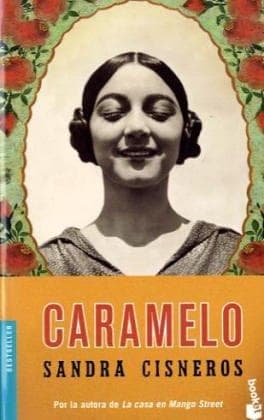
Book details and cover from Google Books.
Ready to read Caramelo?
Get your copy on Amazon, or listen to it on Audible. We earn a commission if you buy through these links.