
We earn a commission if you buy through these links. Learn more
Cannery Row
Guide by the Books of the Day editors · Updated · How we write our guides
A short, warm, episodic portrait of a Monterey waterfront full of drifters and dreamers, where Steinbeck turns a rundown street into something tender, funny and quietly sad.
What Creators Say About Cannery Row
2 creators reviewed Cannery Row on YouTube between 2021 and 2022, with 13.7K views between them. Their opinions are their own; we picked these reviews, we didn't write them.
What It's About
Cannery Row is a novel about a place more than a plot. Steinbeck's subject is a short stretch of Monterey, California, lined with sardine canneries, bars, a grocery and a flophouse, and the people who drift through it. Its central figures are a group of unemployed men who live by their wits, a marine biologist known simply as Doc, and a handful of women who run businesses on the edge of respectability. Rather than building one story, the book moves from one sketch to the next, and characters return in new lights.
The style is what most readers remember. Steinbeck writes with a loose, conversational warmth, often treating the street itself as a living presence, and he mixes broad comedy with passages of real grief. Some episodes are small-scale farce about schemes that go wrong; others pause on loneliness, poverty and the fragile economics of a fishing town whose catch is running out. The sections are short enough to read in a sitting, and the pleasure lies in the accumulation of small scenes rather than in suspense.
Reading it is a bit like sitting on a porch with a talkative local who knows everyone's business and is more forgiving than you expected. It is not a demanding book, but it rewards attention to tone. Steinbeck is never quite sentimental about his drifters, and he never lets the comedy fully cover the sense that this world is slipping away.
Read this if you…
- enjoy character-driven books where the setting is the main attraction
- want a short, warm novel you can finish in a few sittings
- want to see Steinbeck's lighter, more comic side
Skip it if you…
- need a tightly plotted story with a clear through-line
- want a sharp, critical look at economic injustice rather than affectionate portraits
Key Ideas
- 1
Community built from the margins
The book finds a kind of community among people respectable society has discarded: the drifters, the proprietors of compromised businesses, the outsiders who keep the street running. Steinbeck treats their loyalties and generosity as more real than the polite town's, and he asks the reader to notice who actually looks after whom.
- 2
Comedy as a way of seeing hardship
The humor is affectionate and rooted in schemes, misunderstandings and small failures. Steinbeck uses it to make poverty readable without making it trivial, so laughter and grief sit side by side on the same page. The jokes are often the way characters survive, which gives the comedy more weight than it first appears to carry.
- 3
The sea and a fragile livelihood
The street exists because of the sardine catch, and the book keeps an awareness of how precarious that resource and the town's living are. Doc's patient, curious attention to marine life offers a contrasting way of looking at the world, one that values observation over profit and sees the whole web of creatures at once.
- 4
Episodic structure as a portrait of place
Instead of a single plot, the novel assembles linked sketches. Meaning builds through how characters reappear, how small events echo each other, and how the street gradually accumulates into a single personality. Readers who want a tightly driven narrative may find this frustrating, but it is the book's main achievement.
Limitations
Readers coming from the more pointed Steinbeck novels may find this one loose and lightly plotted. Some of its comedy, and its treatment of women, carries a mid-century sensibility that reads as dated, and several figures are closer to types than fully drawn people. The book notices poverty and labor without offering much structural argument about them. Its view of the sea and of ecology is affectionate rather than rigorous.
Questions Readers Ask
- Is Cannery Row a good first Steinbeck novel?
- It can be. It is short, funny and far less grim than The Grapes of Wrath or East of Eden, so it works as an easy entry point. Some readers prefer to start with Of Mice and Men for its tight construction, but Cannery Row shows a different register of his talent. Expect a loose structure rather than a gripping plot.
- Is Cannery Row still worth reading today?
- Yes, mainly for its portrait of a vanished working waterfront and its warmth toward people on the margins. Its gender politics feel dated, and its ecological thinking is more affectionate than scientific. Readers interested in how a place can carry a book will still find it rewarding.
- How does it compare with Sweet Thursday?
- Sweet Thursday, published in 1954, returns to the same street and many of the same characters, so it is a natural follow-up. Cannery Row has the stronger sense of a single town at its peak and a looser, more episodic charm. Read it first, since the sequel makes more sense with its world already in mind.
- Published
- 1945
- ISBN
- 9784828830995
- Difficulty
- beginner
- Category
- Fiction
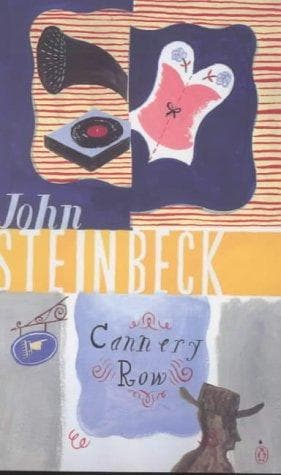
Book details and cover from Google Books.
Ready to read Cannery Row?
Get your copy on Amazon, or listen to it on Audible. We earn a commission if you buy through these links.