
We earn a commission if you buy through these links. Learn more
Burial Rites
by Hannah Kent
Guide by the Books of the Day editors · Updated · How we write our guides
A hard, humane novel of 1820s Iceland, built on a real execution and told through many voices, that makes waiting for death feel unbearably immediate.
What Creators Say About Burial Rites
2 creators reviewed Burial Rites on YouTube between 2014 and 2023, with 9K views between them. Their opinions are their own; we picked these reviews, we didn't write them.
What It's About
Burial Rites is a novel set in northern Iceland in 1829, during the months before a woman named Agnes Magnúsdóttir is executed for her part in a killing at a remote farm. Hannah Kent builds the story on a real case and the last execution in Iceland, but the book is less interested in courtroom suspense than in what happens when a condemned person must wait, and what a community does with someone it has already decided to be rid of. Agnes is sent to live under the roof of a farm family while she awaits her death, and the book follows how those people, and Agnes herself, slowly change.
The structure is the most distinctive thing about it. Kent moves among several narrators, including Agnes, members of the household, and the young priest assigned to prepare her for death, so the story arrives in layers rather than along a single line. The prose is close and physical, with a lot of attention to turf houses, weather, livestock, and the labor of keeping a household alive through a long winter. Icelandic words and customs appear without much glossing, which can feel immersive or slightly effortful depending on your patience.
Reading it is an emotionally heavy experience, quiet rather than gripping in the thriller sense. Much of the pull comes from the question of who Agnes really is, and from watching prejudice, faith, and pity pull against one another. Expect a slow build and a book that stays with you more than it surprises you.
Read this if you…
- want historical fiction grounded in a real case and rendered with unusual sensory detail
- like novels told through several narrators whose accounts do not fully agree
- can handle a bleak, slow book in exchange for emotional depth
Skip it if you…
- want a plot-driven mystery with a clear answer about what really happened
- need fast pacing or an uplifting arc to enjoy a novel
Key Ideas
- 1
Judgment of an outsider
The farm household forms opinions about Agnes before they know her, and the novel is sharp about how fear, gossip, and class shape those judgments. Her status as a disgraced, unwanted person in a tight-knit place drives much of the tension, and the book asks what a community owes someone it has already condemned.
- 2
Waiting as a form of punishment
The stretch between sentence and execution is the book's real subject. Enforced closeness with strangers, the slow passage of seasons, and the knowledge of an approaching date turn ordinary routines into something unbearable. Kent uses this long wait to explore how people live with an ending they cannot change.
- 3
Faith under pressure
The young priest's duty is to bring a condemned woman to God before she dies, but his own doubts and the bleakness around him make that task harder than doctrine suggests. The novel treats religion less as a tidy source of comfort than as something people reach for, strain against, and sometimes fail to find.
- 4
Many voices, one unreliable picture
Rotating narrators give different versions of Agnes and of the events around her, and no single account is fully trustworthy. This forces the reader to assemble the story and weigh motives, which rewards attention but can feel scattered if you want one steady point of view.
Limitations
Many readers find the pacing slow, especially in the middle, where the rotating narrators can circle the same ground. The book is consistently bleak, and its emotional register rarely lifts. Some readers want more of the historical and legal background than the novel provides, since it prefers atmosphere and inner life to explanation. Kent's Icelandic setting is drawn from research rather than lived experience, and readers with specific knowledge of Icelandic history may find some details more impressionistic than they would like.
Questions Readers Ask
- Is Burial Rites based on a true story?
- Yes, loosely. Agnes Magnúsdóttir was a real woman executed in Iceland in 1830 for her role in a killing the previous year. Kent draws on the historical case and its records, but the inner life of Agnes and the people around her is imagined. The novel is best read as a fictional reconstruction rather than a factual account.
- Do I need to know Icelandic history to enjoy it?
- No. The novel gives enough context through its characters and daily life to follow the story without prior knowledge. Some readers find the unfamiliar names and customs a little demanding at first, but the emotional situation is clear. A short background read beforehand can add texture, though it is not required.
- Published
- 2013
- ISBN
- 9780316243926
- Difficulty
- intermediate
- Category
- Historical Fiction
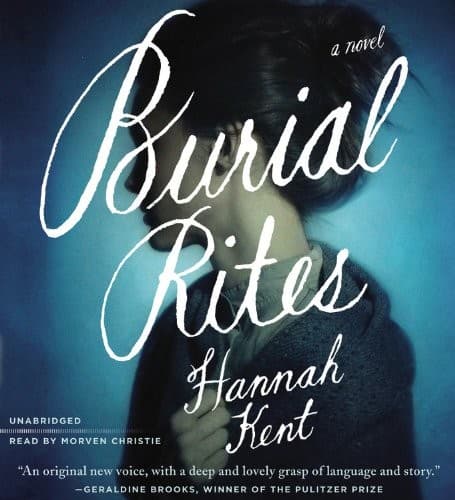
Book details and cover from Google Books.
Ready to read Burial Rites?
Get your copy on Amazon, or listen to it on Audible. We earn a commission if you buy through these links.