
We earn a commission if you buy through these links. Learn more
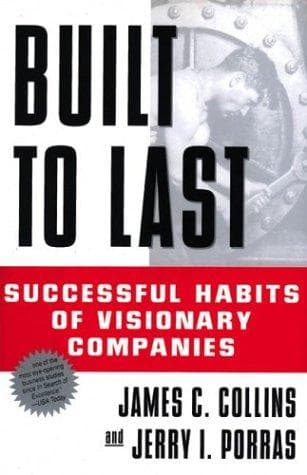
Built to Last
by Collins, James C., Jim Collins
Guide by the Books of the Day editors · Updated · How we write our guides
A clear, evidence-based look at what helps great companies endure, built on paired comparisons that show what the long-term winners did differently from their rivals.
What Creators Say About Built to Last
2 creators reviewed Built to Last on YouTube between 2020 and 2021, with 35.8K views between them. Their opinions are their own; we picked these reviews, we didn't write them.
What It's About
Built to Last is a business book about why some companies stay strong for decades while their rivals fade. Jim Collins and Jerry Porras set out to find what separates long-lived, highly regarded companies from ordinary ones in the same industries. They picked well-known firms that led their fields for many years, then paired each with a comparison company that started in a similar setting but never reached the same level. The comparisons are the heart of the method: the authors look for what the winners did differently rather than simply listing their traits.
The writing is structured like a research report, with frameworks, comparisons, and short sections that each make one argument. It is more analytical than inspirational, though it has a clear optimistic streak. The company stories illustrate the points, so you get a steady stream of examples from familiar brands, and the historical detail does most of the persuasive work.
Reading it feels like sitting in on a long seminar where the presenter keeps asking what leaders actually did at key moments. Some ideas are memorable and easy to apply, while others are more suggestive than proven. Expect a book that rewards note-taking and questioning, not one you finish with a neat checklist.
Read this if you…
- want a structured, evidence-based look at what separates lasting companies from average ones
- help shape strategy or culture in an established organization and want useful frameworks
- prefer history and comparison to motivational advice
Skip it if you…
- want a quick, practical playbook you can apply on Monday
- need the most current data, since the companies and performance figures date from the early 1990s
Key Ideas
- 1
Preserve the core, stimulate progress
Visionary companies hold a stable set of core values and a sense of purpose while changing almost everything else, including strategies, practices, and business lines. The authors argue the common mistake is treating methods as sacred and the core as negotiable, when it should be the other way around.
- 2
Core values and purpose as a foundation
The authors split core ideology into core values, the few beliefs a company holds regardless of profit, and purpose, the reason it exists beyond making money. They stress that these must be genuinely held and acted on, not just written on a wall. A values statement nobody lives by, they suggest, does nothing.
- 3
Bold long-term goals to drive momentum
Alongside the core, these companies set bold, long-term goals that stretch the organization, the idea behind the big hairy audacious goal. The goals create momentum and a sense of challenge, and the historical cases show how they pushed companies toward projects that looked risky at the time.
- 4
Experiment widely and keep what works
Rather than planning every move, these companies tended to try many things, launch numerous initiatives, and keep the ones that succeeded. The authors argue this trial-and-keep process often mattered more than a brilliant founder or a perfect initial strategy.
Limitations
The choice of companies is the book's most debated feature. They were selected partly by reputation and long track record, which risks building conclusions from winners and then reading success back into their habits. Performance was measured over a period ending in the early 1990s, and several of the visionary companies have since faced serious setbacks, which some critics say undercuts the formula. Collins's later work drew similar criticism about how cases were chosen.
Questions Readers Ask
- Is Built to Last still relevant today?
- The core questions about purpose, values, and experimentation are still widely discussed, but the company data is dated. Read it for the frameworks and the questions it raises, and check the current record of any company before treating it as a model. Think of its examples as historical case studies rather than current evidence.
- How does it compare to Good to Great?
- Good to Great, also by Collins, asks how ordinary companies became great, while Built to Last looks at companies that were already exceptional for a long time. Built to Last focuses more on culture and enduring identity, while Good to Great leans toward leadership and disciplined execution. Many readers start with one and then read the other.
- Published
- 1994
- ISBN
- 9780060516406
- Difficulty
- beginner
- Category
- Business
Book details and cover from Google Books.
Ready to read Built to Last?
Get your copy on Amazon, or listen to it on Audible. We earn a commission if you buy through these links.