
We earn a commission if you buy through these links. Learn more
Bright lights, big city
A razor-sharp, second-person portrait of a young Manhattan fact-checker unravelling through nightlife, drugs, and grief, and a defining novel of 1980s excess.
What It's About
Bright Lights, Big City is a short novel from 1984 that follows a young man working as a fact-checker at a glossy magazine in New York. He wants to be a writer, he spends most nights out in clubs, and he uses cocaine more than he admits. Its most striking choice is point of view: the story is told in the second person, so "you" are the one drinking, rationalizing, and drifting.
The prose is clipped, witty, and rhythmic, built from short sentences and lists of details about restaurants, music, and clothes. McInerney lets the comedy and the glamour carry the early pages, then lets the emptiness creep in. The result is a book that reads quickly but lingers, with the sense that the narrator's wit is partly a way of not looking at what is wrong.
Reading it feels like being pulled along on a long, restless night. The plot is loose and episodic, driven more by mood and character than by a conventional arc, so readers who want tight structure may feel adrift. Expect a book about one particular moment in Manhattan, written with a sharp eye for its surfaces and a quieter ache underneath.
Read this if you…
- want a short, stylish novel about urban excess and self-deception
- enjoy voice-driven fiction where the style does much of the work
- are curious about the 1980s New York literary scene and its much-discussed fiction
Skip it if you…
- want a plot with clear stakes and steady forward momentum
- find drug-fueled nightlife tiresome and hard to sit through
Key Ideas
- 1
Second person as both trap and mirror
Addressing the narrator as "you" pulls the reader into his choices and makes it hard to stand outside them. The device creates intimacy and complicity, and it also shows how a person can narrate his own life while refusing to fully own it. Much of the book's tension comes from that gap between what the voice says and what the reader can see.
- 2
The glamour and hollowness of 1980s Manhattan
The city here is a place of status, fashion, and late-night appetite, where people measure themselves by what they wear, where they eat, and who they know. McInerney treats this world with both fascination and distaste. The surfaces are vivid, but the book keeps asking what they are worth once the party ends.
- 3
Ambition colliding with ordinary work
The narrator's job checking facts for a magazine sits uneasily beside his dream of writing something important. The book is sharp about the distance between wanting to create and the daily routine of processing other people's words. That tension gives the story a grounded counterweight to its nightlife scenes.
- 4
Grief and the urge to outrun it
Loss runs beneath the bright surface of the novel, and the narrator's constant movement reads partly as an attempt to avoid feeling it. The book does not offer neat explanations. Instead it shows how someone can keep busy, keep joking, and keep going out while something important goes unaddressed.
Limitations
The second-person device can feel mannered, and some readers find the constant "you" wearing thin over a full book. The supporting characters are sketched mostly through the narrator's self-absorbed view, so they can feel thin. Women in particular are often defined by appearance or by their relationship to him. The book is very much of its era, with brand names, club culture, and consumption that date it. Some critics also find the narrator's self-awareness more of a pose than a real reckoning.
Questions Readers Ask
- Is Bright Lights, Big City still worth reading today?
- Yes, especially if you want a compact novel about ambition, addiction, and the pressure of living in a fast city. Some references feel dated, and the excess can seem familiar to some readers, but the voice and the emotional undercurrent still hold up. It works well as both a period piece and a character study.
- How does it compare to Less Than Zero?
- Both are 1980s novels about affluent young people drifting through excess. Ellis's Less Than Zero is colder and more detached, while McInerney's book is warmer, funnier, and more focused on the narrator's inner conflict. If you liked the mood of one, the other is a natural next read, but McInerney gives you more of a personal struggle to follow.
- Published
- 1984
- ISBN
- 9780747512493
- Difficulty
- beginner
- Category
- Fiction
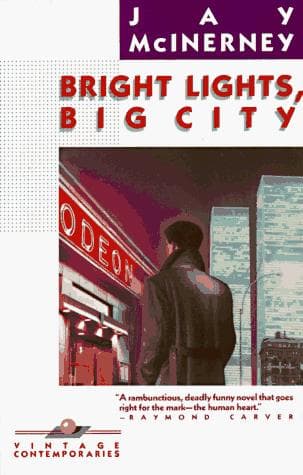
Book details and cover from Google Books.
Ready to read Bright lights, big city?
Get your copy on Amazon, or listen to it on Audible. We earn a commission if you buy through these links.