
We earn a commission if you buy through these links. Learn more
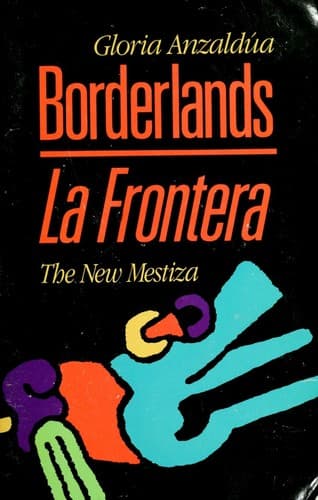
Borderlands/La Frontera
Guide by the Books of the Day editors · Updated · How we write our guides
A bilingual, genre-blending book that reshaped how scholars and readers think about identity, language, and living between cultures, written with unusual force and intimacy.
What Creators Say About Borderlands/La Frontera
2 creators reviewed Borderlands/La Frontera on YouTube between 2015 and 2020, with 39.8K views between them. Their opinions are their own; we picked these reviews, we didn't write them.
What It's About
Borderlands/La Frontera is a hybrid of memoir, cultural history, poetry, and theory by Gloria Anzaldúa, a Chicana writer raised along the Texas-Mexico border. It moves between essay and verse and between English and Spanish, with some passages in Nahuatl and regional dialects left without translation. The book is less a chronological history than a set of linked meditations on land, language, migration, and identity.
The reading experience is dense and sometimes disorienting on purpose. Anzaldúa's sentences often break the rules of standard academic prose, and her arguments circle back, layering personal stories over historical episodes such as the Spanish conquest and violence along the Texas frontier. Readers who expect a neat thesis developed step by step may find it frustrating, but those who slow down often find it rewarding.
Expect to feel uncomfortable at times, especially when the book confronts religion, sexuality, and conflict within communities. It is an invitation to think about being between cultures rather than fully inside one, and it rewards rereading.
Read this if you…
- are curious about identity, language, and belonging in the Americas
- want a challenging, personal text that blends theory with lived experience
- are interested in feminist, queer, or postcolonial thinking and want a foundational source
Skip it if you…
- need a clear, linear history of the US-Mexico border
- want a fast read with a tidy argument you can summarize in one sentence
Key Ideas
- 1
The borderlands as a lived psychological state
Anzaldúa treats the border as more than a line on a map. She describes it as a wound, a daily condition, and a psychic space where people who belong to several worlds at once must make their own sense of who they are. This reframing shifts the question from where the border is to what it does to the people caught inside it.
- 2
Mestiza consciousness as a way of knowing
The book proposes a mixed, hybrid way of thinking that can hold contradictory perspectives without forcing a choice between them. Anzaldúa presents this tolerance for ambiguity as a skill born from marginal experience, one that can pull apart rigid categories of race, gender, and nation and create something new from the pieces.
- 3
Language as identity and resistance
Anzaldúa writes about shame and pressure around speaking Spanish, English, and the blended dialect of the border. Her code-switching is both a formal choice and a political statement. Readers who speak only one language will feel some of the exclusion she describes, which is part of the point.
- 4
Reclaiming Indigenous myth and history
Drawing on Mexica and other Indigenous traditions, Anzaldúa looks for older stories and female figures to reframe the identity of mestiza women who were shaped by conquest and the Catholic church. The mythic material is central to her argument, though readers will want to weigh it alongside historical scholarship.
Limitations
The book is famously dense, and its shifts between languages, genres, and registers can be hard to follow without outside help. Some Spanish and Nahuatl passages are not translated, which is intentional but can leave readers feeling shut out. Its focus on Chicana and Tejano experience does not automatically map onto other migrant or diaspora communities. Some of its mythic and pan-Indigenous claims are contested by historians and anthropologists, and the book's language around identity has been refined by later scholarship.
Questions Readers Ask
- Is Borderlands/La Frontera still relevant today?
- Yes. Its ideas about hybrid identity, code-switching, and living between nations are widely taught in ethnic studies, gender studies, and literature courses. Some of its terminology has been updated by later writers, but the book remains a reference point for discussions of border life, migration, and identity.
- Is this book a history of the US-Mexico border?
- Not in the usual sense. Although it includes historical material, it is closer to a memoir and cultural essay. If you want a chronological account of border politics, treatments by historians will serve you better. Anzaldúa is more interested in how history is lived and felt in the body and language.
- Published
- 1987
- ISBN
- 9781879960855
- Difficulty
- advanced
- Category
- History
Book details and cover from Google Books.
Ready to read Borderlands/La Frontera?
Get your copy on Amazon, or listen to it on Audible. We earn a commission if you buy through these links.