
We earn a commission if you buy through these links. Learn more
Bluets
Guide by the Books of the Day editors · Updated · How we write our guides
Bluets turns a single color and a painful breakup into a slim, restless meditation on grief, desire, and language, written in numbered fragments that reward slow reading.
What Creators Say About Bluets
2 creators reviewed Bluets on YouTube between 2019 and 2024, with 11.7K views between them. Their opinions are their own; we picked these reviews, we didn't write them.
What It's About
Bluets is a short book built from numbered fragments that Maggie Nelson wrote after a painful breakup. The sections range from a single sentence to a few paragraphs, and they circle one subject: the color blue. Nelson moves between personal confession, philosophy, art history, and close observation, often returning to an earlier thought to turn it slightly. The result reads less like a memoir with a clear argument than like a mind thinking on paper, testing whether an obsession can be held still long enough to examine it.
The book leans on a few touchstones. Ludwig Wittgenstein's puzzling remarks about color act as a kind of companion, and Roland Barthes's writing on love hovers nearby. Blue becomes a lens for everything from the history of pigment to the sky, the sea, and the specific ache of wanting someone who is gone. Nelson is funny and exact, and she is willing to undercut her own sentimentality when it starts to show.
Reading it is an experience of rhythm more than plot. You can finish it in one sitting, but it rewards slowing down, and you will likely stop to reread individual fragments. It asks you to accept a loose structure and a voice that is intimate without being a tell-all. Expect to piece together a story from what is implied rather than a continuous narrative.
Read this if you…
- are drawn to lyric essays and prose poems that blur memoir and philosophy
- want a short, intense book about loss that avoids sentimental storytelling
- enjoy thinking about how art, color, and language shape personal feeling
Skip it if you…
- want a conventional narrative with a clear beginning, middle, and end
- are looking for a practical guide or a book that delivers firm conclusions
Key Ideas
- 1
Writing as a way of holding an obsession
Nelson treats a single fixation as a subject worth sustained attention. Rather than trying to escape the feeling of loss, she collects it, examines it from many angles, and lets the repetition itself become the form. The book shows how writing can give shape to something that otherwise just churns.
- 2
Color as something that resists description
Much of the book asks why blue is so hard to talk about. Drawing on Wittgenstein's notes and on the history of pigments and art, Nelson explores how a color can feel vivid and personal while remaining stubbornly difficult to pin down in words. This question quietly mirrors the difficulty of describing emotional loss.
- 3
Grief, desire, and the limits of language
The breakup is never laid out as a neat story. Instead, Nelson circles around longing and absence, questioning whether language can ever capture what she feels. The book's honesty lies in its admissions of failure, where words fall short and the writer has to try again from another direction.
- 4
Form that mirrors a restless mind
The numbered fragments jump between thoughts, digress, contradict themselves, and sometimes correct themselves. This structure makes the reading feel like overhearing someone think. It is part of the book's appeal, but it also means the experience depends heavily on whether you enjoy that kind of open-ended movement.
Limitations
Some readers find the fragments repetitive, and the intensity of the mood can feel self-absorbed if you are not in the mood for it. The book is deliberately partial: it does not offer a full account of the relationship or a resolution to the grief, and its references to art and philosophy assume some familiarity that many readers will not have. Because it is so tied to one moment of one writer's life, it can feel slight to readers looking for broader social or historical argument.
Questions Readers Ask
- Is Bluets a memoir?
- It draws on Maggie Nelson's own experience of a breakup, but it is better described as a lyric essay or prose poem. The personal material is presented in fragments and mixed with philosophy, art history, and reflection, so it does not follow the chronological structure most memoirs use.
- Do I need to know Wittgenstein to enjoy it?
- No. Nelson's engagement with Wittgenstein's remarks on color is accessible on its own, and the book explains its ideas in plain terms. Some readers will enjoy tracking the references further, but the book works fine without that background.
- Published
- 2009
- ISBN
- 9781473548039
- Difficulty
- intermediate
- Category
- Blue
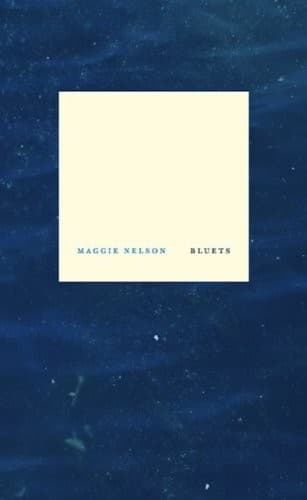
Book details and cover from Google Books.
Ready to read Bluets?
Get your copy on Amazon, or listen to it on Audible. We earn a commission if you buy through these links.