
We earn a commission if you buy through these links. Learn more
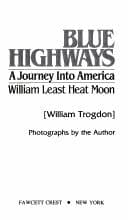
Blue Highways
A slow, observant road trip through small-town America that trades interstates for back roads and turns each stop into a portrait of ordinary people and fading places.
What It's About
Blue Highways, published in 1982, is a travel book about a man who, after a painful personal upheaval, sets out to see the United States by its secondary roads. The title comes from the blue lines on the road atlas he used, which marked minor routes rather than the red main highways. Despite its listing here under tech, this is a travel book. The author's van, which he calls Ghost Dancing, carries him through a loop that favors small towns, diners, feed stores, and places that seem to have been passed over.
The book is less about miles than about conversation. Heat-Moon sits down with waitresses, farmers, shopkeepers, and drifters, and lets their talk and their histories carry much of the weight. Between encounters he writes about the land, the weather, dying towns, and the older America that the interstates bypassed. His prose is dense and layered with historical digression and careful description, and it rewards slow reading far more than skimming.
Reading it feels like sitting in a corner booth for a long afternoon. It is meditative, sometimes melancholy, and often funny, and it asks you to notice what most travelers would drive past. Don't expect a plot or a destination. The value is in the attention.
Read this if you…
- enjoy slow, character-driven travel writing with little conventional plot
- are curious about small-town and rural America and how it has changed
- like essayistic prose that digresses, lingers, and rewards close attention
Skip it if you…
- want a fast read, a clear itinerary, or a lot of jokes per page
- need current information about these towns, businesses, or the road network
Key Ideas
- 1
Attention to overlooked places
Heat-Moon deliberately chooses the minor roads and the small towns that the interstates pass by. The book argues that these places hold more of the country's character than its busy corridors do. Reading it, you start to see a map of America as a set of stories rather than a set of routes between cities.
- 2
America told through conversation
Much of the book's texture comes from the people he meets and the talk that unfolds over meals and counters. He treats these exchanges as serious sources of local history and feeling. The result is a portrait of the country built from individual voices rather than statistics or sweeping claims.
- 3
Travel as a way of working through loss
The trip is driven by personal upheaval, and the book never fully separates the road from the author's inner life. Heat-Moon's reflections drift between observation and private reckoning. Readers who appreciate travel writing that is also a quiet memoir will find this the most affecting thread.
- 4
History written into the landscape
Heat-Moon repeatedly steps back to explain how a town, a river, or a region came to be what it is. These digressions connect the present-day scenery to older economies, migrations, and losses. They give the trip a sense of depth that a simple itinerary would never provide.
Limitations
The trip took place in the late 1970s, so the towns, diners, and businesses he visits have mostly changed or disappeared, and the book reads partly as a record of a vanished era. Critics also point out that the people he meets, and the way he presents them, are seen through one traveler's lens and can feel selective. The prose is dense and digressive, and some readers find the long historical detours and self-absorbed passages tiresome. It is not a guide to anything practical.
Questions Readers Ask
- Is Blue Highways still worth reading today?
- Yes, especially if you care about rural America or good travel writing. The specific places have changed a great deal since the late 1970s, so treat it as a portrait of a particular moment. Its attention to people and place still feels fresh, and many readers return to it precisely because it does not chase trends.
- How does it compare to Bill Bryson's The Lost Continent?
- Bryson's book is faster, funnier, and more openly comic, and it is easier to pick up in short bursts. Blue Highways is quieter, more historical, and more reflective. If you want laughs on a train, choose Bryson. If you want a slower meditation on place and loss, Heat-Moon is the better fit.
- Published
- 1981
- ISBN
- 9780613125260
- Difficulty
- intermediate
- Category
- Tech
Book details and cover from Google Books.
Ready to read Blue Highways?
Get your copy on Amazon, or listen to it on Audible. We earn a commission if you buy through these links.