
We earn a commission if you buy through these links. Learn more
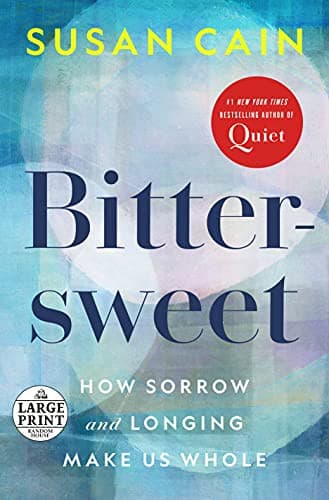
Bittersweet
by Susan Cain
Guide by the Books of the Day editors · Updated · How we write our guides
Susan Cain makes a humane case that sadness, longing, and wistfulness are sources of depth and connection, not problems to be fixed, and that a culture obsessed with positivity loses something by ignoring them.
What Creators Say About Bittersweet
2 creators reviewed Bittersweet on YouTube in 2022, with 76.2K views between them. Their opinions are their own; we picked these reviews, we didn't write them.
What It's About
Bittersweet is Susan Cain's case that the modern habit of chasing constant good feeling leaves something important out. Cain argues that sorrow, longing, and wistfulness are not defects to be managed away but sources of depth, empathy, creativity, and connection. She makes the argument as a sustained essay rather than a self-help manual, moving between research, cultural history, and personal reflection.
The tone is reflective and unhurried. Cain draws on psychology, philosophy, religious and cultural traditions from several countries, and the arts, and she is willing to sit with ideas that do not resolve neatly. Readers expecting a step-by-step plan for feeling better will be disappointed. What they get is a prolonged argument for reframing feelings they already have, and the experience is closer to a long, thoughtful conversation than to a textbook.
Its emotional register is gentle but not sugary. Cain is candid that she is not offering a cure, and the chapters often read as an invitation to notice what has been dismissed as unproductive. Readers who already value introspection will find plenty to underline, while skeptics of the mindset genre may find the argument broader and more humane than they expected.
Read this if you…
- are drawn to melancholy or quiet reflection and want it taken seriously
- feel guilty for not being upbeat all the time
- enjoyed Cain's earlier work on introversion and want her wider lens
Skip it if you…
- want a practical plan for lifting your mood or managing depression
- prefer tightly structured, evidence-dense science books with clear takeaways
Key Ideas
- 1
Positivity has become a cultural demand
Cain argues that workplaces, schools, and social media quietly treat constant upbeat feeling as the proper state of a person. When sadness is treated as a malfunction, people hide it, feel ashamed of it, and lose access to what it can teach them. She frames this as a cultural story worth questioning rather than a simple personal failing.
- 2
Longing as a source of meaning
Cain looks at the pull of wanting something not yet had, and the ache of distance from others or from an ideal. She suggests this unsatisfied feeling motivates art, love, and moral seriousness. Longing becomes less an unpleasant gap to close and more a signal of what a person cares about most.
- 3
Bittersweetness as a way of seeing
Many of the most moving experiences combine joy with loss, such as watching a child grow up or revisiting a place that has changed. Cain makes the case that holding both feelings at once is not confusion but a mature emotional capacity. It deepens attachment rather than weakening it.
- 4
Traditions that already honor sorrow
Cain points to cultural and spiritual traditions that make room for grief, impermanence, and melancholy, and argues that these resources have been underused in modern Western life. The payoff is a fuller vocabulary for feelings that everyday self-improvement language cannot describe.
Limitations
Critics sometimes find the book's argument broad and its boundaries loose, moving across research, history, and personal essay in ways that can feel more evocative than rigorous. Readers wanting clinical guidance on depression, grief therapy, or treatment will not find it here, and the book is no substitute for professional help. Some may also feel the case against positivity is aimed at a culture more nuanced than the argument suggests.
Questions Readers Ask
- Is Bittersweet a self-help book?
- Not in the usual sense. It has a reflective, self-help-adjacent warmth, but it is primarily an argument about culture and emotion. You will leave with a new way of looking at sadness rather than a checklist of techniques. If you need concrete coping strategies, pair it with a more practical guide or with professional support.
- How does it compare to Quiet?
- Quiet focused on introversion and why quieter temperaments are undervalued in a fast, extroverted culture. Bittersweet widens the lens to emotional life generally, especially sorrow and longing. Readers who liked Quiet's humane, research-informed tone will likely find similar warmth here, though the subject feels more personal and less tied to temperament and workplaces.
- Published
- 2022
- ISBN
- 9780241300688
- Difficulty
- intermediate
Book details and cover from Google Books.
Ready to read Bittersweet?
Get your copy on Amazon, or listen to it on Audible. We earn a commission if you buy through these links.