
We earn a commission if you buy through these links. Learn more
Better Than Before
Guide by the Books of the Day editors · Updated · How we write our guides
A practical guide to building and keeping good habits, starting from the idea that the right strategy depends on who you are, so you should pick tools that fit your temperament.
What Creators Say About Better Than Before
2 creators reviewed Better Than Before on YouTube between 2016 and 2020, with 25.5K views between them. Their opinions are their own; we picked these reviews, we didn't write them.
What It's About
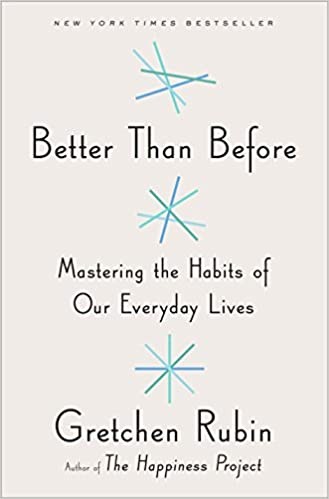
Better Than Before is Gretchen Rubin's book on habit change, and she comes to it from The Happiness Project, her earlier look at everyday contentment. Rather than asking whether habits matter, the book asks how a person actually gets one to stick. Rubin treats habit formation as a practical problem with many workable solutions, and she collects a large set of strategies, from tracking what you do to arranging your surroundings so the desired action becomes the easy one.
The book's central move is her Four Tendencies framework, which sorts people by how they respond to inner and outer expectations. Upholders meet both, Questioners meet only inner ones, Obligers meet outer ones, and Rebels resist both. The point is that a strategy that works for one type can backfire for another, so readers are encouraged to work out which tools suit them rather than copying a generic routine. Rubin also singles out foundational habits, such as sleep, movement, and clearing clutter, arguing that they support nearly every other goal.
Reading it feels like a long conversation with a curious, organized friend who has kept notes on her own experiments. The tone is upbeat and anecdote-driven, with lists, charts, and plenty of examples from her life and from readers. It is easy to dip into, and it rewards readers who want to test ideas on themselves rather than absorb a single method.
Read this if you…
- want practical tools for a habit you have already failed to keep more than once
- prefer concrete checklists and examples over pep talks
- are curious why the same advice works for some people and not for others
Skip it if you…
- want a rigorous, research-driven account, since the book leans on personal experience and informal observation
- already have a habit system that works well and want something new or deeper
Key Ideas
- 1
Choose strategies by temperament, not by trend
The Four Tendencies explain why one person thrives on a public accountability partner while another rebels against it. Obligers respond well to outside deadlines, Questioners want a reason that holds up, and Rebels need the habit to feel like their own free choice. The practical lesson is to diagnose your own tendency before adopting someone else's routine.
- 2
Foundation habits support everything else
Rubin argues that a small set of basic habits, including sleep, physical activity, eating, and managing clutter, make other changes easier. When these are shaky, willpower for anything else tends to run out. Treating them as a base rather than as separate goals changes how a reader prioritizes their efforts.
- 3
Monitoring makes behavior visible
Tracking what you actually do is one of the book's most useful and least glamorous tools. Writing down an action creates a moment of awareness that often changes the next choice. Rubin presents monitoring as a simple lever that many people underuse, because it asks very little and reveals a great deal.
- 4
Make the right action the easy action
Much of habit change, in Rubin's view, comes down to reducing friction. That means arranging your environment, scheduling the behavior, and removing distractions so the good choice takes less effort than the bad one. The idea is less about discipline and more about designing the path of least resistance.
Limitations
Critics point out that the book's evidence is mostly anecdotal and self-reported, drawn from Rubin's own experiments and reader stories rather than controlled studies. The Four Tendencies framework is useful but can feel tidier than real people are, and some readers feel it sorts them into boxes too quickly. The book also focuses on personal habit change within fairly comfortable lives, so it says little about structural barriers such as poverty, disability, or unstable work schedules. Some readers also find the cheerful tone repetitive over a full read.
Questions Readers Ask
- Do I need to read The Four Tendencies first?
- No. Better Than Before explains the framework and applies it to habits, so it stands on its own. Rubin's later book, The Four Tendencies, goes deeper into the typology and how it plays out at work, at home, and in relationships. If you only want the habit strategies, this book is enough, and the other one is a useful follow-up if the framework interests you.
- How does it compare to Atomic Habits?
- Atomic Habits by James Clear is more focused, built around a single system of small changes and identity. Better Than Before is looser and works more like a menu of strategies that you choose from. If you want one clear method, Clear's book is the better fit. If you want to understand why different methods suit different people, Rubin's approach is more flexible.
- Is the advice still relevant?
- Mostly yes. The core ideas about environment, tracking, and accountability are not tied to any particular era. Some examples involving specific apps or gadgets may feel dated, but the habit of testing strategies against your own temperament still holds up well for most readers.
- Published
- 1758
- ISBN
- 9781444769029
- Difficulty
- beginner
- Category
- Psychology
Book details and cover from Google Books.
Ready to read Better Than Before?
Get your copy on Amazon, or listen to it on Audible. We earn a commission if you buy through these links.