
We earn a commission if you buy through these links. Learn more
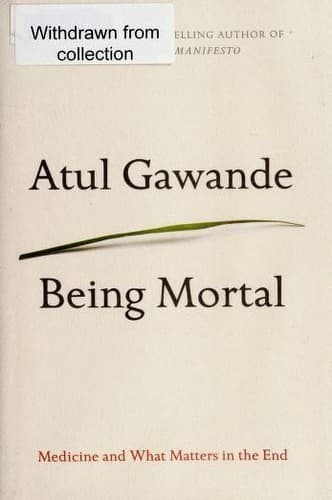
Being Mortal
by Atul Gawande
Guide by the Books of the Day editors · Updated · How we write our guides
Gawande, a practicing surgeon, asks what medicine should do when it can no longer fix a patient, and offers humane, practical answers for aging, frailty, and dying.
What Creators Say About Being Mortal
2 creators reviewed Being Mortal on YouTube in 2015, with 114.3K views between them. Their opinions are their own; we picked these reviews, we didn't write them.
What It's About
Being Mortal is Atul Gawande's book about aging, serious illness, and dying, written by a surgeon who has watched how medicine handles the end of life. Despite the Tech category on this site, it is less about gadgets than about the gap between what medicine is good at and what people need once they can no longer be fixed.
Gawande moves between clinical stories, the history of how nursing homes and hospitals developed, and his own reporting, including his experience with family illness. He does not write as an expert issuing rules. He examines what patients, doctors, and care facilities have tried, including approaches that worked and ones that failed. The tone is measured and humane, with more questions than sermons.
Reading it feels like sitting with a thoughtful clinician who is willing to admit his profession's failures. The book is short, clearly organized, and easy to finish in a few sittings, though some passages are emotionally heavy. It works best for anyone thinking about a parent's care, their own future, or the trade-offs between safety and a life worth living.
Read this if you…
- are caring for an aging parent or thinking ahead about your own later years
- want a clear-eyed look at how medicine and care facilities actually work
- prefer humane, specific storytelling over abstract philosophy about death
Skip it if you…
- want a technical or policy-heavy analysis of healthcare economics or reform
- find detailed accounts of illness and dying too painful right now
Key Ideas
- 1
Medicine is built to fix, not to ask
Gawande argues that training and institutions reward treating disease and prolonging life, which often leaves little room for asking what a patient actually hopes for. When the goal of cure disappears, the usual tools can end up serving the system more than the person.
- 2
Frailty and the cost of safety
Older people often face a choice between safety and independence. The book shows how protective instincts, from families and staff alike, can strip away everyday control and dignity, and why that trade-off deserves more open discussion than it usually gets.
- 3
Small changes can restore control
Several care homes described in the book experiment with more autonomy, pets, plants, and flexible routines. Gawande uses these examples to suggest that residents' daily choices matter as much as clinical measures, and that facilities can be rethought without enormous cost.
- 4
Start the conversation about endings early
A recurring theme is that people rarely get asked what matters most to them before a crisis. Gawande makes the case for talking about goals, fears, and acceptable trade-offs well before decisions become urgent, and for doctors being trained to lead those talks.
- 5
Hospice as a different kind of goal
Hospice and palliative care are presented not as giving up but as a shift in purpose toward comfort, time, and relationships. The book explains why this approach can serve patients better than aggressive treatment at the end, while acknowledging that it is not always easy to choose.
Limitations
The book draws heavily on American healthcare, so its examples and policy suggestions may not map neatly onto other systems. Some readers feel the care homes it praises are presented too favorably, and the evidence is largely anecdotal and selected by the author. It does not go deep into the legal or ethical debates around assisted dying, and its focus on the decision-making of older patients means younger readers facing terminal illness may find it less directly relevant.
Questions Readers Ask
- Is Being Mortal really a tech book?
- No. Although this site lists it under Tech, the book is about medicine, aging, nursing homes, and end-of-life care. Technology appears only as one part of medical practice, and the main focus is on human choices and priorities rather than devices or software.
- Is Being Mortal still relevant?
- Yes. Its core questions about what people want from late life and how care should respond to frailty have not gone away. Some specifics about facilities and policy have changed since publication, but the central argument about asking what matters remains widely cited and useful.
- How does it compare to When Breath Becomes Air?
- Being Mortal is broader and more analytical, looking at systems of care as well as individual lives. When Breath Becomes Air is a memoir told from one patient's perspective. Readers who want the big picture should start with Gawande, while those who want a single, intimate story may prefer Kalanithi.
- Published
- 2014
- ISBN
- 9781627790550
- Difficulty
- beginner
- Category
- Tech
Book details and cover from Google Books.
Ready to read Being Mortal?
Get your copy on Amazon, or listen to it on Audible. We earn a commission if you buy through these links.