
We earn a commission if you buy through these links. Learn more
Behind the beautiful forevers
Guide by the Books of the Day editors · Updated · How we write our guides
Katherine Boo's close, unsparing reporting from a Mumbai settlement shows how a whole economy depends on people the city rarely sees.
What Creators Say About Behind the beautiful forevers
1 creator reviewed Behind the beautiful forevers on YouTube in 2014, with 731.1K views between them. Their opinions are their own; we picked these reviews, we didn't write them.
What It's About
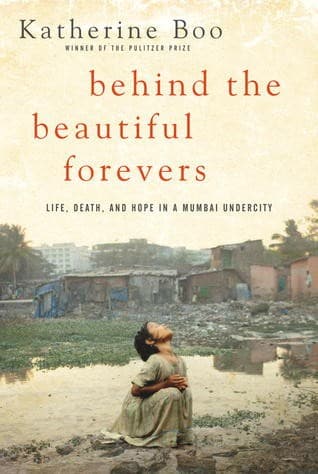
Behind the Beautiful Forevers is narrative nonfiction, not a novel, despite the Fiction category this page was given. Katherine Boo, a longtime journalist, spent several years in Annawadi, a settlement of makeshift housing beside Mumbai's international airport, where families sort and sell recyclable trash and where the city's new wealth is visible from the fence line. The book follows a cluster of residents through a stretch of hope, opportunity, and sudden disaster, focusing on how people make a living, deal with corruption, and turn on one another.
Boo's method is reporting in its purest form: long observation, interviews with residents, officials, and others, and close reading of documents and court records. Scenes are built from what she saw and was told, and she is careful about what she could not know. The prose is spare and clear, and the pacing is that of a well-made novel, which is why a book this detailed reads so quickly.
Reading it is less an education in poverty as a topic than an education in how aspiration, blame, and money work at ground level. You finish with characters you feel you know and a sharper sense of how little separates them from people who consider themselves secure. It is often grim, occasionally funny in its subjects' own wit, and rarely sentimental.
Read this if you…
- want a ground-level look at how a global city's growth touches specific people
- prefer nonfiction that reads with the momentum of a novel
- are interested in urban inequality and how cities absorb the poor
Skip it if you…
- need a clear policy argument or a set of solutions rather than close observation
- find stories of hardship too heavy, since the book is unsparing about what its subjects endure
Key Ideas
- 1
Trash as a economy with its own hierarchy
Sorting garbage is presented as skilled, exhausting, and deeply unequal work. Who owns the sorting yard, who buys from whom, and who bears the debt shows how a informal economy feeds the formal city while staying nearly invisible to it.
- 2
Aspiration as both fuel and trap
Residents pursue education, better housing, and a foothold in the city with real energy. Boo shows that the same hope that drives people forward can also make them vulnerable to bad bargains, false promises, and the expectation that they must prove they deserve help.
- 3
Corruption as part of daily infrastructure
Bribes, police pressure, and dealings with local officials are not dramatic exceptions here but routine costs of staying alive and employed. The book makes clear how corruption works through ordinary relationships rather than through a single villain.
- 4
Competing explanations of poverty and blame
Rich and poor characters each have their own theory of why some people fail and others succeed. Boo lets these theories collide with the evidence in front of her, which forces readers to test their own assumptions about merit, responsibility, and luck.
Limitations
Boo stays mostly out of the frame, which some readers find makes her conclusions harder to pin down. Critics have asked how a foreign reporter's choice of scenes and sources shapes the picture, and whether one settlement over a few years can stand for India's urban poor more broadly. The economic analysis is light compared with dedicated policy writing. The book is also tied to a specific period, and the airport area and city have changed since then.
Questions Readers Ask
- Is Behind the Beautiful Forevers a novel?
- No. Although some catalogs file it under fiction, it is nonfiction. Boo, a journalist, reported from Annawadi over several years, and the characters and events are drawn from that reporting. Its novelistic pacing comes from how the material is structured, not from invention.
- Is the book still relevant today?
- Yes, largely. Its subjects are the informal labor, urban migration, and unequal access to justice that continue to shape cities in India and elsewhere. Some specifics of Annawadi have changed, but the questions the book raises about who benefits from growth and who pays for it remain current.
- Published
- 2011
- ISBN
- 9781846274510
- Difficulty
- intermediate
- Category
- Fiction
Book details and cover from Google Books.
Ready to read Behind the beautiful forevers?
Get your copy on Amazon, or listen to it on Audible. We earn a commission if you buy through these links.