
We earn a commission if you buy through these links. Learn more
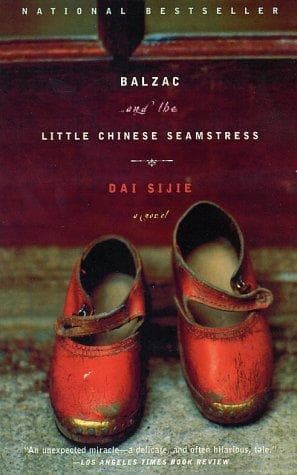
Balzac and the Little Chinese Seamstress
by Dai Sijie
Guide by the Books of the Day editors · Updated · How we write our guides
A short, funny, and quietly moving novel about two city teenagers exiled to a Cultural Revolution village, where a hidden suitcase of forbidden books changes everything for a local seamstress.
What Creators Say About Balzac and the Little Chinese Seamstress
2 creators reviewed Balzac and the Little Chinese Seamstress on YouTube between 2014 and 2022, with 11.1K views between them. Their opinions are their own; we picked these reviews, we didn't write them.
What It's About
Balzac and the Little Chinese Seamstress is a short, warm novel set in 1971, when two teenage boys from urban intellectual families are sent to a remote mountain village in western China for re-education. The narrator and his friend spend their days doing hard labor and hoping for news from home, until they discover a suitcase of forbidden Western novels in the village and begin reading them aloud.
The style is light, wry, and quick. Dai Sijie writes in a plain, fable-like voice with brisk scenes and a narrator who is alternately earnest and self-mocking. Serious subjects such as political persecution, hunger, and the danger of owning the wrong book sit close to comedy, so the reading feels brisk rather than grim. The chapters are short, and the whole book can be finished in an evening or two.
What you get is less a plot to follow than a feeling for how literature can change a person's sense of herself and her world. The book is as much about storytelling as about the Cultural Revolution, and about how a few borrowed pages can open a door that a whole society has tried to shut. Reading it is pleasant, a little bittersweet, and easy to remember.
Read this if you…
- want a short, emotionally resonant novel you can finish in one sitting
- are drawn to stories about how books change individual lives
- enjoy wry, humane narration set against a painful historical period
Skip it if you…
- want a detailed, documentary account of the Cultural Revolution
- need a complex, heavily plotted novel with many twists
Key Ideas
- 1
Books as a way out of a narrow life
The novel's central argument is that reading expands what a person can imagine for herself. The village girl at the center of the story has few options, and the novels show her that other lives, desires, and kinds of freedom exist. Dai Sijie treats this change as real and personal rather than as an abstract lesson about culture.
- 2
Storytelling as both danger and delight
Owning or reading the wrong book is a serious offense in this setting, which gives every reading session a sense of risk. The narrators' pleasure in retelling stories is tied to the threat hanging over them. The tension between joy and fear runs through the whole book and explains why it stays so lively despite its grim backdrop.
- 3
Friendship and rivalry among the outsiders
The two narrators are close, but their friendship is tested by their different ambitions and by the girl who comes between them in a sense. The book looks honestly at how young men act when they are powerless and bored. Their small betrayals and loyalties give the story much of its emotional weight.
- 4
Humor as a response to hardship
The narrator's comic, slightly self-deprecating tone is a deliberate choice. It lets the novel address political brutality without becoming a catalogue of suffering. Readers who want a sober history of the period may find this approach too light, but it is central to what makes the book distinctive.
Limitations
Some readers find the book too slight, with characters sketched quickly and a plot that moves more by episode than by sustained development. The comic tone can feel like it undercuts the seriousness of the political violence it depicts, which is a fair criticism rather than a flaw everyone will notice. The novel is also a single viewpoint, so the wider experience of rural villagers and of the period is shown only through two outsiders. Its gentle, sentimental ending is not to everyone's taste.
Questions Readers Ask
- Is Balzac and the Little Chinese Seamstress a good first novel about the Cultural Revolution?
- Yes, for many readers it is an accessible entry point. The prose is simple, the chapters are short, and the humor makes the hardships easier to approach. It will not give you a complete historical picture, so pairing it with a nonfiction history of the period is a good idea if you want more context.
- Do I need to know Balzac to enjoy the book?
- No. The novel is built so that the reader does not need prior knowledge of Balzac. The books the characters read are part of the story, and the reading experience is about their reactions rather than literary analysis. Readers who know Balzac may enjoy the connections a little more, but it is not required.
- How does it compare to Wild Swans by Jung Chang?
- The two books cover similar territory, but they are very different in tone. Wild Swans is a long, detailed family memoir, while this novel is short, playful, and focused on two young outsiders. Readers who want an intimate, historically dense account will likely prefer Wild Swans, while those who want something light and lyrical may prefer this.
- Published
- 2002
- ISBN
- 9780739301012
- Difficulty
- beginner
Book details and cover from Google Books.
Ready to read Balzac and the Little Chinese Seamstress?
Get your copy on Amazon, or listen to it on Audible. We earn a commission if you buy through these links.