
We earn a commission if you buy through these links. Learn more
Ballet Shoes (Shoes #1)
Guide by the Books of the Day editors · Updated · How we write our guides
A warm, unsentimental 1936 children's classic about three adopted sisters learning to earn their own living through stage training, showing practical work and money matter as much as dreams.
What Creators Say About Ballet Shoes (Shoes #1)
2 creators reviewed Ballet Shoes (Shoes #1) on YouTube between 2023 and 2025, with 2.6K views between them. Their opinions are their own; we picked these reviews, we didn't write them.
What It's About
Ballet Shoes follows Pauline, Petrova and Posy, three girls who arrive in a London household without much certainty about their futures. Their guardian has gone off on an expedition and money is thin, so the question of how the girls will support themselves becomes a practical one. The household is a loose, changing mix of adults and children, and the girls' sense of who they are is shaped as much by the people around them as by any blood ties. Streatfeild keeps the focus on ordinary days: lessons, errands, auditions, and the small humiliations and victories of trying to get work.
The style is brisk and episodic, with a lot of dialogue and a narrator who trusts children to understand money, effort and disappointment. Rather than dwelling on feelings, the book shows characters through what they do. The sisters are distinct people, and the supporting adults are eccentric but rarely cartoonish. Streatfeild's humour is dry and quick, and the warmth comes from competence and loyalty rather than from grand emotional scenes.
Reading it feels like stepping into a comfortable, slightly old-fashioned world of theatres, boarding arrangements and crowded kitchens. It is cosy without being saccharine, and it rewards readers who enjoy watching competence grow. Adults will notice how much attention it pays to the economics of a working family, which makes it more than a book about dancing. Expect period attitudes and a plot that moves by accumulation rather than a single tightening suspense.
Read this if you…
- enjoy stories about young people working hard toward a real, practical goal
- want a cosy, old-fashioned children's classic with a strong sense of place
- are a parent or teacher looking for a book about self-reliance for readers around nine to twelve
Skip it if you…
- need fantasy, magic or fast-paced adventure to stay engaged
- want a modern plot with a central mystery or a strong, continuous through-line
Key Ideas
- 1
Practical work as a path to independence
The sisters are not waiting to be rescued. They look at what they can do and what it will pay, and they treat earning a living as a serious, respectable goal. The book makes the dull mechanics of getting work, such as travelling to auditions, managing small sums and keeping a job, feel important and even exciting. Young readers come away seeing that independence is built from unglamorous daily steps.
- 2
Talent needs discipline and unglamorous effort
Streatfeild is clear that gifts alone do not carry anyone far. Training is repetitive, demanding and often tiring, and the girls have to put in long hours to be good enough for the stage. The book treats hard work as something to respect rather than a punishment, and it shows how confidence grows out of practice rather than arriving as a sudden flash of brilliance.
- 3
Family made by choice rather than blood
The sisters belong to a household that is held together by affection, duty and daily routine rather than by shared ancestry. Loyalty is shown through small acts, such as covering for one another or making room for someone who needs it. This idea of chosen family is one of the book's quieter pleasures and still feels fresh to many readers today.
- 4
Money and class shape every choice
Ballet Shoes is alert to what things cost and who can afford to take risks. Work is not only an expression of ambition but a necessity, and the book is candid about how family finances limit or open up options. Readers interested in how economics frames children's lives will find this one of the most useful threads in the story.
Limitations
The book reflects the attitudes of its 1936 setting. Its picture of race, class and gender is narrow and very English, and some assumptions about who belongs where will feel dated to modern readers. The episodic structure can make the plot feel loose, with events arriving by accumulation rather than building to a single tightening climax. The stage world is shown fondly, so the book does not dig deeply into exploitation or the harder realities of the theatre industry. Readers wanting a sharper, more critical view will need to look elsewhere.
Questions Readers Ask
- Who is Ballet Shoes best suited for?
- It suits confident young readers, roughly nine to twelve, who enjoy family stories and characters who work toward something real. Adults who loved it as children often return to it with pleasure, and it is a good read-aloud for families. Readers who want fast plot twists or magical settings may find it slow, because its appeal lies in character, routine and steady progress.
- Is Ballet Shoes still relevant today?
- Its core themes of independence, perseverance and chosen family still land well. Some of its social attitudes are clearly of their time, so it works best when read with a bit of historical context. Many readers find the practical detail about work and money as interesting now as it was when the book was first published.
- How does it compare to other classic children's books about performing?
- Compared with more romantic stories about theatre, Ballet Shoes is grounded and matter-of-fact. It focuses on the workaday side of training and earning rather than on glamour. Readers who enjoy this practical tone often go on to explore Streatfeild's other books, which share its interest in young people finding their own way.
- Published
- 1609
- ISBN
- 9780808542506
- Difficulty
- beginner
- Category
- Children's Books
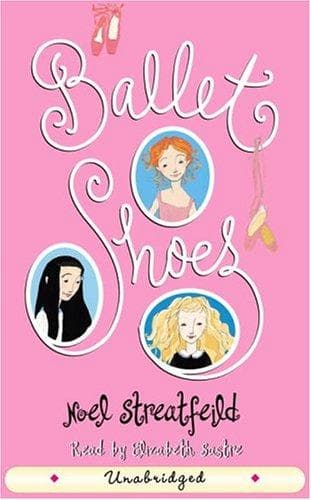
Book details and cover from Google Books.
Ready to read Ballet Shoes (Shoes #1)?
Get your copy on Amazon, or listen to it on Audible. We earn a commission if you buy through these links.