
We earn a commission if you buy through these links. Learn more
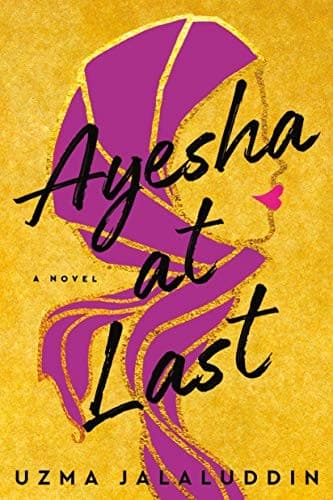
Ayesha At Last
A warm, funny Pride and Prejudice retelling set among Muslim families in Toronto, where Austen's marriage pressures turn into mosque gatherings, family dinners, and well-meaning matchmaking.
What It's About
Ayesha at Last is a romantic comedy and a loose retelling of Pride and Prejudice, set in a Pakistani Muslim community in Toronto. Ayesha is a thoughtful, independent woman watching her friends marry through arranged introductions while she resists the pressure to be matched. The novel moves Austen's social anxieties into community events, family meals, and the matchmaking that happens quietly over tea.
The tone is light and warm, with humor about family meddling and the tension between public piety and private life. Jalaluddin writes in close third person from Ayesha's point of view, so the community's expectations come through someone who is both loyal to it and frustrated by it. The book leans on dialogue and small scenes more than lush description, and it moves at a brisk pace.
The experience is closer to a comfortable, funny romance than a serious novel of manners, though it has more on its mind about faith, family, and belonging than its cover suggests. Readers who know Austen will enjoy spotting the parallels. Readers who don't will still get a complete, satisfying story.
Read this if you…
- enjoy Pride and Prejudice and want a fresh, modern take on its marriage plot
- want a romance with real cultural detail and a community setting
- prefer witty, conversational storytelling over long descriptive passages
Skip it if you…
- want a sweeping, literary novel with complex prose or experimental structure
- are looking for a romance with heavy steam or explicit scenes
Key Ideas
- 1
Austen's social pressures, updated for a new community
The novel keeps the core engine of Pride and Prejudice: a family under pressure to secure good marriages and a community that talks constantly about who is suitable for whom. The setting changes the stakes. Reputation, family honor, and religious propriety shape the choices, and the book shows how these forces can feel both protective and suffocating.
- 2
Marriage as a family project, not only a personal choice
Ayesha's world treats marriage as something families and networks organize, which makes her resistance a meaningful act rather than a simple romantic wish. The book asks what it means to want a partner on your own terms when your community sees your love life as shared business.
- 3
Faith as a daily texture, not a backdrop
Religious practice appears in routines, conversations, and disagreements rather than as decoration. The novel treats devotion, doubt, and cultural identity with affection and some humor, so readers unfamiliar with these communities get a grounded, human picture rather than a stereotype.
- 4
Romance built on banter and small revelations
The love story develops through friction, misjudgments, and gradual shifts in how the characters see each other. Much of the pleasure comes from the sharpness of the dialogue and the way assumptions get tested, which is the same mechanism that makes the Austen original work.
Limitations
Because the novel follows the Austen plot closely, some readers will find the twists and character arcs predictable, especially if they already know the source. The comedy is gentle and can feel light for those wanting more depth in secondary characters or in the community's internal disagreements. Some readers have also said the portrayal of conservative family members can lean toward the obvious. Its focus is firmly on one romance and one woman's perspective, so it offers less broad social commentary than a larger novel might.
Questions Readers Ask
- Do I need to have read Pride and Prejudice first?
- No. The story stands on its own as a romance about a woman navigating family expectations and a new relationship. Knowing Austen adds a layer of recognition, since many scenes and character roles echo the original, but the plot is accessible without that background. Readers who know the source often find the parallels the most enjoyable part.
- Is Ayesha at Last still worth reading today?
- Yes, especially for readers who want a romance rooted in a specific community rather than a generic setting. Its themes of family pressure, identity, and choosing a partner remain relevant. Its humor and warmth hold up well, though the story's pacing and conventions are those of a contemporary romantic comedy rather than an experimental or literary work.
- Published
- 2018
- ISBN
- 9781443455848
- Difficulty
- beginner
- Category
- Romance
Book details and cover from Google Books.
Ready to read Ayesha At Last?
Get your copy on Amazon, or listen to it on Audible. We earn a commission if you buy through these links.