
We earn a commission if you buy through these links. Learn more
Austerlitz
Sebald's quietly devastating novel follows a man piecing together his hidden past through buildings, photographs, and long, drifting memories that reward patient readers.
What It's About
Austerlitz follows Jacques Austerlitz, a reserved architectural historian, as he recounts his life to an unnamed narrator whom he meets by chance over the course of many years and many European cities. Gradually his story turns toward a childhood he cannot fully remember, and toward the question of how a person can be cut off from his own origins.
The style is the heart of the book. Sebald writes in long, unbroken sentences that wander through digressions about railway stations, museums, town squares and the history stored in their walls. Black-and-white photographs are scattered through the text, presented as evidence but often ambiguous, so that the reader feels the same uncertainty about the past that the characters do.
Reading Austerlitz is slow, meditative and melancholy. It is not a page-turner, and little happens in the conventional sense. What it offers instead is a sustained attention to how memory survives in objects and places, and how much is lost when people are unable to speak about what happened to them.
Read this if you…
- are drawn to slow, reflective novels that prize atmosphere over plot
- are interested in how memory, identity and history intersect
- appreciate writing that blends fiction with photographs, travel and architectural detail
Skip it if you…
- want a clear storyline with steady momentum and frequent scene changes
- find long, unbroken paragraphs tiring rather than immersive
Key Ideas
- 1
Memory held in buildings and objects
Austerlitz is drawn to architecture because buildings preserve traces of time that people have forgotten. Stations, fortresses and interiors become a kind of archive, and the book repeatedly asks what a place remembers that its inhabitants do not. This gives the novel its distinctive way of moving through space and history at once.
- 2
A life without a known beginning
The central figure lives with a gap where his early history should be. His adult self is composed and articulate, yet he is unable to account for his own first years. The book explores what it means to build an identity on top of an absence, and how much of selfhood depends on knowing where one came from.
- 3
The delayed and indirect weight of catastrophe
Sebald approaches the Second World War and the Holocaust sideways rather than head-on. Violence is present mostly as aftermath, rumour and silence, which makes its effects feel more persistent. Readers who expect direct depiction may find this restraint either profound or frustrating.
- 4
Style as a way of thinking
The long sentences, shifting narrators and embedded photographs are not decoration. They mirror the way memory circles back, doubles over itself and admits uncertainty. The form itself becomes an argument that the past can only be approached tentatively, through fragments and returns.
Limitations
Critics often find the book's pace very slow and its repeated digressions wearing, and some readers feel the narrative voice can become monotonous over its length. The novel is also more interested in mood and reflection than in dramatising its historical events, so readers seeking a detailed account of the Holocaust or of the emigration of children from Europe will find only partial, indirect treatment. Its preoccupation with a particular kind of European melancholy may feel narrow to some.
Questions Readers Ask
- Is Austerlitz a good first Sebald book?
- It is one of his most celebrated works, but it is demanding in tone and pace. Readers new to his style might find it easier to start with a shorter book and come to Austerlitz once they are comfortable with his long sentences and his mix of text and photographs.
- Do I need to know much about history to enjoy it?
- No specialist knowledge is required. The book introduces its historical background gradually through the characters' experiences. Some familiarity with twentieth-century European history will add context, but the novel is more about the feeling of the past than about dates and events.
- Published
- 2001
- ISBN
- 9780676974331
- Difficulty
- intermediate
- Category
- Fiction
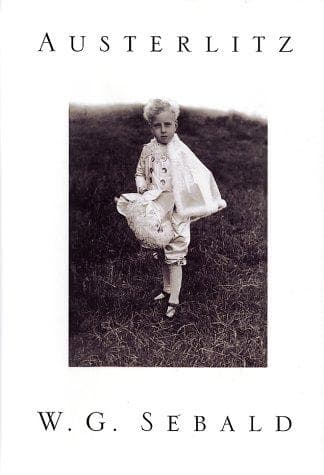
Book details and cover from Google Books.
Ready to read Austerlitz?
Get your copy on Amazon, or listen to it on Audible. We earn a commission if you buy through these links.