
We earn a commission if you buy through these links. Learn more
Atonement
by Ian McEwan
On screen: Atonement (film, 2007)
Guide by the Books of the Day editors · Updated · How we write our guides
Ian McEwan's novel turns one child's misreading of a summer evening into a decades-long reckoning with guilt, class, and the power of storytelling, and its structure rewards close attention.
What Creators Say About Atonement
2 creators reviewed Atonement on YouTube between 2014 and 2016, with 29.4K views between them. Their opinions are their own; we picked these reviews, we didn't write them.
What It's About
Atonement opens on a hot summer day in 1935 at a large English country house, where thirteen-year-old Briony Tallis, an aspiring writer, watches the adults around her and misreads what she sees. Her mistaken accusation changes the lives of several people, and the consequences run through the chaos of the Second World War, from the retreat to Dunkirk to the wards of wartime London. McEwan follows these ripples patiently, so the book feels as much about time and memory as about plot.
The prose is precise, controlled and often lush. McEwan moves between characters' perspectives and lingers on how a mind assembles a story from partial evidence, which makes the reading feel like watching a carefully built mechanism. The set-piece scenes are vivid, and the sentences reward a slower pace. Expect a book that asks you to notice what is withheld as much as what is shown.
Despite the love story at its centre, this is not a conventional romance. It is melancholy and morally serious, concerned with guilt, class and how fiction can both deceive and repair. The emotional payoff depends on what the reader has been shown, which is why it stays with people long after they finish it.
Read this if you…
- want a literary novel in which the structure is part of the meaning
- are drawn to slow-building guilt and a love story repeatedly interrupted by history
- enjoy close attention to how memory and storytelling bend the truth
Skip it if you…
- need a fast, plot-driven read with a clear and satisfying romantic arc
- find long passages of wartime detail and interior reflection tiring
Key Ideas
- 1
A misreading that becomes a life sentence
The novel's engine is a child's partial view of an adult situation, which she interprets with complete confidence. McEwan shows how a single wrong inference, made by someone with little power to correct it, can ruin innocent people. The book asks how much responsibility a young person bears for an error they could not fully understand.
- 2
Fiction as both deception and repair
Briony's compulsion to shape events into a story is the source of the harm, yet the novel suggests writing is also the only way to try to put things right. The book keeps asking what a story owes to the truth, and whether an honest account can ever undo a dishonest one.
- 3
Class and the fragility of a family's order
The Tallis household rests on assumptions about who belongs where, and those assumptions shape how the accusation is believed. McEwan exposes the quiet hierarchy of a country house without turning it into a lecture, letting the social pressures work through the characters' choices.
- 4
War as indifference to private lives
The long central section set during the retreat to Dunkirk shifts the book from domestic drama to the brutal randomness of war. It is harrowing and detailed, and it shows how public catastrophe dwarfs personal grievance, making the earlier scenes feel smaller and more fragile in retrospect.
Limitations
The first part moves slowly, and some readers find the early domestic scenes overdeveloped before the story gathers force. The war section is grim and departs sharply from the romance, which some feel unbalances the book. Critics have also questioned how the novel handles its characters, who sometimes seem more like instruments of the plot than fully independent people. The book's late structural reveal divides readers, with some finding it moving and others finding it a clever trick that cools the emotion.
Questions Readers Ask
- Is Atonement really a romance novel?
- It has a romantic relationship at its heart, but it is better described as literary fiction about guilt and memory. The love story is real and affecting, yet it is shaped by an accusation, a war and a long afterlife of regret. Readers who want a traditional romance with a comforting arc may find it bleak and withholding.
- How does Atonement compare to The Remains of the Day?
- Both are quiet, retrospective novels about self-justification and the English class system, and both are written with great control. Atonement is more openly concerned with the consequences of a single act and covers a wider historical span. Readers who loved the restraint of Ishiguro's narrator will likely appreciate McEwan's careful prose, though Atonement is more emotionally direct.
- Is Atonement still worth reading today?
- Yes. Its questions about how stories shape reality, how easily young people misjudge what they see, and how much power a false account can have feel as urgent now as at publication. The war section and period detail remain vivid, and the book holds up well on a second reading.
- Published
- 2001
- ISBN
- 9780099479130
- Difficulty
- intermediate
- Category
- Romance
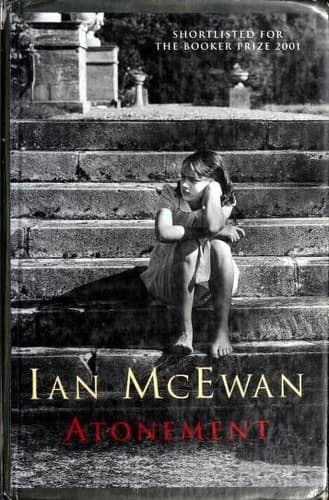
Book details and cover from Google Books.
Ready to read Atonement?
Get your copy on Amazon, or listen to it on Audible. We earn a commission if you buy through these links.