
We earn a commission if you buy through these links. Learn more
Arthur Spiderwick's field guide to the fantastical world around you
by Tony DiTerlizzi, Holly Black
Guide by the Books of the Day editors · Updated · How we write our guides
A playful, illustrated children's fantasy that turns a shabby old house into a field guide to hidden creatures, and rewards readers who pay close attention to the ordinary world.
What Creators Say About Arthur Spiderwick's field guide to the fantastical world around you
1 creator reviewed Arthur Spiderwick's field guide to the fantastical world around you on YouTube in 2023, with 534 views between them. Their opinions are their own; we picked these reviews, we didn't write them.
What It's About
Arthur Spiderwick's Field Guide is the first book in The Spiderwick Chronicles, a middle-grade fantasy written by Holly Black and illustrated by Tony DiTerlizzi. Despite the Tech category listed on this page, it is not a technology book. It is a children's novel about three siblings who move into a neglected old house and discover a hidden guide that catalogues the faerie creatures living nearby, many of them not friendly.
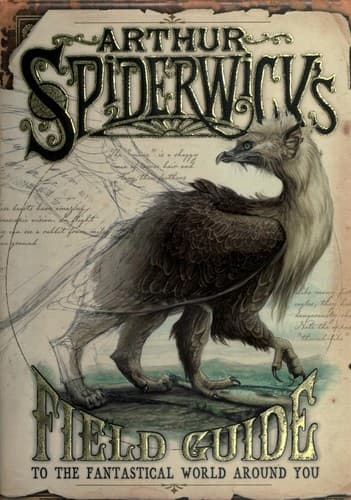
The book's most distinctive choice is its form. Much of the text is presented as the guide itself, with entries, notes, marginal comments from the children, and DiTerlizzi's detailed drawings. The pictures do real storytelling work, so reading feels partly like investigating a found object. Chapters move briskly, and the tone shifts between funny and genuinely creepy.
Reading it is quick and immersive. It suits children around eight to twelve, and adults who loved it as kids will find it easy to revisit. The story is more about curiosity, sibling friction, and learning to take small, strange things seriously than about epic stakes. It works best as an introduction to a series that grows more ambitious over time.
Read this if you…
- love illustrated fantasy where the pictures carry part of the story
- want a quick, spooky read that works for children and nostalgic adults
- enjoy folklore-based creatures that are more unsettling than cuddly
Skip it if you…
- need a long, continuous plot with heavy character development
- expect a nonfiction guide to real folklore or nature
Key Ideas
- 1
The familiar world hides a second layer
The core premise is that places you walk past every day may be full of activity you cannot see. The guide teaches the children, and the reader, to look more carefully at gardens, woods, and old buildings. The idea is simple, but the book makes it feel like a practical skill rather than a slogan.
- 2
The guide as the story's engine
Because the text is framed as an in-world reference book, reading means piecing together information from entries, drawings, and handwritten notes. This makes the book feel like a discovery rather than a continuous narrative. Younger readers often enjoy the sense that they are reading something they were not supposed to find.
- 3
Three siblings who react differently
The children respond to the guide in contrasting ways, some eager, some skeptical, some reckless. Their disagreements drive much of the plot and give the book its emotional texture. The sibling dynamics feel recognizable, which keeps the fantasy anchored in everyday family life.
- 4
Folklore with real teeth
The creatures are not cute mascots. The authors draw on older European fairy lore, in which faeries can be tricky, cruel, or dangerous. That willingness to let the magic carry some threat is part of why the book holds the attention of readers who find gentler fantasy too soft.
- 5
Illustration as an equal partner
DiTerlizzi's drawings are not decoration; they carry descriptions and clues that the prose does not spell out. Readers who skim the pictures will miss part of the story. This integration is the book's most memorable feature and the reason it is often remembered as much for its art as its text.
Limitations
The first book is short and largely sets up the series, so it can feel like an opening rather than a complete story. The characters are sketched more than deeply drawn, and the sibling dynamics, while believable, follow familiar patterns. The guide format is charming but can feel gimmicky to readers who want straightforward prose. Some adult readers find the tone too light for their taste, and the cast and setting reflect the conventions of its era.
Questions Readers Ask
- Is Arthur Spiderwick's Field Guide suitable for adults?
- Yes, though it is written for middle-grade readers, roughly eight to twelve. Adults who enjoy fairy-tale fantasy or the illustrations will find it a fast, pleasant read. Readers who want complex characters or mature themes will probably find the series more satisfying as it develops.
- How does it compare to Holly Black's Tithe?
- Tithe is written for older teens and is considerably darker, with sharper romance and more violent stakes. The Field Guide is gentler, funnier, and far more playful in form. If you liked Black's faerie world but want something for younger readers, this is the more accessible starting point.
- Published
- 2005
- ISBN
- 9780689859410
- Difficulty
- beginner
- Category
- Tech
Book details and cover from Google Books.
Ready to read Arthur Spiderwick's field guide to the fantastical world around you?
Get your copy on Amazon, or listen to it on Audible. We earn a commission if you buy through these links.