
We earn a commission if you buy through these links. Learn more
Ariadne
A fresh, emotionally direct retelling of the Theseus myth from the perspective of the princess who helped him, giving a familiar story new weight and a human cost.
What It's About
Ariadne retells the Greek myth of Theseus and the Minotaur from the point of view of Minos's daughter, the woman who gave the Athenian hero the thread that let him find his way out of the labyrinth at Knossos. Jennifer Saint takes an episode most readers only know as a plot device and asks what it cost the people standing at its edges. The story moves between Crete, the sea voyage, and the aftermath, so the myth gets room to breathe rather than being rushed past as backdrop.
The approach is personal and modern in voice. Saint is less interested in mythic spectacle than in the texture of a royal household: sisters, a father who holds power over his children, and the narrow choices available to women in a world run by men and gods. Readers who already know the myth will recognise the main beats, but much of the pleasure lies in seeing familiar events re-weighted and reconsidered.
Reading it is a fast, emotionally driven experience, closer to an absorbing novel than to a study of antiquity. Although the category listed here is History, this is fiction. It draws on Greek myth rather than a documented historical record, so treat the ancient world as a stage for character rather than a source of verified fact.
Read this if you…
- you enjoy mythological retellings that focus on women who were side characters in the originals
- you want an emotionally engaging novel rather than a scholarly account of ancient Greece
- you are curious how familiar Greek stories look when told from the losing side
Skip it if you…
- you want a historically accurate account of Bronze Age Crete or the Theseus legend
- you prefer dense, lyrical prose or experimental structure over a straightforward narrative
Key Ideas
- 1
Retelling a myth from its margins
The book takes a minor figure in a famous story and makes her the centre of attention. Instead of a hero's quest, you get the view from the palace, the shore, and the bedroom, where the heroic events look less like adventure and more like a series of decisions made by people with little say in them.
- 2
Women's limited choices under a powerful father
Minos's household is governed by his will, and his daughters have to navigate it carefully. Saint uses this pressure to examine how family loyalty, fear, and ambition shape what a young woman can do, and how small acts of defiance can carry large consequences.
- 3
The cost of being useful to heroes
Ariadne's help makes Theseus's success possible, yet her value to others is measured by what she can give. The novel keeps asking who gets remembered in these stories and who is left behind once their usefulness ends, a theme that gives the familiar plot a sharper edge.
- 4
Myth as emotional rather than factual history
The book treats ancient stories as material for character and feeling, not as records of what happened. Its concerns are grief, desire, and belonging, which makes it accessible to readers who have little background in classical literature but still want the myth's weight.
Limitations
Readers who know the myth well may find the plot predictable, since the outline is fixed by the source material and the book relies on that familiarity. Some critics find the voice more contemporary than the setting, which can make the ancient world feel like a backdrop of costume and sentiment. Because it is a novel built on myth, it offers little about how Minoan society actually worked, and anyone expecting archaeological or historical depth will be disappointed.
Questions Readers Ask
- Do I need to know Greek myth before reading Ariadne?
- It helps, but it is not required. The book briefly establishes the core situation, and its emotional focus is on the characters rather than on references to other stories. Readers who know the Theseus myth will get more from the way it is reshaped, while newcomers can follow the narrative without difficulty.
- Is Ariadne historically accurate?
- No. Although it is listed under History, it is a novel that draws on Greek mythology, which is not a reliable record of events. It is better read as a reimagining of legend, with invented emotional detail, than as a guide to the ancient Mediterranean.
- Published
- 2021
- ISBN
- 9781250773593
- Difficulty
- beginner
- Category
- History
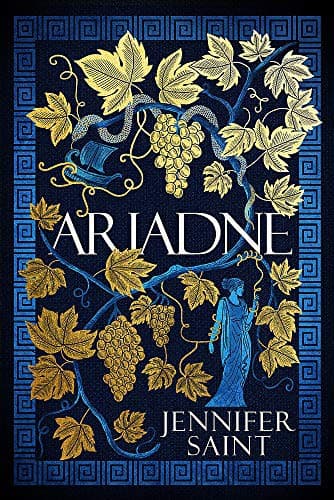
Book details and cover from Google Books.
Ready to read Ariadne?
Get your copy on Amazon, or listen to it on Audible. We earn a commission if you buy through these links.