
We earn a commission if you buy through these links. Learn more
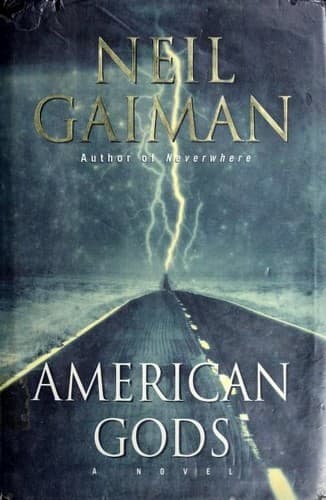
American Gods
by Neil Gaiman
Neil Gaiman's sprawling road novel turns American folklore, immigrant belief, and roadside strangeness into a darkly funny story about gods losing their grip on the people who once worshipped them.
What It's About
American Gods follows Shadow, a former convict who is released from prison a few days early and quickly finds himself working as bodyguard and driver for Mr. Wednesday, a charming and slippery stranger who seems to know far more about Shadow's life than he should. Wednesday is touring the country to gather old deities, the gods that immigrants carried across the ocean and that now survive only in the memory of their followers. They are losing ground to newer powers that Americans worship without thinking of them as religion.
At heart this is a road novel, with long stretches of motels, diners, and small-town oddities, broken up by short interludes that show how various gods first arrived on American shores. Gaiman writes with a storyteller's rhythm, blending folklore, pulp crime, and dry humor, so the prose often feels like a tall tale told by someone enjoying the telling. Violence and strangeness arrive without much warning, and the tone can shift from funny to unsettling within a page.
Reading it is a sprawling, episodic experience rather than a tightly plotted one. Shadow is deliberately a watchful, reactive protagonist, so much of the book's energy comes from the characters he meets and the atmosphere around him rather than from his own decisions. Expect a long, lush novel that rewards patience and invites a second read.
Read this if you…
- enjoy mythology and folklore woven into modern American settings
- like episodic road stories with odd characters and dry, dark humor
- are curious about how belief and identity travel with immigrants
Skip it if you…
- need a fast-paced plot driven by a decisive, active hero
- want a tightly structured story with every thread neatly resolved
Key Ideas
- 1
Gods survive only as long as people believe
The novel's central premise is that deities carried by immigrants draw their power from worship and memory. As attention shifts toward television, money, highways, and screens, the old gods weaken and newer forces rise. Gaiman treats faith as something people do every day, often without noticing, rather than a belief they hold in a church or temple.
- 2
America as an inheritance of carried beliefs
Short interludes trace how gods came with people fleeing hardship or seeking a new life, from the earliest arrivals to later waves of migrants. Gaiman frames migration as a spiritual event as much as a economic or political one. The country becomes a mixed inheritance in which many older traditions coexist, compete, and slowly fade.
- 3
Shadow as a deliberately quiet everyman
Shadow is a listener more than a driver of events. He functions as a blank slate that lets other characters reveal themselves, and readers learn the world alongside him. This suits a book about watching and wandering, but it can frustrate readers who want a protagonist who acts decisively and pushes the plot forward.
- 4
Folklore woven into road-trip Americana
Motels, diners, roadside attractions, and small towns serve as the setting for myth that feels both ancient and disturbingly ordinary. Gaiman mixes humor with menace, placing gods in unlikely places and letting their scale collide with mundane details. The result is a mythic texture that feels grounded in specific American landscapes.
Limitations
The most common criticisms are about pacing and structure. The middle stretches can feel digressive, and the many gods and side characters sometimes blur together. Shadow's passivity frustrates some readers, and female characters are often defined mainly through their relationships with men. Parts of the technology and media references, written in 2001, feel dated now. Gaiman later published an author's preferred text in 2011 that restores material cut from the original edition, which many readers now consider the definitive version.
Questions Readers Ask
- Do I need to know mythology to enjoy American Gods?
- No. Gaiman introduces each god through the story itself, and you do not need prior knowledge of Norse, Egyptian, or African myth. Familiarity helps you catch allusions and enjoy the references, but the novel explains what it needs. Readers who go in cold usually find the characters carry the book well enough.
- How does it compare to Gaiman's Anansi Boys?
- Anansi Boys is lighter, funnier, and more tightly focused on a single character's family story, and many readers find it an easier entry point. American Gods is broader, darker, and more ambitious in scope, with a wandering structure and a heavier mythic tone. If you enjoy Gaiman's voice, Anansi Boys is a comfortable next read.
- Published
- 2001
- ISBN
- 9781538462096
- Difficulty
- intermediate
- Category
- Science Fiction
Book details and cover from Google Books.
Ready to read American Gods?
Get your copy on Amazon, or listen to it on Audible. We earn a commission if you buy through these links.