
We earn a commission if you buy through these links. Learn more
Altered Carbon
A hardboiled murder mystery set in a future where minds can be moved between bodies, and the rich can cheat death, this is cyberpunk noir with a sharp class critique and a voice that stays with you.
What It's About
Altered Carbon is a hardboiled detective novel set in a future where a person's mind is stored in a small device called a stack, which can be installed in any compatible body, or sleeve. Death is an inconvenience for anyone who can afford backups, and a disaster for everyone else. Takeshi Kovacs, a former elite soldier who has spent a long time in storage, wakes up in a borrowed body in a city that used to be San Francisco. He is hired to solve a murder involving a man rich enough to come back from the dead.
Morgan writes in a clipped, profane, first-person voice that owes as much to Chandler and Hammett as to cyberpunk. The prose is fast and often graphic, with frequent violence and sex, and the action rarely stops long enough for the world to be explained. You learn how the sleeve economy works by watching it in use: who pays for which body, how gangs and corporations operate, and what a human life is worth on the open market.
Reading it feels like a pulpy, cinematic thriller with an unusually thoughtful core. The plot moves through interviews, double-crosses and set pieces, and the genre furniture is familiar. The underlying idea is sharp enough, though, that the book rewards a second pass. It works best read straight through in a few long sittings.
Read this if you…
- enjoy hardboiled crime stories with a science fiction premise
- want a cynical, wisecracking narrator with a dark sense of humour
- are interested in what inequality looks like when death itself can be bought
Skip it if you…
- are put off by graphic violence and explicit sex
- want a gentle, character-driven story or an easy-to-follow world
Key Ideas
- 1
Identity as a portable, purchasable thing
The novel treats the body as replaceable hardware and the stack as the self. That premise forces a question the book keeps returning to: if you can change bodies, what exactly are you? Morgan uses the idea to explore how identity, memory and continuity might be bought, sold and lost, and he is more interested in the social consequences than in the technical mechanics.
- 2
Immortality as a privilege of class
Because the wealthy can afford backups and clone-like sleeves, death becomes a luxury item. The book uses this to sharpen its critique of inequality. Poverty is not just a matter of money but of whether you are allowed to keep living, and the city's power structure is built around that difference.
- 3
Noir structure in a science fiction setting
Kovacs is a cynical investigator working for a powerful client, moving through corrupt institutions and unreliable witnesses. The mystery follows the logic of classic crime fiction. Morgan's skill lies in placing those familiar beats inside a world where the normal rules of death and identity no longer apply.
- 4
Violence and the body as commodity
Bodies are rented, swapped and discarded, and violence is casual because the consequences often seem reversible. Morgan asks what dignity means when a person can be stored, transferred or destroyed like equipment. The book does not look away from the brutality it depicts, and that refusal is part of its argument.
- 5
A distinctive, profane narrative voice
Much of the book's appeal lies in Kovacs himself, a weary, sardonic narrator with a dark sense of humour and little patience for pretense. His voice carries the story through its long stretches of exposition and violence, and it gives the novel much of its personality.
Limitations
The book is graphic and often misogynistic in its portrayal of some characters, and its female roles can feel thin or sexualized. Its macho tone and extreme violence will not suit every reader. The world is built through dense slang and technical shorthand, which can be hard to track early on. Some mechanics of the stacks and sleeves are loosely explained. Crime readers may find the final solution more conventional than the setting. Morgan's sequels vary in quality, and the series has aged unevenly in its treatment of gender.
Questions Readers Ask
- Do I need to read the sequels to enjoy Altered Carbon?
- No. Altered Carbon works as a complete novel with its own mystery and resolution. Morgan wrote follow-ups featuring Takeshi Kovacs, and many readers continue, but you will not be left hanging if you stop here. It is a good test of whether the character and voice appeal to you before committing to a series.
- How does it compare to Neuromancer?
- Neuromancer is more lyrical and focused on hackers and cyberspace. Altered Carbon is grittier and more physical, concerned with bodies, class and violence, and it reads more like a detective novel. If you want style and atmosphere, Gibson is the better choice. If you want a fast, brutal thriller about who controls human life, Morgan is closer to the mark.
- Is Altered Carbon still relevant?
- Its central questions about digital backups, body ownership and inequality remain current, and many readers find it prescient on those themes. Some of the technology and cultural references feel dated, and the treatment of women draws criticism. The core ideas still hold up, even if the surface has aged.
- Published
- 2002
- ISBN
- 9781400101375
- Difficulty
- intermediate
- Category
- Science Fiction
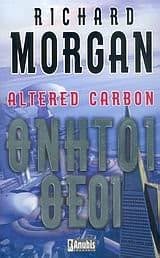
Book details and cover from Google Books.
Ready to read Altered Carbon?
Get your copy on Amazon, or listen to it on Audible. We earn a commission if you buy through these links.