
We earn a commission if you buy through these links. Learn more
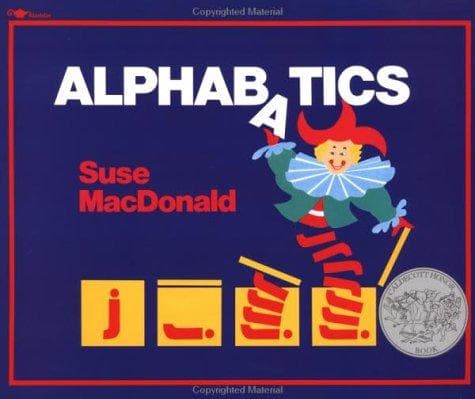
Alphabatics
A die-cut alphabet picture book where each letter's shape is reworked into a picture, turning letter recognition into a hands-on guessing game for small children.
What It's About
Alphabatics is a picture book for young children that teaches the alphabet through shape rather than through a list of words. Each letter is shown with a cut-out window, and turning the page reveals how that letter's form has been transformed into a recognizable image. The reader is asked to see the letter first and the picture second, which is the core of the book's appeal. It is aimed at preschool and early elementary readers who are just beginning to recognize letters.
The approach is visual and tactile. Die-cut pages do much of the work, so the book reads more like a small puzzle than a traditional alphabet primer. Adults reading aloud will find it easy to pause and let a child guess before the next page turns, and the paper engineering rewards slow looking rather than quick page-flipping. Because the book is compact, it pairs well with other alphabet activities such as tracing letters or naming objects around the house.
The experience is brief and playful rather than narrative. There is no story to follow, so the book works best in short sessions with a parent, teacher, or early reader who enjoys noticing details on each page. It is less a reference than a conversation starter about how letters and everyday objects relate. Its limits are its own: it is not designed to build vocabulary deeply or to teach phonics in a systematic way.
Read this if you…
- want a first alphabet book for a toddler or preschooler who likes surprises under flaps and cutouts
- are a parent or teacher looking for an interactive way to practice letter recognition
- appreciate simple graphic design and want to show a child how letters can become pictures
Skip it if you…
- want a systematic phonics program or a book that builds reading skills step by step
- are looking for a story, characters, or a longer read for older children
Key Ideas
- 1
Letters as shapes before symbols
The book encourages children to notice the physical form of each letter. By showing how a letter's outline can become part of a picture, it asks the reader to treat letters as drawn objects rather than abstract marks. This can help young children separate the look of a letter from the sound or name they are learning to attach to it.
- 2
Paper engineering as part of the lesson
The die-cut openings are not decoration. They hold the transformation in place on the page, so the child discovers the link between letter and image through touch and sight at once. The cutouts make the reveal feel like a small event on each page, which keeps attention on the letter rather than the surrounding design.
- 3
Guessing before naming
Many pages invite the child to predict what an unfinished or partly hidden shape might become. Making a guess before the answer appears builds the habit of looking closely and testing an idea, a skill that carries over to later reading. Adults can extend this by asking what else the shape could be.
- 4
Designed for shared lap reading
The book works best when an adult and child look at it together. The pages are simple enough that one question or comment per spread is usually enough to hold a young child's interest. It rewards the kind of short, repeated sessions common in preschool and early home literacy routines.
Limitations
The book is short and has no narrative, so it can feel slight to children who have moved past basic letter recognition. Die-cut pages are also more fragile than standard board or paper pages and may not survive rough handling from very young readers. Some letter-to-picture links may be unclear to a child who does not yet know the letter well, which means an adult may need to explain several pages. Its illustration style reflects its era, and newer alphabet books often offer more vocabulary and more explicit phonics support.
Questions Readers Ask
- Who is Alphabatics best suited for?
- It suits preschool and kindergarten-age children who are learning to recognize letters, and the adults who read with them. Its shape-based approach works especially well for visual learners who enjoy lift-and-look books. Older children who already read fluently will likely find it too simple, though it can still be an enjoyable shared book.
- How does it compare to a standard alphabet book?
- A standard alphabet book usually pairs each letter with one familiar word and a picture. Alphabatics puts more weight on the letter's shape and on the surprise of its transformation. It is a good complement to a word-focused book, but if you want a child to build a large vocabulary or learn sounds systematically, pair it with a more traditional primer.
- Published
- 1986
- ISBN
- 9780689716256
- Difficulty
- beginner
- Category
- Children's Books
Book details and cover from Google Books.
Ready to read Alphabatics?
Get your copy on Amazon, or listen to it on Audible. We earn a commission if you buy through these links.