
We earn a commission if you buy through these links. Learn more
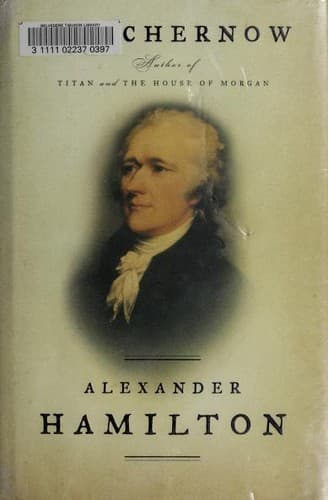
Alexander Hamilton
by Ron Chernow
Guide by the Books of the Day editors · Updated · How we write our guides
Chernow's long, vivid biography makes the case for Hamilton as the founder who built the American financial state, and shows the ambition that cost him everything.
What Creators Say About Alexander Hamilton
2 creators reviewed Alexander Hamilton on YouTube between 2017 and 2018, with 12.5K views between them. Their opinions are their own; we picked these reviews, we didn't write them.
What It's About
Chernow follows Hamilton from a hard childhood in the Caribbean through the Revolutionary War, his years as George Washington's aide, the fights over the Constitution, and his term as the first Treasury Secretary, ending with his fatal duel with Aaron Burr in 1804. It is a conventional cradle-to-grave biography, chronological and richly detailed, written for readers who want the full arc of a life rather than a single thesis.
The style is narrative and warm without being uncritical. Chernow leans heavily on letters, Hamilton's enormous body of writing, and contemporary accounts, and he is comfortable explaining financial and constitutional arguments in plain terms. Hamilton emerges as brilliant, driven, quick to take offense, and often reckless in print. Reading it feels like sitting with a biographer who has absorbed a vast archive and wants you to understand why this man mattered.
The experience is immersive and long. Expect many pages on political feuds, newspaper and pamphlet wars, and the maneuvering of early Washington politics, balanced by a steady momentum as Hamilton's career climbs. The pace suits readers who enjoy a big, unhurried account. Anyone wanting a brief introduction will find it demanding, but the payoff is a clear sense of how the early republic was built and fought over.
Read this if you…
- want a full, chronological life of a founding figure rather than a quick sketch
- are curious how the federal government's finances and institutions were actually created
- enjoyed the Broadway musical and want to know the real story behind it
Skip it if you…
- want a brisk read you can finish in a weekend
- prefer biographies that keep their subject at arm's length and judge him harshly
Key Ideas
- 1
A self-made outsider with something to prove
Hamilton had no family standing, no fortune, and no formal path to power. Chernow shows how his talent, work ethic, and skill with the pen let him rise anyway, and how that outsider status fed both his ambition and his resentment of inherited privilege.
- 2
Building a national financial system
Hamilton's plans for federal assumption of state debts, a national bank, and a revenue system are presented as the core of his achievement. Chernow also sets out the rival vision of Jefferson and Madison, so the reader sees why these choices were so contested.
- 3
Writing as a political weapon
Hamilton fought many of his battles on paper, through essays, pamphlets, and newspaper pieces, including his contributions to The Federalist Papers. Chernow argues that this constant writing made him one of the most influential figures of his age and also made him a great many enemies.
- 4
Pride, temperament, and their costs
The book does not hide Hamilton's combative temperament, from his public admission of an affair to his bitter rivalries with other leaders. Chernow traces how these traits shaped his downfall and ultimately led to the duel that ended his life.
Limitations
Chernow is an admirer of his subject, and some critics feel he is too generous to Hamilton's elitism and his wariness of popular democracy, while treating his opponents, especially Jefferson, more sharply. Hamilton's private inner life is less visible than his public record, because he left far more political writing than intimate papers, so the emotional texture of his family life comes through only in part. The book is also long and dense with political detail, which can slow readers who are not already interested in early American government.
Questions Readers Ask
- Is this book worth reading after seeing the musical?
- Yes. The musical took real liberties with timing, personalities, and tone, and this biography fills in the context around Hamilton's career, including the politics and rivalries that the stage version compresses. Expect a much fuller and more complicated man than the show presents.
- How does it compare to Chernow's biography of Washington?
- Both share the same approach: detailed, archive-driven, and admiring of their subjects. The Hamilton book is more focused on finance, writing, and personal conflict, while the Washington book centers on leadership and the presidency. Readers who liked one will usually find the other a comfortable next step.
- Is the book still relevant today?
- Yes. Debates about public debt, the role of a central bank, executive power, and how the Constitution should be interpreted all trace back to the fights Chernow describes. Reading it gives useful historical context for those arguments.
- Published
- 2004
- ISBN
- 9780965906210
- Difficulty
- intermediate
- Category
- Biographies
Book details and cover from Google Books.
Ready to read Alexander Hamilton?
Get your copy on Amazon, or listen to it on Audible. We earn a commission if you buy through these links.