
We earn a commission if you buy through these links. Learn more
Alexander and the Terrible, Horrible, No Good, Very Bad Day
Guide by the Books of the Day editors · Updated · How we write our guides
Judith Viorst's 1972 picture book turns one miserable day into a funny, honest read-aloud that tells young children their bad days are normal.
What Creators Say About Alexander and the Terrible, Horrible, No Good, Very Bad Day
2 creators reviewed Alexander and the Terrible, Horrible, No Good, Very Bad Day on YouTube between 2019 and 2021, with 786.7K views between them. Their opinions are their own; we picked these reviews, we didn't write them.
What It's About
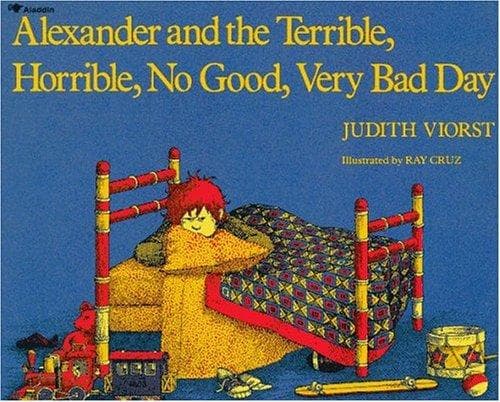
Alexander and the Terrible, Horrible, No Good, Very Bad Day is a 1972 picture book by Judith Viorst, illustrated by Ray Cruz. It follows a young boy through a single day that goes wrong almost from the moment he wakes up. Small disasters pile up at home, at school, and at the dinner table. Viorst keeps the stakes at the scale a small child feels them, so the frustrations seem real even when the adults around him treat them as minor.
The approach is simple and repetitive, built for reading aloud. The sentences are short, the title's refrain comes back at intervals, and Cruz's illustrations carry much of the mood, with Alexander's face doing a lot of the work. For adults, the humor is dry, and the book is quick to finish. For anyone who has spent time with a tired or grumpy child, it will feel uncomfortably familiar.
Reading it is less about a plot with a payoff than about being let in on a feeling. There is no twist to spoil. The pleasure lies in the accumulation of small setbacks and in recognizing them. Parents often use it as a way into talking about disappointment, and the book trusts children to sit with a bad day rather than rushing to fix it.
Read this if you…
- want a read-aloud that validates a grumpy or disappointed child
- are looking for a short, funny book for kids roughly four to eight
- enjoy picture books that rely on mood and illustration more than plot
Skip it if you…
- need a book with a clear moral, a resolution, or a behavior lesson to reinforce
- want a story with a plot, character development, or a surprise ending
Key Ideas
- 1
Small frustrations feel enormous to children
The book takes minor setbacks seriously because a child experiences them that way. A lost seat, a missing treat, or a bad start to the morning can dominate a young person's whole sense of the day. Viorst writes from inside that scale rather than from the adult's view of it.
- 2
Bad days are ordinary, not a sign of failure
Alexander's day is not caused by anything he has done wrong in a moral sense. The message is that everyone has days like this, and that a rough stretch says little about who you are. This gives young readers permission to feel unhappy without treating the feeling as a character flaw.
- 3
Repetition as a read-aloud device
The refrain and the list-like structure make the book easy to follow and fun to chant along with. Children learn the rhythm quickly and often join in, which turns the reading into a shared experience. The repetition also deepens the sense of a day that just keeps going wrong.
- 4
Comfort without correction
The adults in the book do not lecture Alexander or try to talk him out of his mood. The response is closer to acknowledgment than repair. Some readers find this refreshing, while others wish the book offered a clearer lesson to take away.
Limitations
The book is a product of its time. Its domestic settings, routines, and everyday objects reflect early 1970s American family life, so some details feel dated to today's readers. It also offers little in the way of explicit guidance. Parents who want a book that teaches coping strategies or gratitude may find it too open-ended, and it is a very slight story by the standards of longer children's fiction.
Questions Readers Ask
- Is Alexander and the Terrible, Horrible, No Good, Very Bad Day still worth reading with children today?
- Yes, mainly because the feelings it describes have not changed. Children still have days when everything goes wrong, and the book names that experience without judgment. Some of the details look dated, but the humor and the refrain tend to land with each new generation of young listeners.
- Who is this book best for?
- It is aimed at preschool and early elementary readers, roughly four to eight, and works especially well as a read-aloud. Older children and adults often enjoy it too, particularly as a reminder of how a bad day feels from the inside.
- How does it compare to other picture books about bad days?
- Many picture books about difficult feelings end with a lesson or a fix. This one mostly stays in the bad day itself. If you want a book that offers a clear way forward, look elsewhere. If you want one that simply agrees a bad day is real, this is a strong choice.
- Published
- 1972
- ISBN
- 9781481414128
- Difficulty
- beginner
- Category
- Children's Books
Book details and cover from Google Books.
Ready to read Alexander and the Terrible, Horrible, No Good, Very Bad Day?
Get your copy on Amazon, or listen to it on Audible. We earn a commission if you buy through these links.