
We earn a commission if you buy through these links. Learn more
Akata witch
Guide by the Books of the Day editors · Updated · How we write our guides
A twelve-year-old who moves from America to Nigeria discovers she has magical gifts and must learn a hidden world of spirits, secret societies, and loyal friendship rooted in local tradition.
What Creators Say About Akata witch
2 creators reviewed Akata witch on YouTube between 2017 and 2018, with 10.4K views between them. Their opinions are their own; we picked these reviews, we didn't write them.
What It's About
Akata Witch follows Sunny Nwazue, a girl born in the United States to Nigerian parents. She is albino, has always been the outsider at school, and is not sure where she belongs. After her family relocates to Nigeria, she begins to notice things other people cannot see. She is drawn into a secret community of children who practice magic, and she has to learn its rules, its history, and its dangers while adjusting to a new country and a new school.
Okorafor writes in a grounded, conversational voice. Much of the story is about ordinary life: school politics, friendships that shift, family tensions, food, and the small frustrations of being new. The magic arrives through that everyday texture. It is taught through practice and mentorship, it draws on Igbo language and Nsibidi symbols, and it carries real costs. The book makes a point of treating local traditions as a living system rather than as decoration.
The reading experience is brisk and approachable. Chapters move quickly, and there are eerie, tense episodes and a few genuinely unsettling moments. Still, the emotional center is coming of age and the question of how to be yourself in two worlds at once. It is closer to urban fantasy with a creepy edge than to conventional horror.
Read this if you…
- want fantasy rooted in Nigerian culture and folklore rather than European myth
- enjoy coming-of-age stories about a newcomer finding her place
- are comfortable with creepy, tense scenes in a young adult register
Skip it if you…
- want a fast, gory horror novel with sustained dread
- need a fully self-contained story, since this is the first book in a series
Key Ideas
- 1
Belonging between two countries
Sunny's struggle to fit in is less about magic than about identity. She is an American-raised child of Nigerian parents who now has to find her footing in a place that feels familiar and foreign at once. The book treats that divided sense of home with patience and without easy answers.
- 2
Magic grounded in African tradition
Rather than borrowing from European myth, the book builds its magic from Nigerian spirit beliefs, juju practices, and Nsibidi symbols. Readers who know these traditions will recognize details, and readers who do not will learn them through the story's own logic rather than through lectures.
- 3
Power that must be learned and earned
Sunny's abilities do not arrive fully formed. She trains, makes mistakes, and deals with rules set by older practitioners. The book suggests that gifts matter less than discipline, judgment, and the willingness to ask for help.
- 4
Outsiders finding each other
Sunny's friendships with other young magic users form the heart of the story. Loyalty, jealousy, and trust play out inside a small group that has to work together, and the bonds feel earned because the characters are flawed and often unsure of one another.
- 5
Difference as both burden and strength
Sunny's albinism shapes how other people treat her and how she sees herself. The book lets that experience carry emotional weight without turning it into a single symbol, and it frames her perceived difference as part of what makes her useful in the magical world.
Limitations
As the opening volume, the book spends much of its length on setup, including introducing the magical rules, the characters, and the new setting, so its middle can feel slow to some readers. The prose is plain by design, which suits its young audience but may feel thin to adults who want more lyrical writing. Some magical concepts are explained through dialogue, and readers unfamiliar with Igbo terms may need to keep track of unfamiliar vocabulary. The book is also written for young readers, so its treatment of Nigerian society and its frank portrayals of violence and fear are limited to what fits that register.
Questions Readers Ask
- Is Akata Witch really horror?
- Not in the usual sense. The book has creepy episodes, spirit encounters, and some dark moments, but it is mostly a coming-of-age fantasy. Readers looking for sustained dread or graphic violence will likely find it milder than the category suggests. It works better as an eerie, atmospheric fantasy than as a scare-driven novel.
- How does it compare to Harry Potter?
- Both follow a young outsider who discovers a hidden magical community and a school-like training structure. Akata Witch differs in its setting, its roots in Nigerian spirit traditions, and its focus on family and diaspora identity. The magic feels more tied to a specific culture and less like a fully built British boarding-school world.
- Do I need to read the sequels?
- The first book has its own complete arc, so it works on its own. However, the story continues in later books, including Akata Warrior, and readers who enjoy this one will likely want to follow Sunny's development further. You can decide after finishing this volume.
- Published
- 2011
- ISBN
- 9782211304344
- Difficulty
- beginner
- Category
- Horror
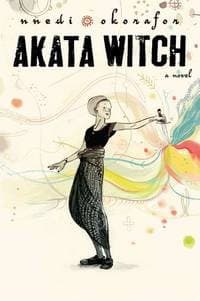
Book details and cover from Google Books.
Ready to read Akata witch?
Get your copy on Amazon, or listen to it on Audible. We earn a commission if you buy through these links.