
We earn a commission if you buy through these links. Learn more
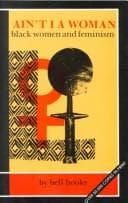
Ain't I a Woman
by bell hooks
A short, pointed 1981 argument that feminism and Black liberation movements both left Black women out, and that race, sex, and class must be analyzed together.
What It's About
Ain't I a Woman is a concise, pointed history of Black women in America, published in 1981, that asks why women who worked, were enslaved, and organized alongside men were so often left out of both the feminist movement and the Black freedom struggle. bell hooks traces how stereotypes attached to Black women, from the enslaved field worker to the domestic servant to the matriarch blamed for community problems, shaped how society treated them and how they were portrayed even by their own communities.
The book is argumentative rather than archival in tone. It draws on historical sources, social commentary, and the political writing of its period, moving across slavery, emancipation, Reconstruction, and the twentieth century to build a case rather than to narrate one life or event in depth. Its sentences are direct and its arguments are easy to follow, with few passages that depend on specialist vocabulary. It reads like a sharp polemic written with a teacher's clarity.
Reading it feels like being drawn into an argument you are expected to finish. Its criticisms are aimed at white feminists, Black male leaders, and the wider culture alike, which makes it uncomfortable on purpose. Expect a book that asks you to reconsider assumptions you may not have known you held, rather than one that offers a neat program or a complete record of the period.
Read this if you…
- want a concise, pointed history of Black women's place in American social movements
- are interested in how race, gender, and class shape one another
- want to understand why feminist and civil rights movements have struggled with inclusion
Skip it if you…
- want a detailed archival history with extensive primary sources or sustained narrative storytelling
- prefer a neutral survey that gives every viewpoint equal space
Key Ideas
- 1
Race, sex, and class as linked oppressions
hooks argues that these three systems cannot be pulled apart. A feminism that addresses only sex, or a civil rights politics that addresses only race, will miss what Black women actually experience. The idea anticipated the vocabulary of intersectionality, which became common in later years.
- 2
Critique of a middle-class women's movement
Much of the mainstream women's movement focused on concerns such as housework and entry into professional careers. hooks points out that many Black women had long worked outside the home out of economic necessity, so those priorities did not speak to their lives.
- 3
Stereotypes as tools of control
Images such as the mammy, the matriarch, and the sexually available woman were not harmless cultural notions. hooks shows how they justified exploitation and assigned blame, and how they continued to shape expectations long after slavery ended.
- 4
Sexism inside Black liberation movements
The book argues that many Black freedom organizations, especially during the Black Power era, reinforced male leadership and idealized traditional gender roles. For hooks, liberation that leaves women subordinate is incomplete liberation.
- 5
Black women's labor at the center of history
hooks treats the work of Black women, in fields, households, and paid jobs, as central to American economic and social history rather than as a footnote. This reframing is what gives the book its historical argument.
Limitations
Written in 1981, the book reflects the political landscape of the late 1970s, and some of its historical references and examples are dated. Its scope is broad rather than deep, so individual periods and debates receive brief treatment and readers may want more detail elsewhere. Its tone is polemical and sharply critical of figures across several movements, which some readers find one-sided. The focus is mainly on the American context, and it does not offer a comparative or global perspective.
Questions Readers Ask
- Is Ain't I a Woman still relevant today?
- Yes. Its core argument that race, sex, and class must be analyzed together remains central to current debates about inclusion in feminism and social justice. The historical details and some examples date from the early 1980s, so many readers pair it with more recent scholarship to see how the picture has changed.
- How does it compare to Angela Davis's Women, Race & Class?
- Both books examine Black women's history and critique the movements that excluded them, and both appeared around 1981. Davis's book is longer and more heavily researched, while hooks writes more briefly and polemically. Readers who want a sharper argument may prefer hooks, and those who want more historical depth may prefer Davis.
- Do I need background in feminist theory to read it?
- No. The book is written accessibly and assumes curiosity more than prior knowledge. Some familiarity with the civil rights and women's movements of the 1960s and 1970s will help you follow its references, but you do not need academic training to engage with its argument.
- Published
- 1981
- ISBN
- 9788416205561
- Difficulty
- intermediate
- Category
- History
Book details and cover from Google Books.
Ready to read Ain't I a Woman?
Get your copy on Amazon, or listen to it on Audible. We earn a commission if you buy through these links.