
We earn a commission if you buy through these links. Learn more
A Visit from the Goon Squad
A Pulitzer-winning web of linked stories about music, memory, and time that rewards patient readers with a richly layered picture of ambition and aging.
What It's About
The novel follows a loosely connected cast whose lives intersect around the New York music world, anchored by a record producer, Bennie Salazar, and his longtime assistant, Sasha. Each section can be read on its own, with different narrators, time periods, and styles. The connections surface gradually, as minor figures from one section become central in another.
Egan moves between the punk era of the 1970s, the decades that follow, and a near future shaped by new technology. She changes form freely, using a slideshow-style section, a memoir-like account, and other experiments, so the reading experience feels more like assembling a mosaic than following one plot. The book keeps asking what happens to talent, friendship, and ambition as people age and the culture around them shifts.
Reading it feels brisk and absorbing, with sharp humor and melancholy sitting side by side. Much of the pleasure comes from spotting links between sections and noticing how small details return later with new weight. Expect to pay close attention, since the payoff builds gradually rather than through suspense.
Read this if you…
- enjoy structurally adventurous fiction that rewards careful reading
- are interested in how time reshapes friendships, talent, and ambition
- like ensemble novels where minor characters get fully realized lives
Skip it if you…
- want a single plot with steady forward momentum
- find music-industry settings uninteresting or hard to care about
Key Ideas
- 1
Time as the book's real subject
Egan jumps across years and sometimes decades, letting the reader see what time does to people: it erodes some hopes, hardens some habits, and quietly rewrites old relationships. Because the gaps are large, the characters often appear changed, and the reader fills in the years between in a way that makes the changes feel earned.
- 2
Fame, failure, and the cost of ambition
Many characters are chasing relevance, status, or artistic validation, and the book looks closely at what those pursuits demand and what they quietly take away. Success and failure are both treated as complicated, and few characters end up exactly where they expected to be.
- 3
Form that changes with the culture
Each section adopts a different voice or structure, and these shifts mirror changes in how people communicate and record their lives. The experiments are not decoration; they show how the same story can look different depending on the medium through which it is told.
- 4
Minor characters with full lives
Figures who seem peripheral in one chapter often get their own moment of depth in another. This gives the book an ensemble feel and makes the reader rethink who matters in any life, since everyone is someone else's background character.
- 5
Technology and the performed self
The near-future sections explore how people might present themselves when recording and sharing is constant. The book is less interested in gadgets than in what happens to intimacy, memory, and authenticity when a life is always being documented.
Limitations
Some readers find the shifting structure disorienting, especially early on, and the connections between sections can feel forced to others. The world is centered on the music business and its milieu, which narrows the book for readers with no interest in that scene. Some characters are sketched more lightly than others, and the near-future material is speculative, so its specifics may feel more dated over time than the rest of the book.
Questions Readers Ask
- Do I need to know anything about rock music to enjoy it?
- No. The music scene provides the setting, but the book is mostly about people, ambition, and the passing of time. Some readers enjoy the period detail and insider texture, but you do not need prior knowledge of punk or the record business to follow the stories or connect with the characters.
- Do the stories need to be read in order?
- Reading in order is the intended experience, since the connections build as you go. Jumping around would make the links harder to notice and the timeline harder to track, though each section is complete enough to stand alone.
- How does it compare to a conventional novel?
- It is closer to a set of linked stories than a single continuous narrative. If you prefer a traditional plot that moves steadily toward one climax, it may feel scattered. If you like puzzles, shifting viewpoints, and slow accumulation of meaning, it is likely to reward you.
- Published
- 2010
- ISBN
- 9781780330280
- Difficulty
- intermediate
- Category
- Fiction
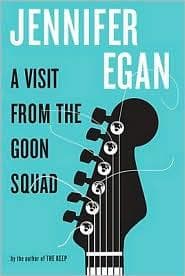
Book details and cover from Google Books.
Ready to read A Visit from the Goon Squad?
Get your copy on Amazon, or listen to it on Audible. We earn a commission if you buy through these links.