
We earn a commission if you buy through these links. Learn more
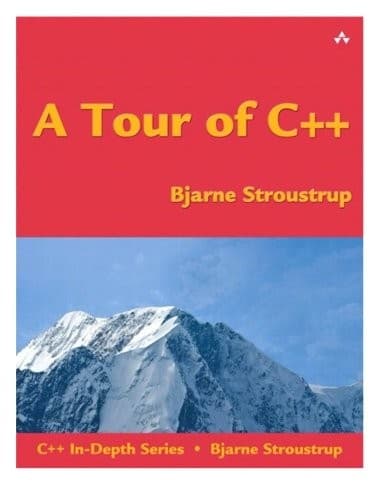
A Tour of C++
A fast, opinionated walk through modern C++ by its creator, ideal for experienced programmers who want the language's current features in one short book.
What It's About
A Tour of C++ is a compact survey of the modern language written by Bjarne Stroustrup, who designed and developed C++. Rather than teaching programming from scratch, it assumes you already write code in some language and want to see what C++ offers today, from basic types and functions through classes, templates, the standard library, and concurrency. The book is deliberately brief, so each topic gets a few pages, with enough detail to make the features make sense and enough pointers to go further.
The style is direct and opinionated. Stroustrup spends considerable effort on the reasons behind design choices, such as why resource management and generic programming are arranged the way they are, rather than on exhaustive syntax tables. Code examples are short and meant to be read closely, and the book steers you toward the standard library as the way to write idiomatic code instead of hand-rolled loops and manual memory handling.
Reading it feels like being shown around by a guide who knows the building well. It is quick and dense in places, and it works best in one or two sittings with a compiler nearby. You will finish with a clear map of the language and a sense of which features to reach for, rather than a deep command of any single one.
Read this if you…
- want a fast refresher on modern C++ features after learning the language years ago
- already program in another language and need to become productive in C++ quickly
- prefer a reference that explains design reasoning alongside the syntax
Skip it if you…
- are a complete beginner to programming, since the book assumes working knowledge of at least one language
- want step-by-step exercises or a full treatment of every library component
Key Ideas
- 1
Modern C++ as one coherent language
The book presents C++ as a language to be used in a modern style, favoring types that express intent and library facilities over low-level habits carried over from C. The aim is to show how the pieces fit together, so that features added across several standards read as parts of a single design rather than a pile of additions.
- 2
Resource management without manual cleanup
A central idea is that objects should own the resources they use and release them automatically when they go out of scope. This pattern, usually called RAII, together with smart pointers and standard containers, removes most explicit deallocation from everyday code. The book treats this as the foundation for writing safe programs without constant bookkeeping.
- 3
Generic programming through templates and concepts
Templates let one algorithm or container work across many types, and concepts state the requirements a type must meet. Together they make reusable code easier to write and give compilers the information needed to report clearer errors. The book explains these ideas as the main tools for writing general code in C++.
- 4
The standard library as the default toolkit
Containers, algorithms, strings, utilities, and concurrency support are presented as the first choice for most tasks. The argument is that well-tested library components usually express intent more clearly and perform better than custom code, so readers are encouraged to reach for them before writing their own.
Limitations
The book is short by design, so many topics receive only a few pages, and readers who want depth on templates, concurrency, or the less common parts of the library will need further sources. It assumes familiarity with programming and some exposure to C-style code, which makes it a poor first book. Because C++ keeps evolving, editions differ in which language standard they cover, so check the edition's date against the features you need. The style is also opinionated, and not every recommendation will match your team's conventions.
Questions Readers Ask
- Is A Tour of C++ still relevant if I learned C++ years ago?
- Yes, that is one of its main uses. It was written to bring experienced programmers up to date on features added in recent standards and frames them in terms of modern practice. Check which edition you are buying, since newer revisions cover more recent language standards than older printings.
- How does it compare to a full C++ reference or textbook?
- A Tour is much shorter and gives a sense of the language's overall shape and reasoning, while a full reference covers far more syntax and library detail. Use the tour first to get oriented, then consult a comprehensive reference or the standard library documentation when you need specifics.
- Published
- 2013
- ISBN
- 9780321958310
- Difficulty
- intermediate
- Category
- Tech
Book details and cover from Google Books.
Ready to read A Tour of C++?
Get your copy on Amazon, or listen to it on Audible. We earn a commission if you buy through these links.