
We earn a commission if you buy through these links. Learn more
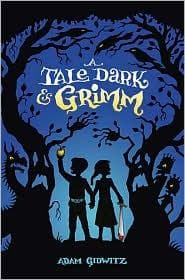
A Tale Dark & Grimm (A Tale Dark & Grimm, #1)
by Adam Gidwitz
Guide by the Books of the Day editors · Updated · How we write our guides
A middle-grade retelling of grim Grimm fairy tales, carried by a chatty narrator who keeps breaking in to warn, joke, and argue, so the gore lands with humor instead of dread.
What Creators Say About A Tale Dark & Grimm (A Tale Dark & Grimm, #1)
2 creators reviewed A Tale Dark & Grimm (A Tale Dark & Grimm, #1) on YouTube between 2013 and 2014, with 1.5K views between them. Their opinions are their own; we picked these reviews, we didn't write them.
What It's About
A Tale Dark & Grimm is a middle-grade fantasy that takes a run of the Brothers Grimm's folktales, mostly the bleakest ones, and retells them as one connected story. The book's frame is a narrator who keeps interrupting to address the reader, apologize for what is coming, argue about how stories should be told, and admit when he is unsure of a detail. The tone mixes horror, slapstick, and blunt commentary on children's books that soften everything.
The style is the main draw. Hunger, abandonment, violence, and death are described without much cushioning, but the voice keeps the mood playful, so the darkness rarely feels hopeless. Sentences are short and conversational, the chapters move quickly, and the asides give adults as well as children something to notice. The retellings feel more like a campfire performance than a polished literary adaptation, which suits the source material well.
Reading it is closer to listening to an excitable storyteller who trusts you with the grim parts than to settling into a traditional novel. It rewards readers who already know the Grimm originals, because the book plays with their shapes and expectations, but newcomers can follow it without trouble. Expect a quick, funny, sometimes gruesome ride rather than deep character study.
Read this if you…
- enjoy funny, gruesome storytelling with a loud narrator
- know some Grimm tales and want to see them turned inside out
- want a fast read that a confident older kid can finish in a few sittings
Skip it if you…
- want quiet, realistic characters and slow emotional development
- find gore or cruelty to children hard to read, even when it is played for laughs
Key Ideas
- 1
Original fairy tales were meant to frighten
The book argues that many Grimm stories were harsher before later editions smoothed them for young readers. Its retellings lean into cruelty, hunger, and punishment, suggesting that these tales once served as warnings about real dangers. Readers come away seeing the familiar stories as older and rougher than the picture-book versions they may remember.
- 2
The narrator as a character, not a guide
The narrator is a personality with opinions, doubts, and a habit of stopping the story to speak directly to the reader. He comments on what he is doing, admits to choices he regrets, and pushes back on the idea that a children's book must be tidy. This voice is the book's engine, and much of its humor comes from the gap between his bravado and his nerves.
- 3
Honest darkness can be safe for children
The book takes seriously the question of how much hard material young readers can handle. Its answer leans toward candor: children are often ready for fear and loss if the storytelling respects them. Humor works as a release valve, letting the reader feel the weight of a scene and then breathe before the next one.
- 4
Separate tales linked into one arc
Rather than presenting a loose anthology, the book threads its stories together with recurring characters, motifs, and a single framing arc. The connections reward attentive readers and make the collection feel like one long narrative instead of a set of standalone fables with a shared title.
Limitations
The narrator's constant interruptions are the book's signature, but some readers find them gimmicky and tiring, especially when the jokes repeat their rhythm. The violence is frank, and the playful voice does not fully soften it for sensitive or younger readers. Character depth is limited by the fairy tale format and the quick pace, so the people feel more like archetypes than fully drawn individuals. Readers who want a traditional plot with sustained suspense may find the structure loose. The humor also depends partly on familiarity with fairy tale conventions, which can make some jokes land less well for newcomers.
Questions Readers Ask
- Who is A Tale Dark & Grimm best suited for?
- It suits confident middle-grade readers, roughly ages 9 to 13, and adults who enjoy witty children's fantasy. Its mix of gore and comedy works best for readers who like dark stories with a playful voice. Parents of sensitive children may want to read a few pages first, since the violence is direct and not heavily softened.
- Do I need to know the Grimm fairy tales before reading it?
- No, the book introduces its material clearly enough for new readers to follow. Readers who already know the originals will get more out of it, because the retellings play with familiar shapes and expectations. Knowing the source stories mostly adds a layer of recognition and surprise rather than being required to understand the plot.
- How does it compare to a traditional fairy tale collection?
- A traditional collection presents each tale on its own with a fairly neutral tone. This book links its stories into one arc and adds a chatty narrator who comments on events and addresses the reader directly. If you want the original texts, look elsewhere, but if you want a lively, modern take that keeps the danger, this is the more entertaining choice.
- Published
- 2010
- ISBN
- 9788424637798
- Difficulty
- beginner
- Category
- Tech
Book details and cover from Google Books.
Ready to read A Tale Dark & Grimm (A Tale Dark & Grimm, #1)?
Get your copy on Amazon, or listen to it on Audible. We earn a commission if you buy through these links.