
We earn a commission if you buy through these links. Learn more
A Room of One's Own
A short, sharp essay on why women writers have been held back, and why the argument still lands: money and a private space matter more than anyone admitted.
What It's About
A Room of One's Own grew out of two lectures Virginia Woolf gave to women students at Cambridge in 1928, and it reads like a talk given to an intelligent room: conversational, sly, sometimes funny, and willing to wander. Its starting question is simple. Why have so few women written fiction across the centuries, and what would have changed that? Woolf answers with a mix of invented scenes, historical speculation, and close readings of books rather than a tidy thesis.
The essay follows a narrator who is refused entry to a college library, reflects over a meal, and keeps returning to the gap between what men and women were permitted to do. Woolf's method is to imagine a gifted sister of Shakespeare and ask what would have become of her. The prose moves between wit and anger, and the argument often bends back on itself, which some readers find delightful and others find frustrating.
The experience is less like reading a manifesto than like eavesdropping on a mind thinking aloud. It is short enough to finish in an evening, but dense enough that you will want to pause over individual sentences. Expect digressions, a deliberately unfinished feel, and a conclusion that asks more of the reader than it hands over.
Read this if you…
- are curious about why literary history looks the way it does
- want a short, witty classic of feminist thought you can read in one sitting
- enjoy essays that think on the page rather than arguing a neat case
Skip it if you…
- want a systematic history of women writers with names, dates, and sources
- prefer tight, modern prose and find older essay styles tiresome
Key Ideas
- 1
Money and a private room come first
Woolf argues that the basic conditions for writing, an independent income and a space of one's own, were denied to women for centuries. The scarcity of women writers, she suggests, tells us about those conditions rather than about any lack of ability.
- 2
The imagined sister of Shakespeare
Woolf builds a thought experiment around a woman with the same gifts as a famous playwright but none of his education or freedom. Her fate shows how social pressure, not talent, decides who gets to create, and it is the essay's most memorable device.
- 3
Literary history as a record of exclusion
Woolf looks at how the literary past has been recorded and judged, and how women's work has been overlooked or measured against standards that were never applied to men. She also considers how women's writing might change once they gain access to education and leisure.
- 4
The androgynous mind
Woolf suggests that a great writer's mind combines masculine and feminine qualities, and that freedom from anger and grievance helps writing. The idea is abstract and sometimes puzzling, but it is central to how she imagines a fully realised art.
Limitations
The essay speaks mainly to educated, middle- and upper-class English women of its own era, and its examples come largely from British literature. Its economic argument reflects 1920s conditions, and some passages are speculative rather than evidence-based. Readers who want a complete survey of women's writing, or a more inclusive view of race and class, will need to look elsewhere. Its digressive style can also feel evasive to readers who expect a direct argument.
Questions Readers Ask
- Is A Room of One's Own a technology book?
- No. Despite the category it was filed under here, it has nothing to do with technology. It is a 1929 essay about women, money, and the conditions needed to write fiction, drawn from lectures Woolf gave at two women's colleges at Cambridge. If you came looking for tech reading, you will want a different book.
- Is it still relevant today?
- Largely yes, though its specifics have shifted. The core claim that access to money, time, and space shapes who gets to make art is still debated in literary and academic circles. Its examples and economics belong to the 1920s, so treat it as a starting point rather than a current survey of the field.
- Published
- 1929
- ISBN
- 9798780440239
- Difficulty
- intermediate
- Category
- Tech
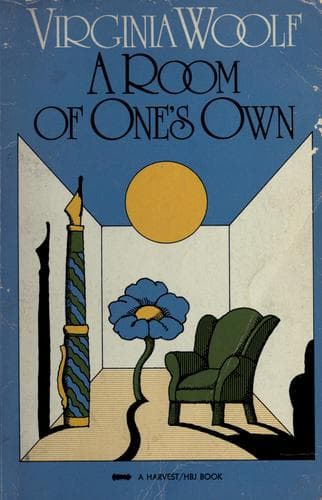
Book details and cover from Google Books.
Ready to read A Room of One's Own?
Get your copy on Amazon, or listen to it on Audible. We earn a commission if you buy through these links.