
We earn a commission if you buy through these links. Learn more
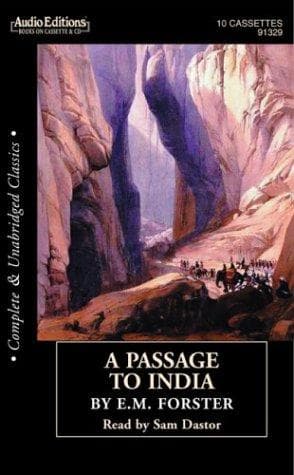
A Passage to India
Forster's study of friendship and colonial prejudice in India remains a precise, ambiguous portrait of empire, with a mystery at its center that still divides readers.
What It's About
A Passage to India follows a small circle of British officials, Anglo-Indians and Indian professionals in the fictional provincial town of Chandrapore during the years of British rule. The story centres on Dr. Aziz, a Muslim physician who forms a warm friendship with Cyril Fielding, the English head of the town's college, and on the arrival of two Englishwomen, the elderly Mrs. Moore and the younger Adela Quested, who want to see more of India than the official receptions allow. A trip to the Marabar Caves becomes a crisis that divides the town and drives the novel's second half.
Forster writes with a wry, observant narrator who moves between characters and sometimes steps back to comment on the whole country. The prose is clear and often funny, but it is deliberately uncertain. The book keeps asking how well anyone can know another person, and it refuses to hand the reader a neat verdict. Its three sections, titled Mosque, Caves and Temple, shift the mood from social comedy to something darker and more mystical.
Reading it feels like watching decent people fail each other with good intentions. You will be irritated, moved and occasionally unsure whom to trust, which is largely the point.
Read this if you…
- want a serious novel about colonialism that treats its characters as individuals rather than symbols
- enjoy irony, social comedy and slowly building moral tension
- are comfortable with an ending that refuses resolution
Skip it if you…
- want a clear-cut story with obvious heroes and villains
- prefer fast plot and tight pacing, since the middle section moves slowly and the narrative circles back often
Key Ideas
- 1
Friendship strained by empire
The bond between Aziz and Fielding is the emotional core of the book. It is sincere, but it is constantly undercut by the social hierarchy around them. Forster shows how personal goodwill struggles to survive when political structures keep reminding each man of his place.
- 2
Ambiguity as a deliberate method
The novel never fully settles what happened in the caves. Forster keeps the central event partly hidden, which forces readers to weigh testimony, assumptions and prejudice themselves. Many readers find this frustrating at first and rewarding later, once they notice how much their own judgments are doing.
- 3
The limits of understanding across cultures
Characters repeatedly misread one another, whether through tone, gesture or motive. The book treats misunderstanding not as a simple individual failing but as something built into colonial life, where the two communities rarely meet on equal terms or with equal information.
- 4
Mrs. Moore and the mystical turn
Mrs. Moore's experience at the caves introduces a spiritual, almost cosmic register that contrasts sharply with the social realism elsewhere. It suggests that some truths lie beyond rational categories, and it shifts the book's attention from politics toward questions of meaning and the self.
- 5
Irony and a narrator who withholds judgment
Forster's narrator is wry and occasionally intrusive, pointing out the absurdities of the British community while remaining wary of easy answers for anyone. The irony is a tool for seeing clearly, not just a source of wit, and it gives the book much of its distinctive texture.
Limitations
Forster was an English writer looking at India from the outside, and the Indian characters are often seen through English eyes. Some readers find his portrayal of Indian figures paternal or stereotyped, and his sympathy has clear limits. The Indian nationalist movement is largely offstage, so the political stakes feel more personal than historical. The Marabar section's mysticism is abstract and divides readers, and the prose can feel mannered in places.
Questions Readers Ask
- Is A Passage to India still relevant today?
- Yes. Its questions about power, cultural misunderstanding and the gap between good intentions and social reality still feel current. Readers should keep its period perspective in mind, since Forster's view of India is limited, but the novel remains one of the most useful books for thinking about how empire shaped personal relationships.
- How does it compare to Heart of Darkness?
- Conrad's novella is tighter and darker, focused on a single journey into a dangerous interior. Forster's novel is broader and more socially textured, concerned with everyday friendships, manners and town life. If you liked Conrad's sense of moral unease, you will likely find Forster's ambiguity familiar, but his tone is more humane and more often comic.
- Published
- 1924
- ISBN
- 9780140862928
- Difficulty
- intermediate
- Category
- Fiction
Book details and cover from Google Books.
Ready to read A Passage to India?
Get your copy on Amazon, or listen to it on Audible. We earn a commission if you buy through these links.