
We earn a commission if you buy through these links. Learn more
A Little Life
Guide by the Books of the Day editors · Updated · How we write our guides
A devastating, intimate portrait of friendship and trauma that rewards readers willing to sit with its harshest material and its deep tenderness.
What Creators Say About A Little Life
2 creators reviewed A Little Life on YouTube between 2016 and 2019, with 444.7K views between them. Their opinions are their own; we picked these reviews, we didn't write them.
What It's About
A Little Life follows four friends who meet at college and move to New York to build lives in the arts, architecture, and law. The novel stretches across several decades, and its center of gravity is Jude, a brilliant, guarded lawyer whose past is far darker than his polished surface suggests. Willem, an aspiring actor, and the other two friends orbit him, and their loyalty becomes the emotional frame for everything else.
Yanagihara's style is expansive and patient. Her chapters are long, her interiority is dense, and she is willing to linger in scenes most novels would skip. The prose is controlled rather than showy, and the book reads more like an accumulation of years than a conventional plot. Many sections deal directly with abuse, illness, and self-harm, rendered in close detail, so the experience is one of sustained emotional pressure rather than suspense.
Reading it is an immersion in friendship as a form of devotion, and in the question of how much one person can be asked to carry for another. It asks you to stay with its characters through long stretches of warmth and long stretches of despair. Many readers describe it as exhausting, hard to put down, and hard to forget.
Read this if you…
- want a long, immersive novel about friendship across decades
- can handle sustained, detailed depictions of abuse and self-harm and value emotional honesty
- prefer slow, character-driven fiction over plot-driven suspense
Skip it if you…
- need a fast, plot-driven read or find harrowing subject matter too distressing to sit with
- are looking for uplift, escape, or light company; the book offers tenderness but rarely relief
Key Ideas
- 1
Friendship as lifelong devotion
The novel treats friendship as something closer to family, with obligations that deepen rather than fade over time. Each friend's loyalty is tested by distance, success, and disagreement, and the book is interested in what people owe one another when they have chosen each other rather than being bound by blood.
- 2
Trauma that shapes every relationship
Jude's history governs his choices, his fears, and how the people around him respond to him. The book shows how damage from childhood can be invisible to others while quietly directing an adult's behavior, and how even good intentions can fail to reach someone who has learned not to trust care.
- 3
Care that can become a burden
Love in the novel often takes the form of caretaking, and the book examines what that costs the carers. It asks where support ends and self-erasure begins, and whether a person can be helped by someone who has nothing left to give. These questions drive much of the emotional tension.
- 4
Ambition, art, and the New York dream
The four friends arrive in the city with real talent and real hunger, and the early chapters capture the excitement and vanity of that stage of life. Professional success is portrayed as meaningful but never as a substitute for the connections that actually sustain people.
- 5
Endurance as the storytelling method
Yanagihara's structure works by accumulation, asking readers to live with characters across years rather than chasing plot. This patience is part of the book's power, but it is also what makes it demanding, since the reader must absorb pain without a clear sense of when relief will come.
Limitations
The novel's length and repetition frustrate many readers, who feel some sections could be shortened without loss. Its depictions of abuse and self-harm are graphic enough that some critics question whether they are sometimes gratuitous. Jude's suffering is so relentless that he can feel more like a symbol of trauma than a fully independent person. The circle of characters is also largely white, affluent, and urban, which narrows the book's view of the wider world.
Questions Readers Ask
- Is A Little Life too disturbing to read?
- It can be. The book contains graphic and repeated depictions of abuse, self-harm, and suicidal thinking. Many readers find it worthwhile, but it helps to check content warnings first and to read in shorter stretches. If you are currently struggling with these subjects, it may be wise to wait.
- How does A Little Life compare to The Secret History?
- Both are campus-born novels about a close circle of friends, but the comparison mostly ends there. The Secret History is built around a mystery and a dark intellectual premise. A Little Life is less about puzzle or plot and more about the long, painful accumulation of one character's history and his friends' devotion to him.
- Is A Little Life still worth reading today?
- Yes, for readers who want serious, emotionally demanding fiction. It was published in 2015 and was shortlisted for the Man Booker Prize, and it remains widely discussed. Its themes of friendship, care, and trauma have not dated, though some readers now question its representation choices more openly than they did at release.
- Published
- 2008
- ISBN
- 9788328037342
- Difficulty
- intermediate
- Category
- Fiction
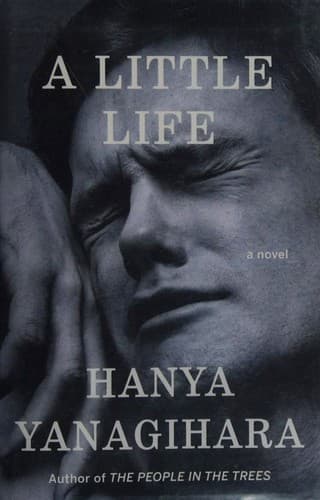
Book details and cover from Google Books.
Ready to read A Little Life?
Get your copy on Amazon, or listen to it on Audible. We earn a commission if you buy through these links.