
We earn a commission if you buy through these links. Learn more
A god in ruins
Guide by the Books of the Day editors · Updated · How we write our guides
A God in Ruins gives Kate Atkinson's wartime bomber pilot a funny, melancholy life, ideal for readers who want literary fiction about guilt, memory and family.
What Creators Say About A god in ruins
2 creators reviewed A god in ruins on YouTube between 2018 and 2023, with 3.2K views between them. Their opinions are their own; we picked these reviews, we didn't write them.
What It's About
A God in Ruins is a novel, not history, despite the category listed for it here. It follows Teddy Todd, the RAF bomber pilot who was a secondary figure in Life After Life. It works fine as a standalone, but the earlier book's themes of chance and repetition add weight. Atkinson moves across Teddy's life in short sections that jump between decades, from a childhood in the early twentieth century through the war and into old age, so the emotional picture builds gradually rather than arriving as a single arc.
The war sections are the heart of the book: the physical strain of missions, the dread of crews, and Teddy's unease about what the bombing campaign does to people on the ground. Atkinson's prose is warm, wry and observant, with a sharp eye for domestic detail and everyday speech. She often cuts between times with little warning, which rewards close attention.
Reading it feels less like following a plot than like sitting with a man looking back at a life he did not expect to have. Grief, regret and gentle comedy sit side by side. Expect a reflective pace and frequent shifts in time that you need to track.
Read this if you…
- want literary fiction that takes wartime history seriously without becoming a conventional war novel
- enjoy wry, observant prose and sharp character portraits
- are interested in how guilt and luck shape a whole life rather than a single crisis
Skip it if you…
- want a fast, linear plot with clear cause and effect
- find detailed wartime violence or moral ambiguity hard to sit with
Key Ideas
- 1
Chance and the shape of a life
The novel is preoccupied with how much of a life depends on luck, timing and small decisions. Teddy's survival of the war and the ordinary accidents of his later years raise the question of what he owes to fortune. Atkinson does not offer a tidy answer, but she keeps returning to the idea that a life could easily have gone another way.
- 2
Guilt inside the bomber war
Teddy's wartime sections examine the moral cost of strategic bombing from the inside. The book does not let the reader treat the crews as simple heroes or the campaign as clean. Teddy's doubts build quietly, and they shape how he sees himself long after the fighting ends.
- 3
Families carrying wounds forward
Much of the novel's emotional weight lies in Teddy's relationships with his daughter and granddaughter. Atkinson shows how damage from one generation can reach the next without anyone quite naming it. These family scenes are often funny and sharply observed, and they give the war story a human counterweight.
- 4
A structure that mirrors memory
Atkinson's fragmented, nonlinear method is central to the experience. Scenes return, reframe and overlap, much as memory does. The style makes the book feel intimate and playful, but it also asks readers to hold many threads at once.
Limitations
Some readers find the nonlinear structure disorienting, especially in the early sections, and the constant time shifts can blur emotional beats. Because the book is a sequel in spirit to Life After Life, it can feel like it leans on its predecessor's ideas. Teddy's point of view is also narrow, and readers wanting a broader view of the war or of the people on the ground may feel the story stays close to its protagonist. The pace is deliberately slow, which not every reader will enjoy.
Questions Readers Ask
- Do I need to read Life After Life first?
- No. A God in Ruins can be read on its own, and Teddy's story makes sense without the earlier novel. Readers who have read Life After Life will notice echoes and recurring ideas that add depth, but the book is built to stand alone. If you are unsure, starting with Life After Life gives you more of the wider design Atkinson is working with.
- Is it a good choice for readers who like war novels?
- It can be, but it is closer to literary fiction about a war than to a classic war novel. Combat and bombing missions feature, yet the emphasis falls on memory, guilt and family. Readers who want battlefield action or a tight plot may find it too reflective. Those drawn to character-driven books about the aftermath of war will likely get more from it.
- Published
- 2015
- ISBN
- 9780316176538
- Difficulty
- intermediate
- Category
- History
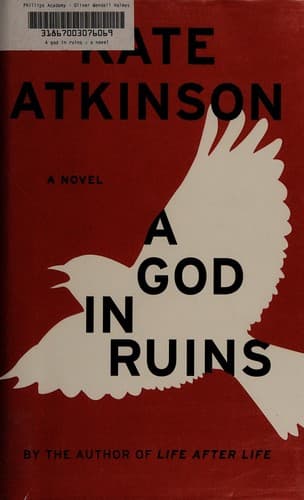
Book details and cover from Google Books.
Ready to read A god in ruins?
Get your copy on Amazon, or listen to it on Audible. We earn a commission if you buy through these links.