
We earn a commission if you buy through these links. Learn more
A Farewell to Arms
Guide by the Books of the Day editors · Updated · How we write our guides
Hemingway's spare, understated novel of love and disillusion during the First World War remains a model of restrained prose, and it rewards readers who look for feeling beneath the surface.
What Creators Say About A Farewell to Arms
2 creators reviewed A Farewell to Arms on YouTube in 2023, with 65.2K views between them. Their opinions are their own; we picked these reviews, we didn't write them.
What It's About
Although it is often shelved as history, A Farewell to Arms is a novel, and the war is its backdrop rather than its subject. The narrator, Frederic Henry, is an American serving as an ambulance driver with the Italian army. The war reaches him in fragments: rear-area chaos, crowded hospitals, and a retreat that the book renders with unsettling clarity. Much of the emotional weight comes from his relationship with Catherine Barkley, a nurse he meets in a hospital, and from the way the war keeps interrupting their plans.
The prose is the main reason readers return to the book. Hemingway writes in short, plain sentences, repeats words and phrases deliberately, and rarely names feelings outright. Dialogue carries much of the load, and what goes unsaid often matters more than what is said. At times the style feels flat, but it is controlled, and the small domestic details, such as meals, weather and routine, do more emotional work than the set-piece scenes.
The experience is intimate and melancholy rather than heroic. The war scenes are brief and grounded in physical detail, especially around wounds and exhaustion. Expect a slow build of tenderness followed by a mood that darkens steadily. Readers hoping for a panoramic account of the front or a plot full of incident may find it restrained, but those who value precision and quiet emotion usually come away moved.
Read this if you…
- want a emotionally direct love story set against the First World War
- like spare, precise prose and don't mind reading between the lines
- are interested in how war erodes a person's trust in leaders and causes
Skip it if you…
- want a sweeping military narrative with battles, strategy and historical detail
- need characters who explain their feelings clearly and at length
Key Ideas
- 1
Love under the pressure of war
The war is not just an interruption to the romance. It decides where people are, who survives, and how long any plan can last. Frederic and Catherine's relationship is built in the gaps between orders, hospital shifts and retreats, so their intimacy feels temporary and borrowed. Hemingway uses this pressure to make ordinary tenderness feel precious and fragile.
- 2
The iceberg style of understatement
Hemingway leaves most emotion beneath the surface. Characters rarely say what they feel. Readers infer it from gestures, small routines and conversations that drift away from the real subject. This asks more of the reader than it first appears, and it gives the book much of its force, since feeling is earned rather than announced.
- 3
Disillusion with leaders and causes
The narrator arrives at the war without strong ideals and grows skeptical of the officers, rhetoric and causes that send men into danger. The book is less a patriotic story than a close look at how institutions can treat individuals as expendable, and at how a man who once followed orders begins to question them.
- 4
War as a bodily, chaotic experience
The retreat and the hospital scenes give war a concrete presence: confusion, panic, wounds, and the rough logic of who gets moved and who is left behind. Hemingway drew on his own time as an ambulance driver in Italy, and his clipped, observational reporting here reads as close to firsthand.
Limitations
The style is the most common point of criticism. Some readers find the dialogue repetitive and the sentences stylized to the point of mannerism. Catherine is largely seen through Frederic's eyes, so readers looking for her inner life may feel she is thinly drawn. The novel is not a history of the Italian front, and its view of the war is personal rather than analytical. Some romantic passages can feel sentimental to modern readers, and its attitudes toward gender and nationality reflect its era.
Questions Readers Ask
- Is A Farewell to Arms worth reading if I usually avoid war novels?
- Probably yes, with a caveat. The war is present, but the book is really about a relationship and about what happens to someone's sense of purpose. The battle scenes are brief, and the retreat is the main action. If war fiction feels too grim in general, the mood here will still be heavy, but the short sentences and focus on people may make it easier to read.
- How does it compare to For Whom the Bell Tolls?
- Both are Hemingway novels about war and love, but they differ in scope. For Whom the Bell Tolls is set during the Spanish Civil War, covers only a few days, and centers on a guerrilla mission. A Farewell to Arms is more intimate and focused on a private relationship, with its war seen from behind the lines. Choose the first for a larger, more action-driven story.
- Published
- 1929
- ISBN
- 9781521308202
- Difficulty
- intermediate
- Category
- History
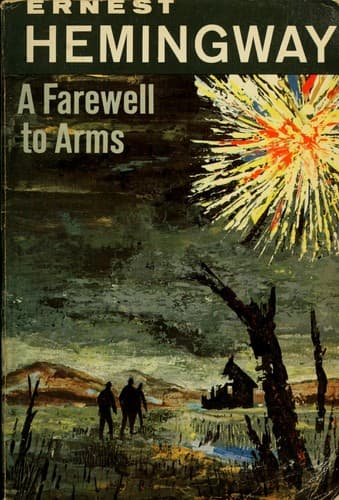
Book details and cover from Google Books.
Ready to read A Farewell to Arms?
Get your copy on Amazon, or listen to it on Audible. We earn a commission if you buy through these links.