
We earn a commission if you buy through these links. Learn more
A child's history of the world
Guide by the Books of the Day editors · Updated · How we write our guides
A warm, old-fashioned read-aloud survey of human history from the earliest peoples to the modern age, useful as a first sweep of the whole story before you go deeper.
What Creators Say About A child's history of the world
1 creator reviewed A child's history of the world on YouTube in 2020, with 3.2K views between them. Their opinions are their own; we picked these reviews, we didn't write them.
What It's About
A Child's History of the World is a narrative survey of human history, written to be read aloud to children, though many adults read it on their own. Hillyer starts with the earliest people and moves forward through the ancient civilizations, the classical world, the medieval period, and into the modern era. Major empires, religions, inventions, and turning points appear in one continuous story rather than as separate subjects.
The voice is the main attraction. Hillyer speaks directly to the listener in a warm, slightly old-fashioned tone, with asides, vivid scenes, and a clear sense of which events mattered and why. The chapters are short, so the book works well in bedtime-sized pieces. Instead of a dense catalog of dates, you get a sequence of episodes that builds a feel for cause and effect over time.
Reading it feels more like being told a long story by someone who knows the material well than studying a textbook. It is light on footnotes, sources, and debate between competing interpretations, so it is best treated as an introduction and a framework to build on. Adults returning to it often find it a pleasant refresher, and it pairs well with more detailed books on whichever era grabs you.
Read this if you…
- want a single, readable story of the whole human past before choosing an era to study
- are reading history aloud with a child or teen and want a warm, unpatronizing voice
- enjoy a storyteller's tone and want a gentle refresher on half-remembered history
Skip it if you…
- need up-to-date scholarship or citations you can check
- want a balanced, global treatment of non-European history
Key Ideas
- 1
History as one connected story
The book keeps returning to how peoples, goods, and ideas moved between regions. Trade routes, migrations, conquests, and religions are shown as links in a chain, so later events make more sense because you have seen what came before. This gives a child, or an adult who has only met history as separate units, a sense of the whole arc rather than isolated episodes.
- 2
People and moments over statistics
Hillyer selects the events and figures he thinks will hold a listener's attention, such as a famous battle, a ruler's choice, or an invention's effect on daily life. Numbers and institutional detail are kept to a minimum. The result is a history built from memorable scenes, which helps information stick but leaves out much of the slower economic and social background.
- 3
Progress told as a moral narrative
The book frames the past as a long movement toward greater freedom, learning, and fairness, with heroes and failures clearly marked. This gives it momentum and a reflective tone that suits family reading. It also means the account is shaped by a particular view of civilization, which a reader should keep in mind when weighing its judgments.
- 4
Built for listening, not skimming
Short chapters, repetition, and conversational transitions make the text easy to follow aloud and easy to pick up again after a break. The pacing rewards attention to the story's rhythm. For readers used to scanning headings and summaries, the slower, more personal style can feel unusual at first but becomes part of its charm.
Limitations
The book was written in the early twentieth century, and its framing reflects the assumptions and emphasis of that era. Coverage of Africa, Asia, the Americas, and other non-Western regions is uneven compared with Europe, and some characterizations and phrasing feel dated today. Archaeology and historical scholarship have advanced considerably since it appeared, especially on prehistory, so specific claims should be checked against current sources. Social history, including the lives of ordinary people and women, receives relatively little attention.
Questions Readers Ask
- Is A Child's History of the World still accurate enough to be useful?
- Treat it as a narrative framework rather than a reference. The broad sweep is still readable and engaging, but archaeology and historical scholarship have changed a great deal since the book was written. Its assumptions about progress and civilization also reflect its time. Use it for the storyline and check specific facts against a newer survey.
- Is this book only for children, or can adults get something from it?
- Adults who want a quick, pleasant overview of world history or a refresher will find it rewarding. The writing is clear and the chapters are short, so it is easy to read in small sittings. Readers who want depth, evidence, or a range of scholarly views should treat it as a starting point and move on to more detailed works.
- Published
- 1978
- ISBN
- 9781607965329
- Difficulty
- beginner
- Category
- History
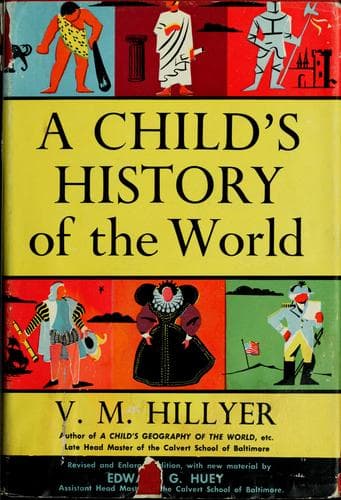
Book details and cover from Google Books.
Ready to read A child's history of the world?
Get your copy on Amazon, or listen to it on Audible. We earn a commission if you buy through these links.